


Embroidered Low Stool
These embroidered low stool pieces bring warmth and texture to a room, offering practical seating and traditional craft from past centuries.
Embroidered Low Stool
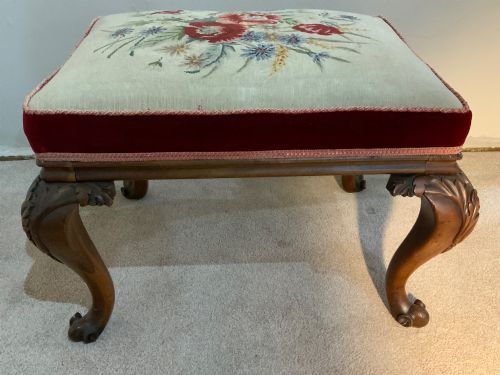
An embroidered low stool combines a sturdy timber frame with a textile top, serving as a footstool, ottoman seat, or dressing table stool. When you search for an embroidered low stool, you encounter pieces originating from periods such as the nineteenth century, the Edwardian era, and the nineteen twenties.
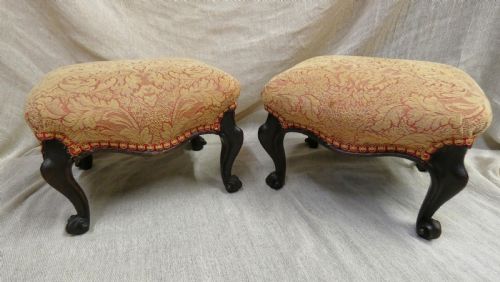
The forms span simple footstools, pairs of stools, and larger ottoman seats. Many examples adopt historic revival aesthetics like Queen Anne style, Chippendale style, and Victorian Rococo Revival.
Makers utilised woods including mahogany, walnut, and oak for the structural frames. These support tops finished in needle point, tapestry, wool, fabric, velvet, and damask fabric.
Materials and construction
Makers constructed the timber frames using hardwoods such as mahogany and walnut, shaping them into styles reflecting Georgian, George II, and Victorian design traditions. Joinery techniques secure the low profile, providing a stable base for daily use as a footrest or seat.
The upper sections rely on textile artistry, incorporating wool needlework, tapestry, and damask fabric. Artisans stretched these worked panels over padded foundations fitted directly to the wooden frames.
Periods represented span from the nineteenth century through the Edwardian era and into the nineteen twenties.
Assessing quality and character
Quality rests in the precision of the timber frame carving and the density of the woodwork. Pieces influenced by specific historical revivals show greater attention to proportion and stylistic detail in the legs and aprons.
The needlework and fabric top dictate much of the visual appeal. Finer execution in the textile surface displays intricate pattern work and tightly packed stitches that endure through decades of use.
The Embroidered Low Stool Glossary
- Needle point
- A type of embroidery worked on a stiff, open-mesh canvas using wool or silk yarn. This technique creates durable geometric or pictorial designs frequently seen on antique upholstery.
- Damask
- A reversible figured fabric woven on a jacquard loom with patterns formed by contrasting warps and wefts. It provides a formal sheen suitable for period seating.
- Rococo Revival
- A nineteenth-century design movement characterised by flowing curves, naturalistic ornamentation, and C-scroll motifs. It influenced the elaborate shaping of wooden frames.
- Ottoman
- A low, upholstered seat without arms or a back, designed for resting feet or sitting. Larger versions accommodate multiple users in a domestic interior.
Embroidered Low Stool: Frequently Asked Questions
How do I use a low stool today?
These pieces function well as footstools before armchairs or as low seats beside dressing tables. Their compact size allows them to sit neatly under tables or beside fireplaces.
They also serve as decorative accents in hallways and bedrooms, adding tactile textile warmth to wooden floors.
What periods do these stools come from?
The available examples span from the mid-nineteenth century through to the Edwardian period and the early nineteen twenties. Some pieces reference earlier Georgian and George II eras through revival design.
Construction dates range across Victorian production, nineteen hundred, and nineteen twenty, reflecting shifting tastes in domestic seating.
Which woods appear most often?
Frames are predominantly built from mahogany and walnut, with occasional examples in oak. These dense timbers provide the necessary strength for low furniture subject to weight.
Carved details and polished finishes on the wood complement the variety of woolen and textile tops.
How do I identify a revival style?
Revival pieces copy design elements from earlier centuries, such as Queen Anne or Chippendale aesthetics. Makers in the Victorian and Edwardian eras reinterpreted these classical forms with contemporary tooling.
Examinations of the timber age and construction methods help distinguish the original period from later revivals.