

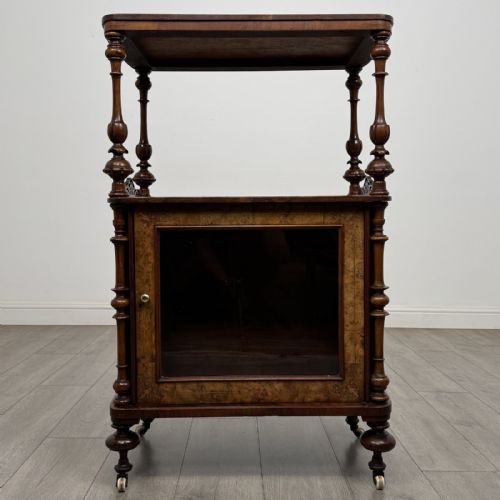
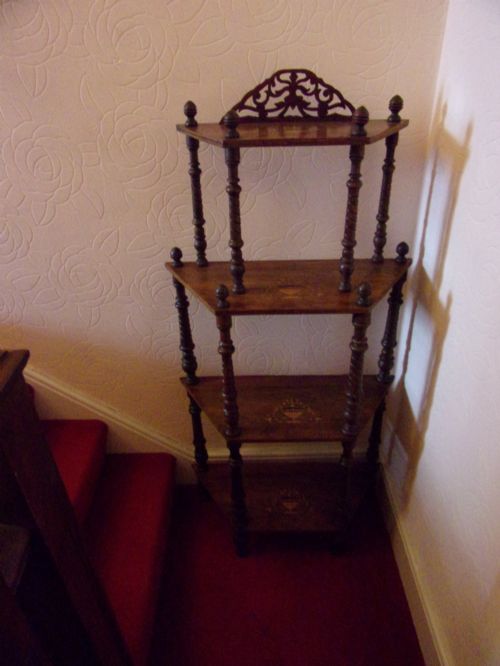
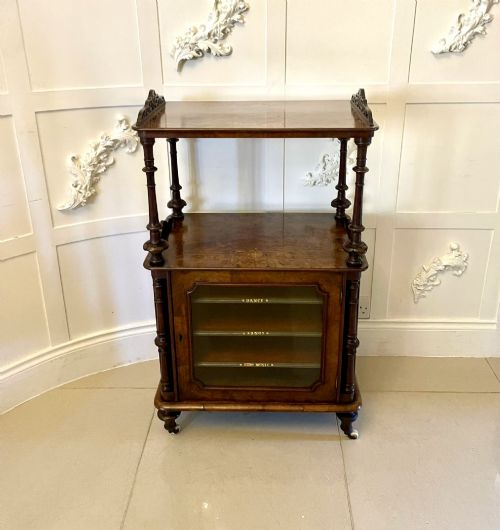
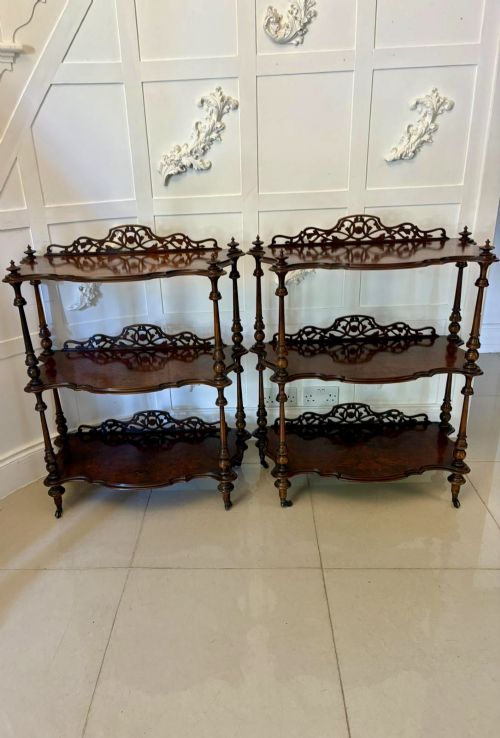


Edwardian Whatnot Stand
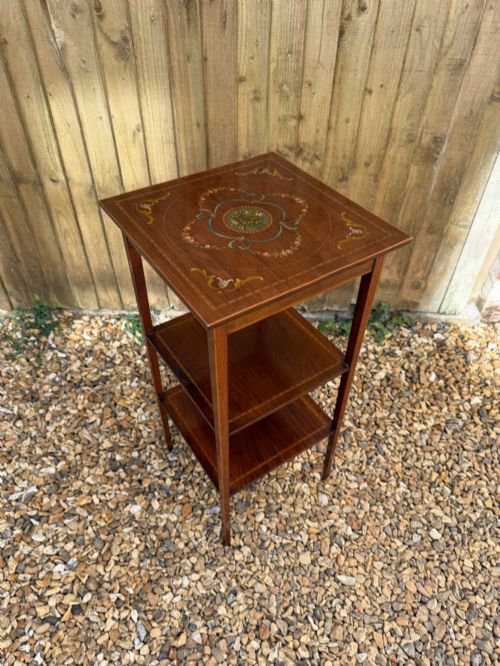
An edwardian whatnot stand brings tiered display space to a room, offering multiple open shelves for books, ornaments and small collections.
Edwardian Whatnot Stand
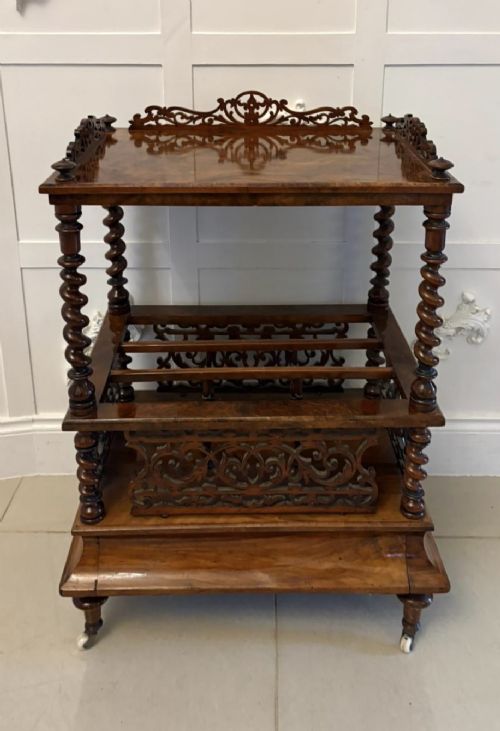
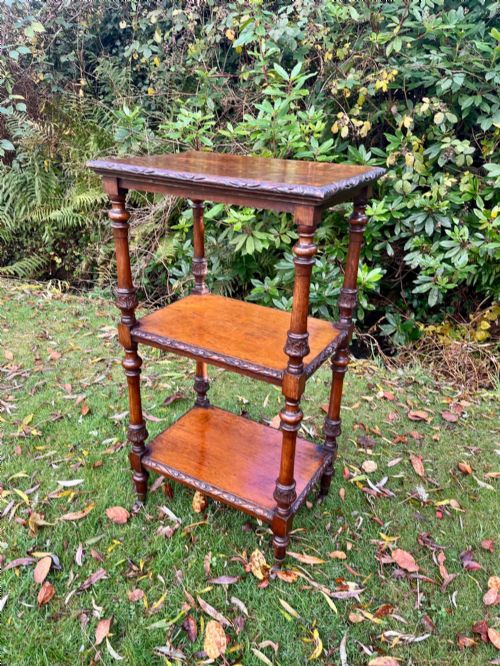
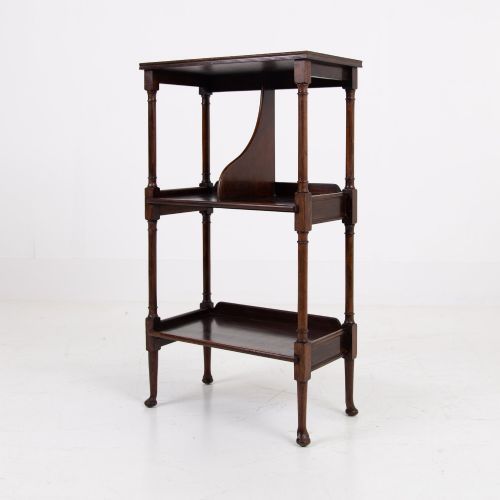
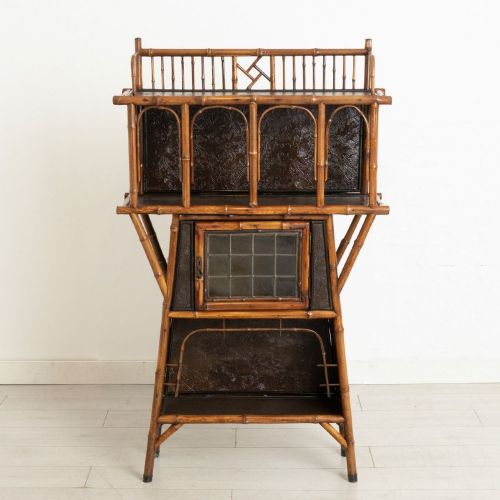
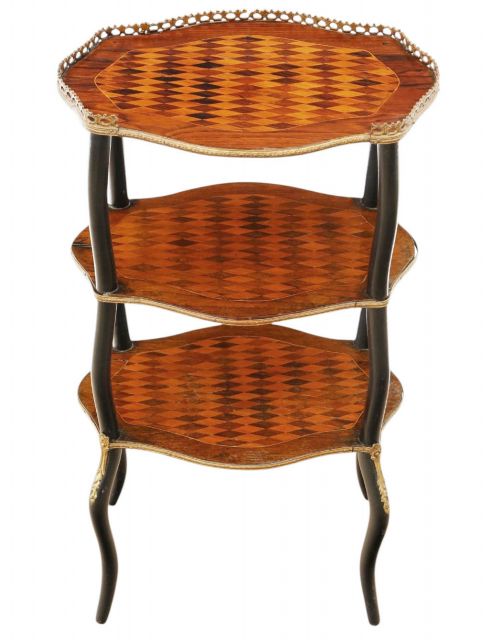
The edwardian whatnot stand is a multi-tiered piece of furniture designed for display and storage, appearing alongside Victorian and 19th century examples on this page. These tiered stands take various forms, including corner units, multi-shelf display towers, and pieces combined with canterburys or music cabinets.
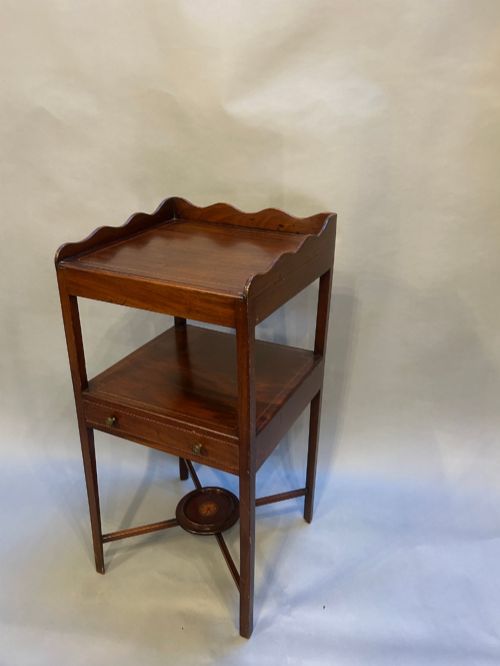
Makers constructed these stands with differing numbers of tiers, ranging from compact two-tier tables to tall structures with four, five, or six shelves. While Edwardian versions share space with earlier Victorian pieces, the core function remains the display of decorative objects across open horizontal surfaces.
Materials and construction
Cabinetmakers utilised timber frameworks of mahogany, walnut, burr walnut, and rosewood, frequently incorporating marquetry inlay, parquetry, and ebonised details. Secondary materials such as brass fittings, glass, ceramic, and marble tops appear across the pieces.
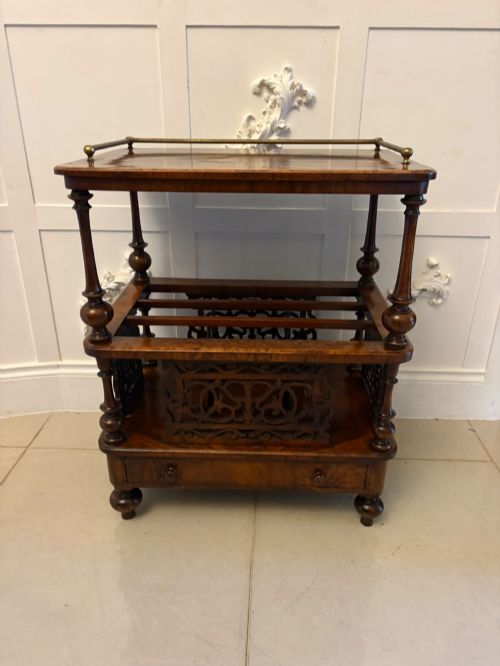
Construction techniques include turned upright supports, barley twist columns, and tiered shelving secured by upright spindles or solid panels. Some pieces integrate drawers beneath the shelving or combine the open tiers with enclosed cupboard bases and music racks.
Edwardian Whatnot Stand Retail Price Guide 2026
Typical asking prices for edwardian whatnot stand among the pieces listed under this phrase on Sellingantiques today, from the lower quarter to the upper quarter. They describe what is for sale here now, not the wider market.
Distinctions in craftsmanship
Quality reveals itself in the selection of timber veneers, particularly figured burr walnut and rich rosewood, matched with precise marquetry inlay. The execution of structural elements, from turned uprights to stable corner joints, determines the durability of multi-tiered stands.
The inclusion of specific functional additions, such as fitted drawers, brass mounts, or combined music cabinet compartments, separates standard utility pieces from finer examples of cabinet work.
Samson & Son London·Leonard Wyburd for Liberty and Co
The Edwardian Whatnot Stand Glossary
- Whatnot
- A piece of furniture consisting of a set of open shelves for displaying small objects. These tiered stands date predominantly through the Victorian and Edwardian periods.
- Etagere
- A French style of tiered display stand featuring multiple open shelves supported by slender columns. These pieces function similarly to whatnots for presenting ornaments.
- Canterbury
- A low stand featuring partitions for holding sheet music or books, frequently incorporated into the base of a whatnot. This form often includes a small underdrawer.
- Marquetry
- Decorative veneer work formed by fitting together small pieces of wood, shell, or other materials to create pictorial or geometric patterns on furniture surfaces.
- Barley twist
- A type of turned furniture support resembling the spiral twist of a barley stalk. This decorative carving appears on the vertical uprights of certain tiered stands.
Edwardian Whatnot Stand: Frequently Asked Questions
What is an edwardian whatnot stand used for?
An edwardian whatnot stand serves primarily to display ceramics, books, and decorative ornaments across its open tiers. The multi-shelf design maximises vertical display space in a room.
Certain variations incorporate dedicated storage, such as drawers or music racks, allowing them to function as side tables or bedside night stands while keeping surfaces clear.
How do I tell Victorian from Edwardian stands?
Victorian stands frequently employ dense timbers like burr walnut and rosewood, often featuring heavy turning, elaborate marquetry inlay, and dark finishes. The construction tends toward ornate Victorian styles.
Edwardian examples often present lighter mahogany frames, painted decoration, or simpler lines reflecting the transition into twentieth-century interior preferences.
Where should I place a whatnot in a room?
A corner whatnot fits neatly into unused room angles, utilising vertical space without obstructing pathways. Standing models anchor well against plain walls or beside seating furniture.
Tall tier arrangements suit larger rooms where they can display collections safely, while compact two-tier tables function effectively as bedside or lamp stands.
Can these stands support heavy books?
Most tiered stands are designed for ornaments, ceramics, and light reading material rather than heavy library volumes. The open shelf construction relies on slender upright supports.
Heavier items are best placed on the lowest solid tier or a reinforced base shelf to maintain stability across the upper structure.