


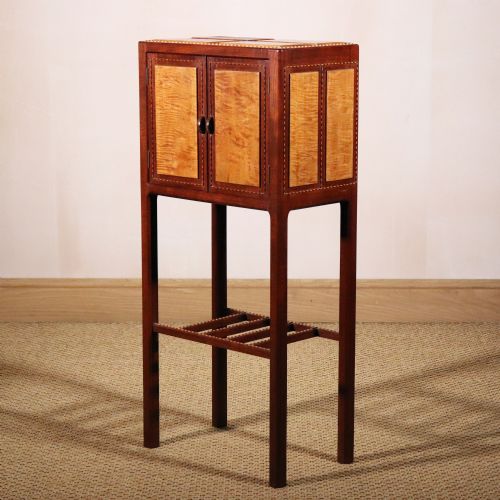


Edwardian Stationery Stand
An Edwardian stationery stand keeps correspondence organised on the desk, combining practical compartments for paper with the refined craftsmanship of the early twentieth century.
Edwardian Stationery Stand
An edwardian stationery stand encompasses desk accessories designed to hold letters, envelopes, and writing materials in an orderly fashion. These pieces include writing inkstands, letter racks, and desk tidies originating predominantly from the Edwardian period, alongside related items from adjacent decades.
The versions most commonly met on this page are brass and oak desk sets and inkstands dated around nineteen hundred. They frequently feature built-in compartments for stationery and glass inkwells, combining utility with period style.
How they were made
These items are constructed from solid and veneered timbers such as mahogany, oak, and satinwood, often enhanced with brass or silver fittings and boxwood stringing. Artisans utilised carving, inlay, and metal casting to create the decorative letter racks and cabinets.
Edwardian Stationery Stand Retail Price Guide 2026
Typical asking prices for edwardian stationery stand among the pieces listed under this phrase on Sellingantiques today, from the lower quarter to the upper quarter. They describe what is for sale here now, not the wider market.
Listings feature items from the nineteenth century through to nineteen sixty, spanning oak, mahogany, brass, and silver.
What varies in quality
The standard of an edwardian stationery stand depends upon the crispness of its carving, the richness of the timber grain, and the complexity of its brass or silver mounts. Ornate ornamentation and substantial materials distinguish the finer examples from simpler utilitarian desk tidies.
Design execution also plays a role, with specific pieces displaying distinct stylistic influences such as arts and crafts or art nouveau, which elevate them beyond standard production items.
The Edwardian Stationery Stand Glossary
- Edwardian
- Relating to the reign of King Edward VII, spanning from nineteen hundred to nineteen ten. Pieces from this era often show lighter proportions than Victorian items.
- Inkstand
- A desk stand holding one or more inkwells alongside pen grooves. They provide a fixed base for writing equipment.
- Letter rack
- A desk accessory with upright divisions to hold incoming and outgoing correspondence. These keep paper sorted and visible.
- Chinoiserie
- European decorative style reflecting Chinese artistic motifs. It appears on selected desk accessories through painted or lacquered decoration.
- Arts and crafts
- A design movement valuing traditional craftsmanship and simple forms. Objects in this style emphasise honest construction and natural materials.
Edwardian Stationery Stand: Frequently Asked Questions
What fits inside an edwardian stationery stand?
These stands accommodate standard writing paper, envelopes, and occasionally small notebooks within their wooden or brass compartments.
Many examples also incorporate dedicated slots for pens and lidded glass inkwells for daily correspondence.
How were stationery stands used?
They sat on writing desks or library tables to keep essential writing materials tidy and within easy reach.
Users stored incoming letters in the rack and dipped their pens into the accompanying inkwell during letter writing.
What materials are common?
Common materials include hardwoods such as mahogany and oak, paired with brass fittings and clear glass inkwells.
Some pieces incorporate decorative touches like silver plating, satinwood, and boxwood inlay.
How do I care for wooden stands?
Keep wooden surfaces clean by dusting regularly with a dry cloth and avoiding placement in direct sunlight.
Condition the timber occasionally with appropriate furniture wax to maintain the finish of the wood.