




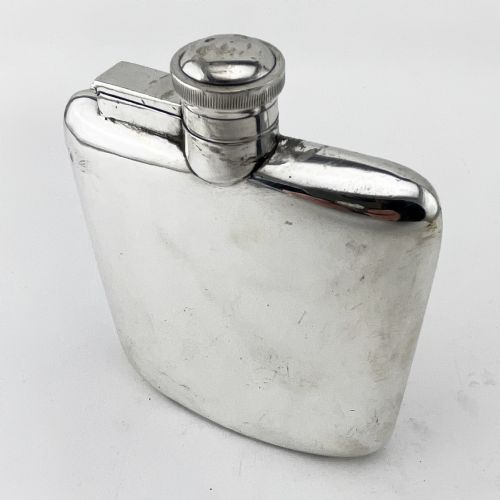


Edwardian Silver Whisky Bottle
An edwardian silver whisky bottle brings solid period weight and cut crystal brilliance to a home bar, offering a tangible link to early twentieth-century hospitality.
Edwardian Silver Whisky Bottle
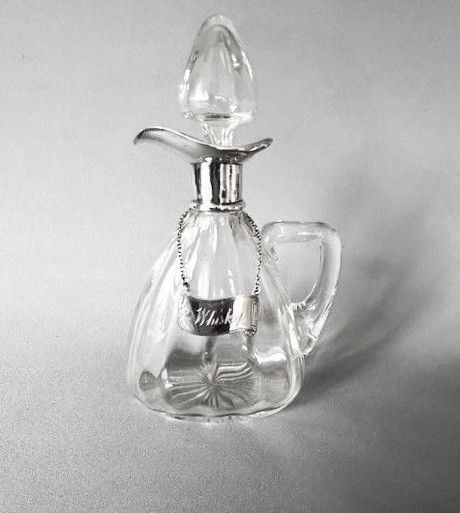
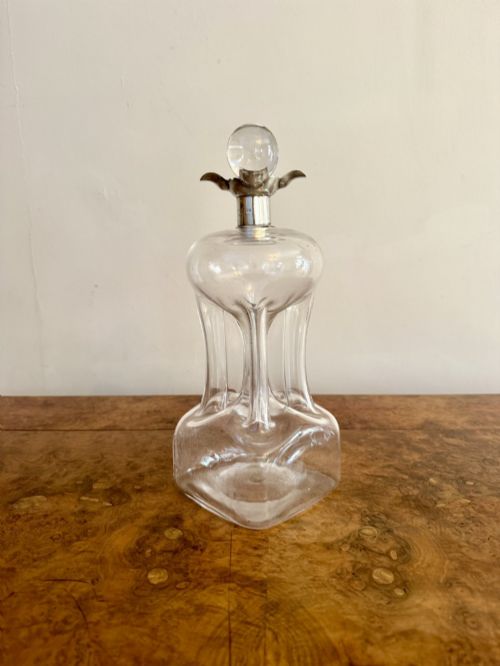
The edwardian silver whisky bottle encompasses a variety of practical forms designed for dispensing spirits, most commonly appearing as collar-mounted glass decanters, hip flasks, and noggins.
Many examples on this page date from the Edwardian period and the early twentieth century, taking shape as cut crystal or glass bodies fitted with hallmarked sterling silver mounts, collars, and matching labels.
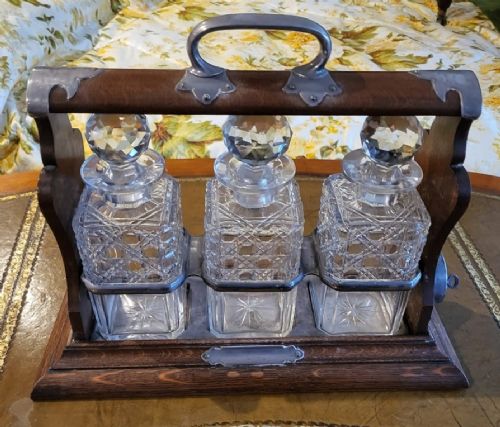
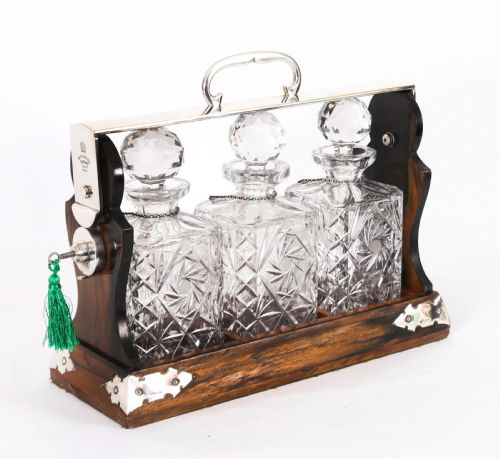
Larger manifestations include three-bottle tantalus frames and spirit decanter sets housed in oak or coromandel, reflecting the diverse ways households stored and served whisky during the era.
Materials and construction
Craftsmen combined heavy-gauge glass and cut crystal with sterling silver collars, mounts, and plate, utilising specialised cutting techniques to create faceted surfaces that catch the light.
Wood such as oak and coromandel provided the structural housings for multi-bottle tantalus sets, incorporating metal locking mechanisms alongside silver-plated mounts.
Silversmiths shaped sheet metal into flasks and decanter mounts, applying hallmarks to certify the sterling standard of the components.
Edwardian Silver Whisky Bottle Retail Price Guide 2026
Typical asking prices for edwardian silver whisky bottle among the pieces listed under this phrase on Sellingantiques today, from the lower quarter to the upper quarter. They describe what is for sale here now, not the wider market.
Listings feature Edwardian and Victorian cut glass decanters alongside oak tantalus sets, hip flasks, and silver-plated barware.
Quality factors in silver and glass
Quality rests in the weight and clarity of the crystal glass body, alongside the crispness of the cutting and the gauge of the silver used for collars and mounts.
The integration of mechanisms, such as the locking bars on a tantalus or the snug fit of a silver-mounted stopper, distinguishes sturdier workshop output from lighter commercial pieces.
Maker marks and legible silver hallmarks provide a clear indication of origin and standard, lifting marked pieces above unmarked equivalents.
Walker and Hall·Hukin and Heath·Betjemann
The Edwardian Silver Whisky Bottle Glossary
- Noggin
- A small mug or vessel used for measuring out a specific portion of liquor. These small spirit measures often feature silver mounts and a matching label.
- Hallmark
- An official stamp applied to precious metals indicating the purity, the assay office, and the year of testing. These marks help date the silver mount of a bottle accurately.
- Cut crystal
- Glassware shaped with faceted patterns by cutting wheel techniques. This material gives decanters significant heft and light-refracting qualities.
- Decanter label
- A small metal tag hung by a chain around the neck of a bottle to identify the contents. They are frequently encountered alongside Edwardian spirit bottles.
Edwardian Silver Whisky Bottle: Frequently Asked Questions
How do I clean an old decanter?
Fill the glass body with warm water and specialised cleaning beads, avoiding harsh abrasives that might scratch the interior. Take care to protect any silver collars from prolonged contact with cleaning solutions.
Dry the vessel thoroughly upside down, and leave the stopper out until the interior is completely free of moisture.
Can I store whisky in these bottles long term?
Glass decanters with standard stoppers lack an airtight seal, meaning high-proof spirits can slowly evaporate or oxidize over extended periods. They suit serving spirits during an evening rather than long-term archiving.
For best results, keep bottles upright in a stable environment away from direct sunlight.
What is a tantalus frame?
A tantalus is a locking cabinet or frame designed to hold two or three decanters securely. The locking mechanism prevents guests or servants from pouring drinks without authorization.
Most examples use oak or coromandel wood fitted with a metal locking bar across the top of the glass stoppers.
How do I identify an Edwardian piece?
Examine the silver components for hallmarks that correspond to the reign of King Edward VII or the early decades of the twentieth century. Stylistic cues like Art Nouveau curves or straightforward Edwardian proportions also help date the object.
Comparing the cut glass patterns to documented catalogue examples confirms the manufacturing era.