





Edwardian Silver Tantalus
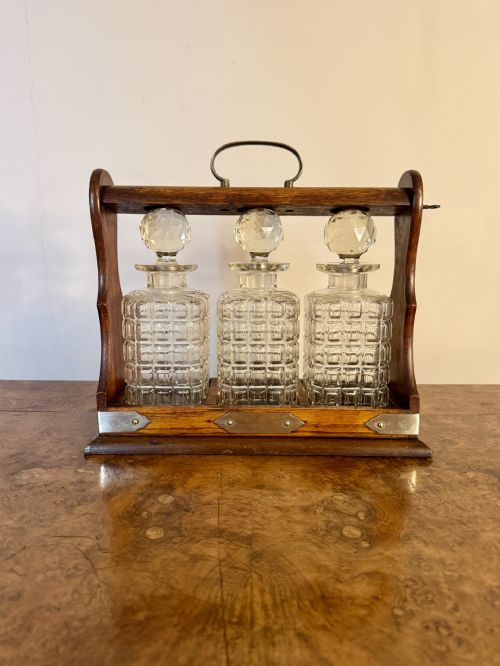
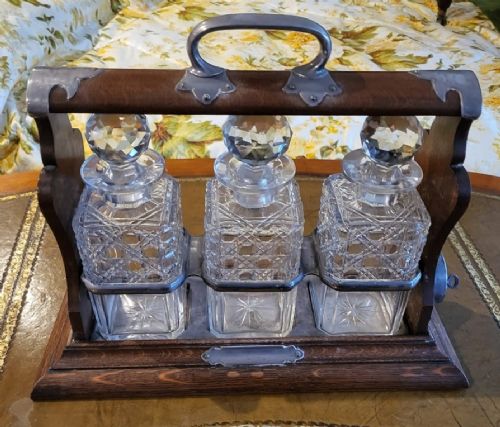
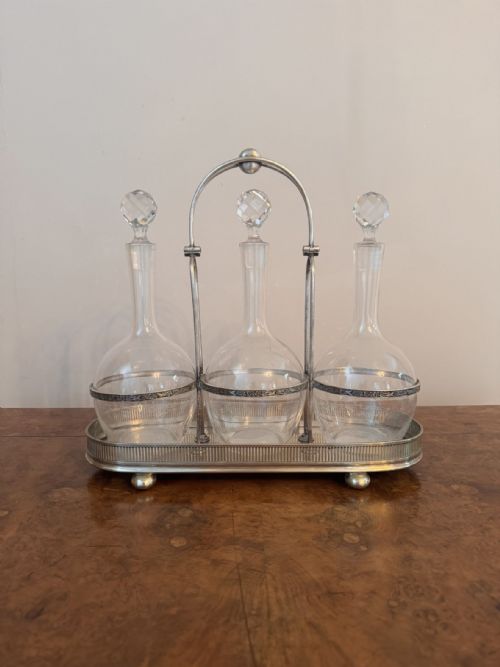
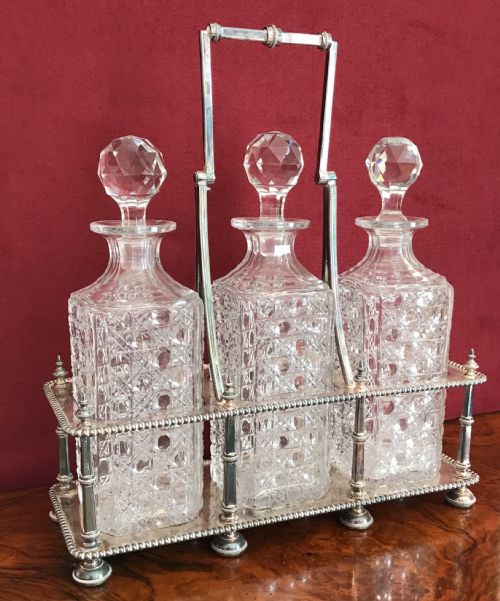
These edwardian silver tantalus pieces secure your spirits behind locking metal frames while displaying cut glass decanters for your guests.
Edwardian Silver Tantalus
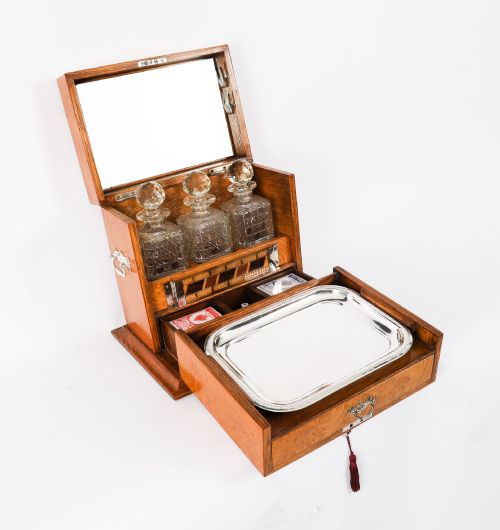
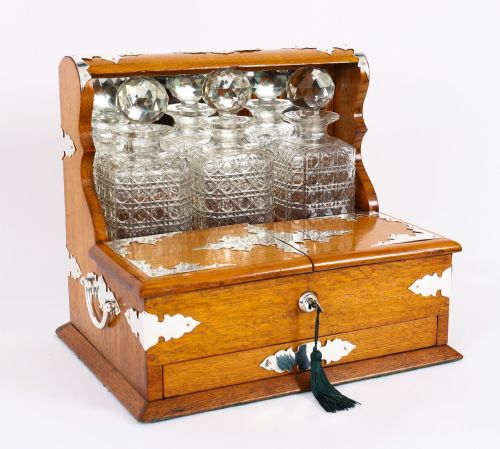
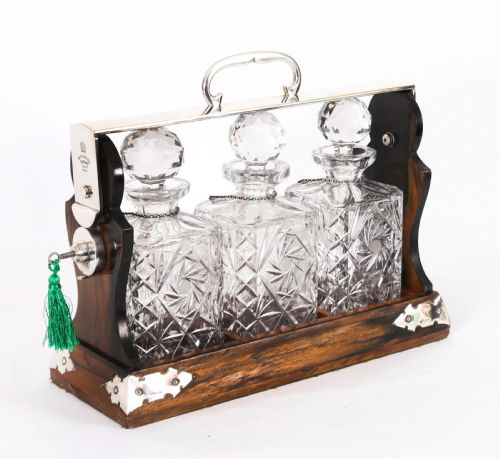
An edwardian silver tantalus comprises a secure wooden or metal framework fitted with a locking mechanism that prevents the removal of decanters without a key. Most examples found here date from the Edwardian period and Victorian eras, frequently incorporating robust oak frames alongside silver plated mounts.
The primary form holds two or three cut glass decanters, often accompanied by integrated games compendiums with compartments for cards and counters. These barware sets serve as portable dry bars designed to sit on sideboards or in smoking rooms.
While many specimens date strictly to the early twentieth century, related decanter sets and stands also appear across the listings. The overarching purpose remains the containment of fine whiskey, gin, and brandy away from unauthorised hands.
Materials and construction
Carpenters constructed the bodies from figured oak, blond oak, and occasionally exotic coromandel wood, fitted with hinged locking bars operated by a key. Metalworkers applied silver plating or sterling silver to the handle assemblies, locking mechanisms, and collars.
Glaziers and glasscutters produced heavy cut crystal and cut glass decanters with patterned facets designed to catch the light. Brass hardware frequently reinforces the corners and interior compartments of combined games compendiums.
Edwardian Silver Tantalus Retail Price Guide 2026
Typical asking prices for edwardian silver tantalus among the pieces listed under this phrase on Sellingantiques today, from the lower quarter to the upper quarter. They describe what is for sale here now, not the wider market.
The name borrows from Greek mythology, ensuring guests could admire the whiskey all evening without ever taking a sip.
Judging quality in a tantalus
The standard of an edwardian silver tantalus rests upon the weight of the timber frame, the complexity of the locking mechanism, and the integrity of the silver plating. Superior pieces integrate fully functioning locks with original keys alongside matching cut crystal decanters.
Combined games compendiums demonstrate higher craftsmanship when the interior fittings, such as cribbage boards and card storage, remain intact and undamaged within the oak housing. Maker attribution to established firms like Betjemann or Hukin and Heath elevates the standing of a piece.
Betjemann·Hukin and Heath
The Edwardian Silver Tantalus Glossary
- Tantalus
- A locking drink container named after the mythological figure who was kept just out of reach of water. The frame secures the decanter stoppers so the bottles cannot be removed while locked.
- Games Compendium
- A fitted box containing equipment for multiple parlour games such as cards, chess, and dice. These often sit within the base or sides of larger tantalus units.
- Silver Plate
- A base metal, such as copper or nickel brass, coated with a thin layer of silver. This technique provided the appearance of solid silver at a lower cost during the nineteenth and twentieth centuries.
- Coromandel
- A dense, dark tropical hardwood with contrasting striations used for luxury furniture and decorative boxes. It appears on high-end cabinet work from the period.
- Cut Crystal
- Glass containing lead oxide that increases brilliance and weight, shaped with geometric wheel-cut patterns. The facets refract light through stored spirits.
Edwardian Silver Tantalus: Frequently Asked Questions
How does the locking mechanism work?
Turning the key releases the metal top bar, allowing it to swing upward or slide clear of the decanter stoppers. When the bar is locked back down, the stoppers cannot be pulled out, preventing access to the contents.
Most mechanisms rely on a functional brass or steel lock set into the wooden base or upright spine of the frame.
Were these made for specific rooms?
These pieces traditionally occupied dining rooms, libraries, and smoking rooms where hosts entertained guests. They kept expensive spirits secure from household staff while remaining accessible for formal hospitality.
Larger versions with integrated games boxes served as self-contained social hubs for evening entertainment.
How do I care for the wood and silver?
Maintain the oak or coromandel cabinet work with appropriate furniture wax applied sparingly with a soft cloth. Keep silver plated mounts polished gently to avoid wearing through the plating to the base metal.
Ensure glass decanters are washed by hand and dried thoroughly to preserve the clarity of the cut crystal.
How can I tell the period?
Victorian examples tend toward heavy figured oak and robust brass fittings, while Edwardian pieces often display slightly lighter proportions and refined silver plated mounts. Art Deco items from the 1930s introduce streamlined geometric styling in sterling silver and crystal.
Hardware styles, lock stamps, and construction methods also help narrow down the manufacturing decade.