
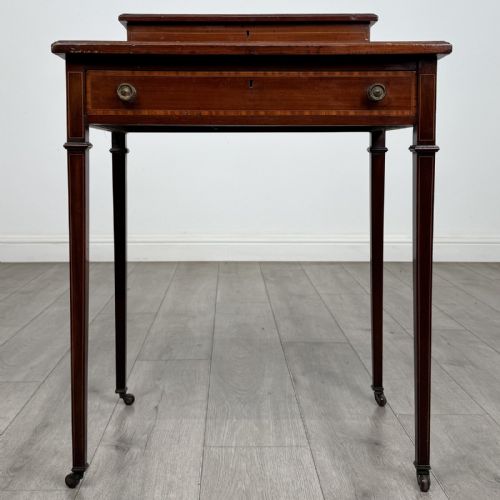
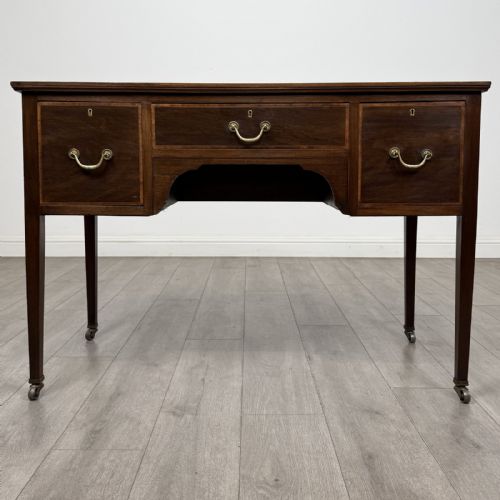
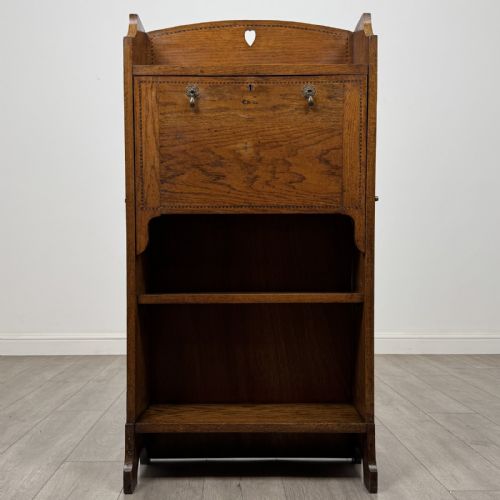
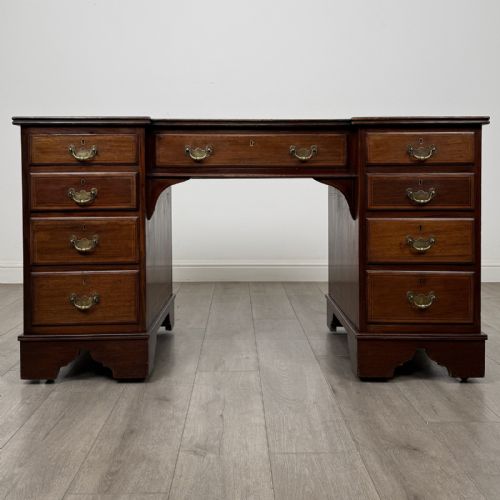
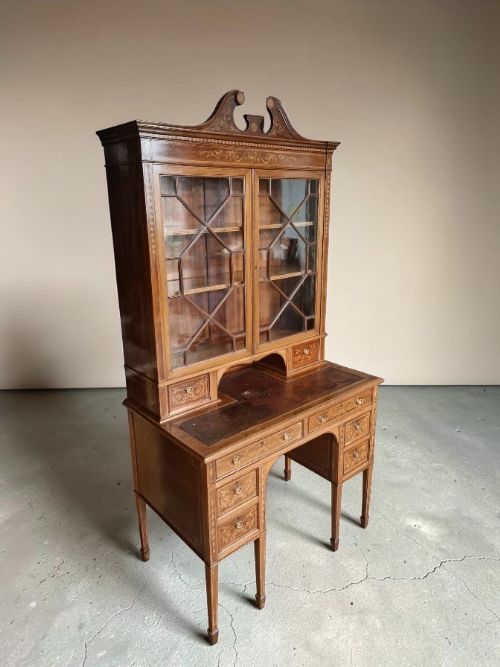
Edwardian Inlay Desk
An edwardian inlay desk brings refined cabinet-making into a room, combining fine timbers with delicate marquetry for daily writing.
Edwardian Inlay Desk
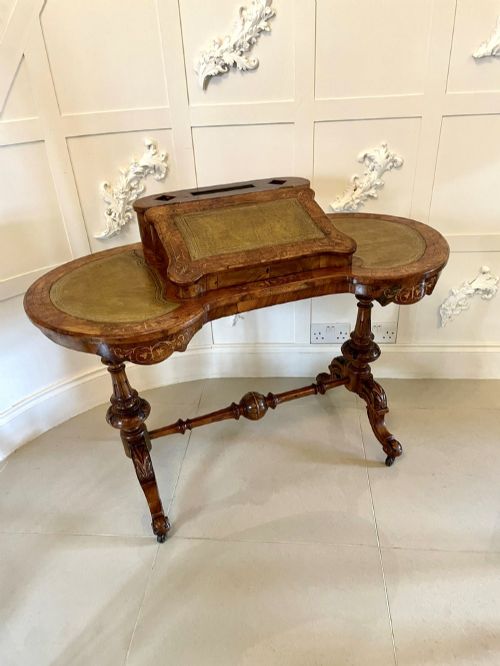
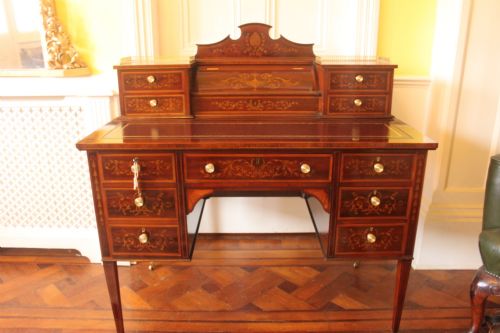
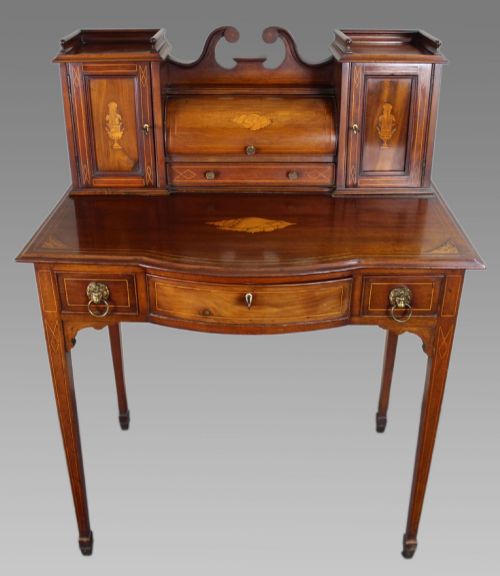
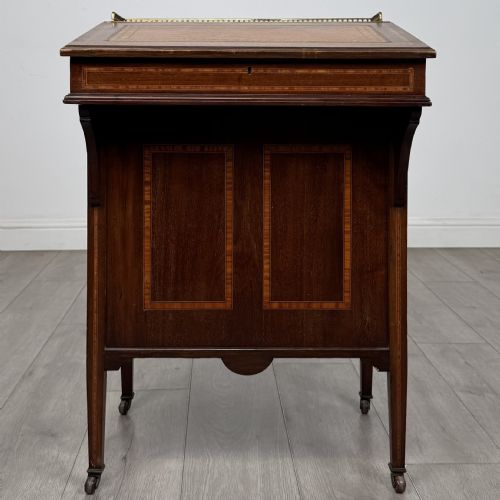
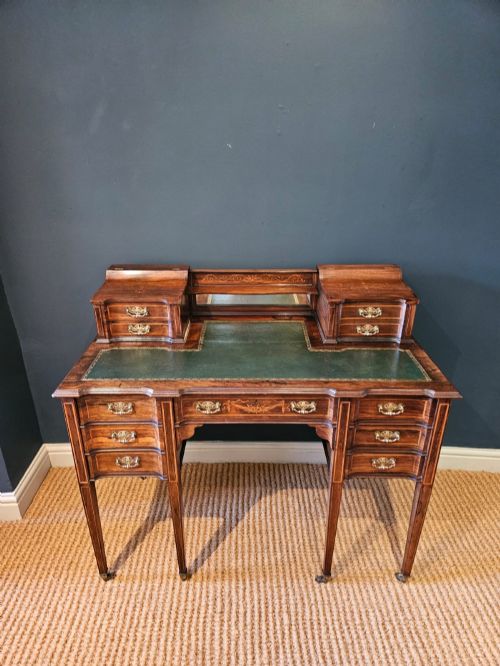
An edwardian inlay desk encompasses writing tables, cylinder desks, and kidney-shaped forms produced during the opening decades of the twentieth century. These pieces draw heavily on earlier Sheraton Revival idioms, frequently employing lighter proportions than their Victorian predecessors. Mahogany and rosewood serve as the primary foundations, often accented with contrasting lighter timbers.
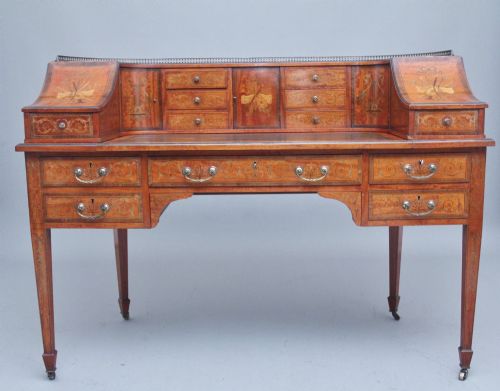
The varieties met most frequently on this page include freestanding writing tables and compact kneehole configurations designed for domestic studies. Cabinet-makers of the period also produced specialised forms such as Carlton House desks and fall-front bureaux. Satinwood highlights appear regularly, providing the pale ground necessary for intricate floral and ribbon marquetry.
Judging Quality
The standard of an edwardian inlay desk rests upon the crispness of the marquetry and the choice of timber figurations, such as flame mahogany or figured satinwood. Superior workshops employed dense, well-matched veneers and executed floral or neoclassical ribbon motifs with high precision, leaving minimal filler in the joints.
Construction details differentiate standard production from exhibition pieces, notably the use of solid drawer linings, hand-cut dovetails, and retained original brass handles. The integration of complex forms, such as curved kidney outlines or fully fitted cylinder tops, indicates the level of craftsmanship invested by the maker.
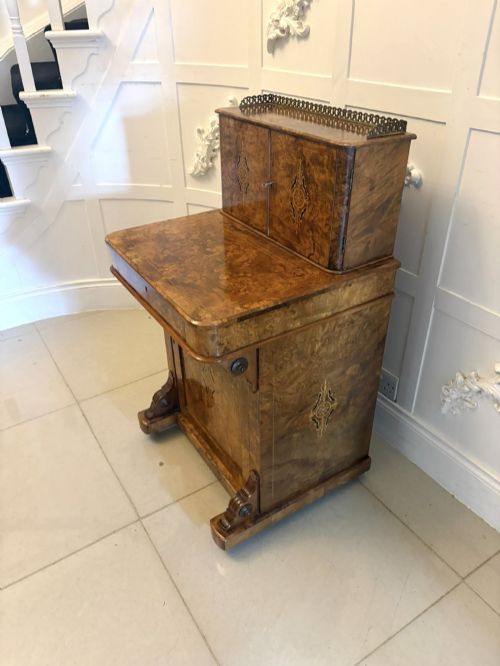
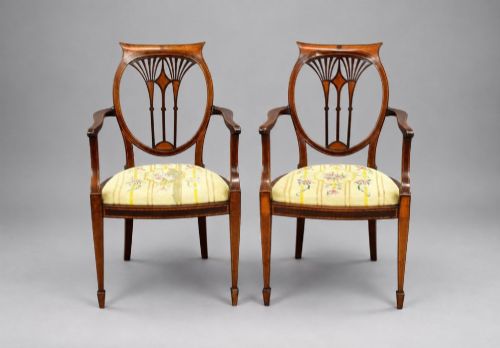
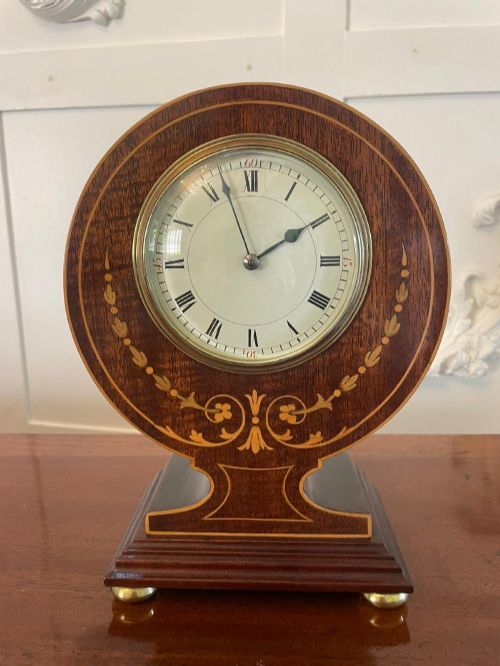
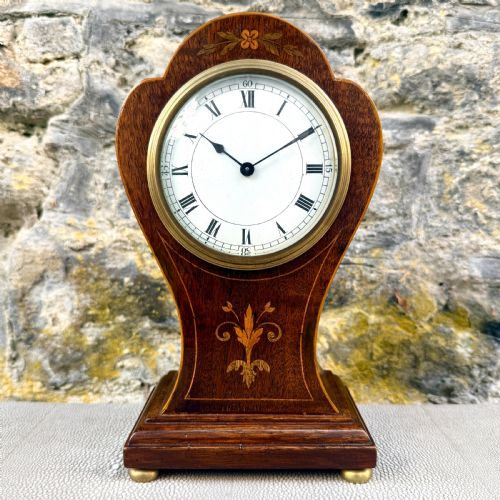
Listings feature mahogany, rosewood, and satinwood alongside brass and leather, demonstrating the Edwardian preference for contrasting timbers.
Maple & Co·Edwards & Roberts
The Edwardian Inlay Desk Glossary
- Marquetry
- Decorative patterns formed by fitting together thin slices of wood veneer into a design. This technique allows intricate pictorial or geometric motifs to adorn the flat surfaces of furniture.
- Stringing
- Narrow strips of contrasting wood inlaid into channels cut into the surface of a piece. It creates delicate border lines around drawer fronts and tabletops.
- Cylinder desk
- A writing desk featuring a rolling semi-cylindrical wooden shutter that conceals the writing surface and interior pigeonholes. When closed, it protects the desk contents.
- Kidney-shaped
- Describing a writing table with a concave front curve that accommodates the user. This serpentine outline requires specialised curved veneer work.
Edwardian Inlay Desk: Frequently Asked Questions
How do I identify an Edwardian desk?
An edwardian inlay desk usually displays lighter proportions, paler secondary timbers, and Sheraton Revival motifs compared to heavy Victorian furniture. Examine the internal construction and wood species for clues regarding the manufacturing period.
Makers working around nineteen hundred favoured satinwood borders and delicate boxwood stringing over the darker, heavier styling of the preceding decades.
Are these desks suitable for daily use?
These writing tables function well for modern laptop use or correspondence, provided the leather writing surface is treated with care. Many models offer sufficient drawer space for contemporary stationery.
Placing the furniture away from direct heat sources helps preserve the stability of the veneers and the French polished finish.
How should I care for satinwood and mahogany?
Maintenance requires occasional dusting with a soft, dry cloth and the sparing application of traditional beeswax to nourish the timber. Avoid commercial silicone sprays, which can degrade the French polish over time.
Keeping the piece out of direct sunlight prevents the pale satinwood and rich mahogany tones from fading unevenly.