
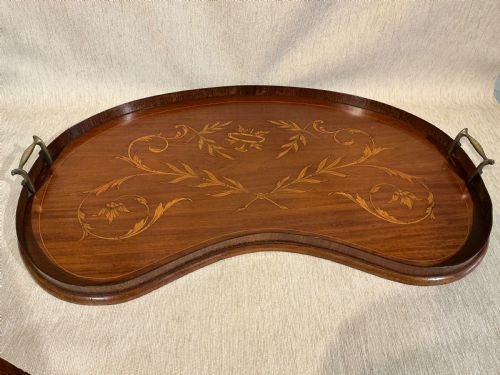


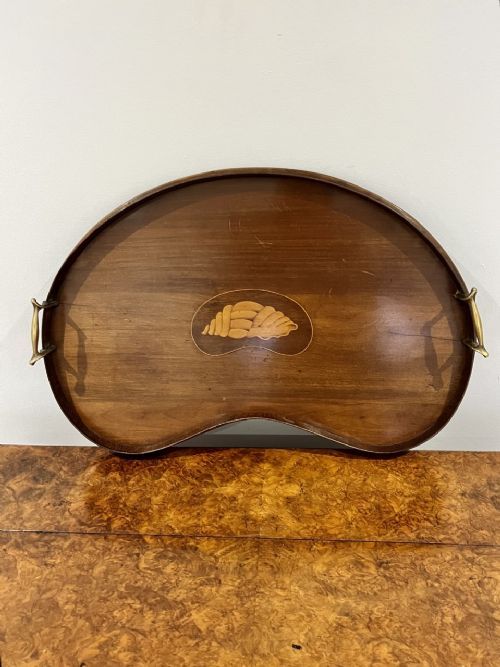


Edwardian Inlaid Butler Tray
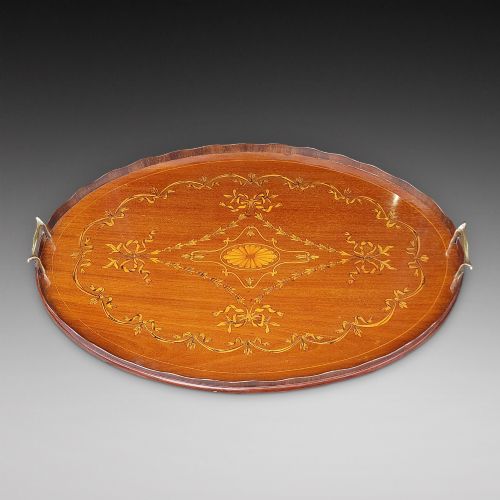
An edwardian inlaid butler tray brings refined timber and crisp marquetry to the afternoon table, offering a portable surface built for service and display.
Edwardian Inlaid Butler Tray
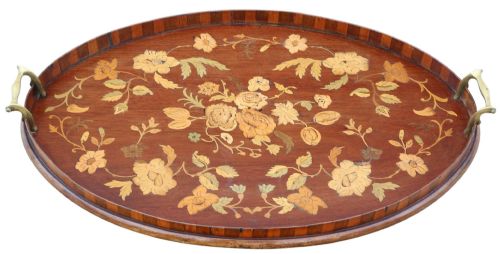
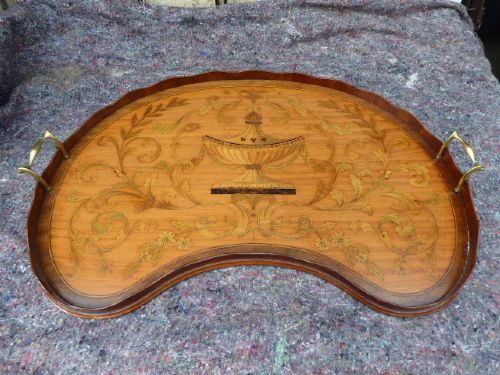
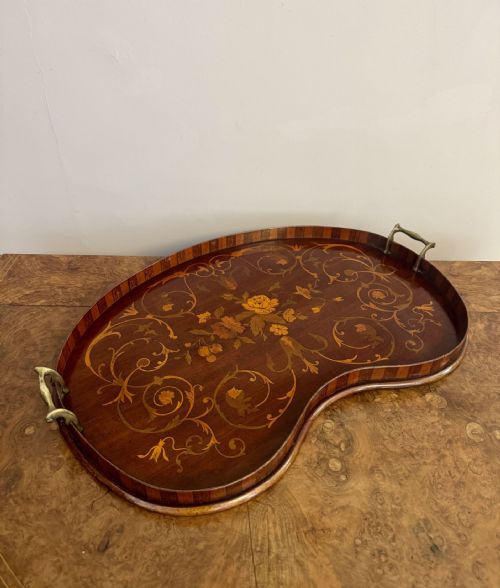
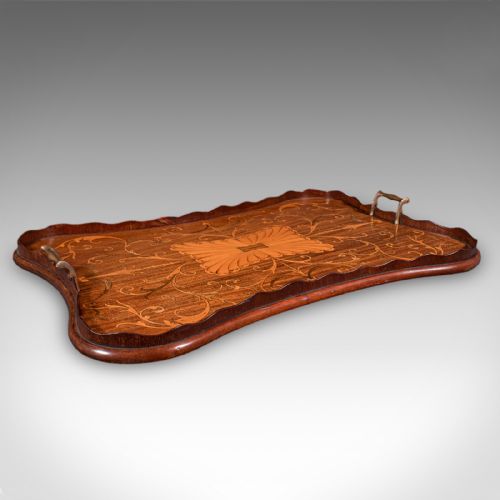
When you search for an edwardian inlaid butler tray, you encounter portable serving surfaces designed for domestic hospitality during the late nineteenth and early twentieth centuries. These pieces combine practical carrying handles with decorative timberwork, serving both afternoon tea and formal drinks. You meet oval, kidney shaped, and octagonal forms across this selection, often paired with folding or fixed stands to function as occasional tables.
The Edwardian period and the late nineteenth century dominate the examples listed here, alongside select Victorian and Georgian Revival pieces. Mahogany and satinwood form the primary foundations, enriched by marquetry inlay, brass galleries, and shell motifs. Makers and workshops of the era produced these trays for versatile drawing room use, shifting them easily from sideboard to stand.
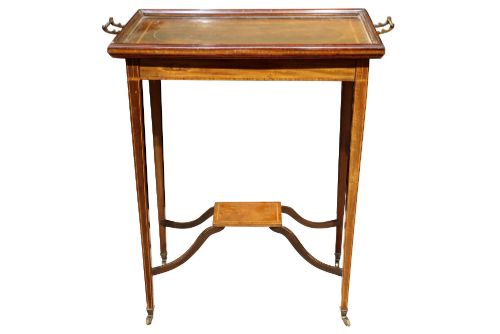
Most items you encounter adhere to classic Edwardian and Sheraton Revival aesthetics, translating earlier proportions into lighter domestic furniture. Alongside standard serving trays, you find pieces mounted on side table bases to create permanent occasional furniture. The materials range from solid mahogany to burr yew and rosewood, reflecting the diverse cabinet-making trades of the period.
Materials and Construction
Cabinet makers utilised mahogany and satinwood as the principal timber bases, often incorporating burr yew, rosewood, and teak for tonal contrast. These woods provided a stable foundation for detailed surface decoration while maintaining the lighter weight required for a portable serving tray.
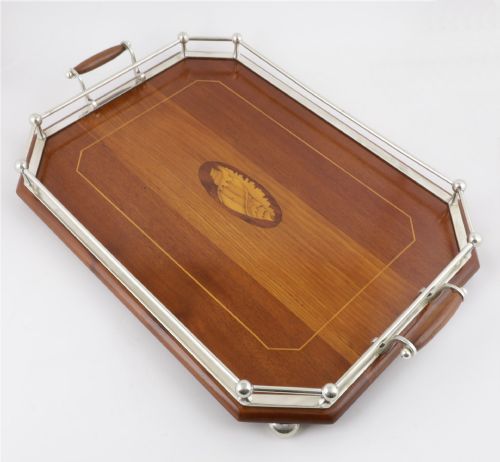
Marquetry inlay and shell motifs define the decorative surface, requiring precise hand-cutting of contrasting veneers to form floral or geometric patterns. Brass fittings, including galleries and drop handles, were integrated to secure items during transit and provide structural definition.
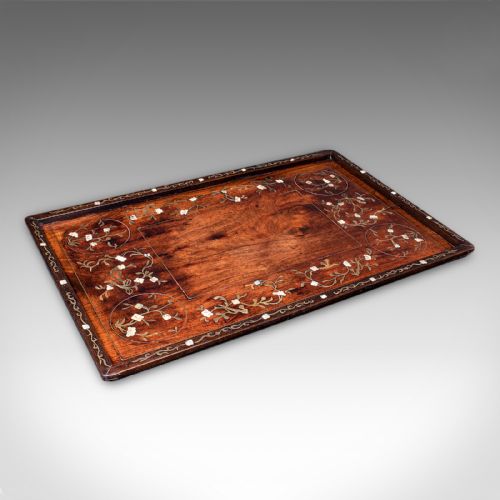
Selected examples combine wood bases with silver plate mounts and bone details, showing varied workshop specialisms across English and Anglo-Indian production. Joinery techniques ensured the raised edges and handles could support the weight of silver teaware and glassware.
Listings feature mahogany, satinwood, teak, and rosewood, frequently enhanced by marquetry inlay and brass galleries.
Judging Quality and Execution
The precision and complexity of the marquetry inlay set superior examples apart from standard production, with tighter veneer junctions indicating higher workshop skill. Dense, figured mahogany and carefully selected satinwood provide a richer visual depth than plain secondary timbers.
Integration of hardware dictates the tactile experience of a tray, where solid brass galleries and firmly seated drop handles demonstrate superior manufacturing standards. The crispness of carved mouldings and the seamless fit of corner joints reveal the underlying competence of the cabinet maker.
Edwards and Roberts
The Edwardian Inlaid Butler Tray Glossary
- Marquetry inlay
- Decorative patterns formed by fitting contrasting veneers into a prepared wooden surface. This technique allows intricate floral and geometric designs to sit flush with the main timber.
- Sheraton Revival
- A late nineteenth and early twentieth century design movement drawing on the light, neoclassical furniture of George Sheraton. Pieces from this revival feature delicate inlay and tapered legs.
- Tray top table
- A serving tray placed permanently upon a folding or fixed wooden stand to create an occasional table. This form allows a portable tray to function as a side table.
- Brass gallery
- A low metal railing fitted around the perimeter of a serving tray to prevent glassware or ceramics from sliding off. These galleries often feature pierced or cast decorative motifs.
- Kidney shaped
- A curved, asymmetrical tray contour designed to rest comfortably against the body of the person serving. This form appeared frequently in Edwardian tea trays.
Edwardian Inlaid Butler Tray: Frequently Asked Questions
How were butler trays used?
These trays served primarily for carrying tea services, afternoon refreshments, and drinks between rooms. The raised edges and drop handles ensured safe transit for porcelain and glassware.
Many versions also functioned on folding stands as temporary side tables in drawing rooms. This dual purpose made them adaptable furniture for hosting guests.
What is a tray top table?
A tray top table combines a removable or fixed serving tray with a dedicated wooden stand. It raises the portable surface to standard table height for use as an occasional table.
This form allows you to utilise the decorative surface of an inlaid tray without needing a separate sideboard or low table.
How do I identify Edwardian inlay?
Edwardian inlay typically employs Sheraton Revival motifs such as satinwood banding, neoclassical urns, and floral swags. The contrast between dark mahogany and pale satinwood creates a crisp visual effect.
Workshops during this era favoured lighter, elegant proportions compared to the heavier carved styles of earlier decades.
Can I use these trays daily?
Modern living suits these trays well for serving drinks or displaying decorative objects on coffee tables. Their sturdy timber construction remains functional for light domestic service.
Care should be taken with antique polished surfaces to protect the wood and marquetry from moisture and heat.