
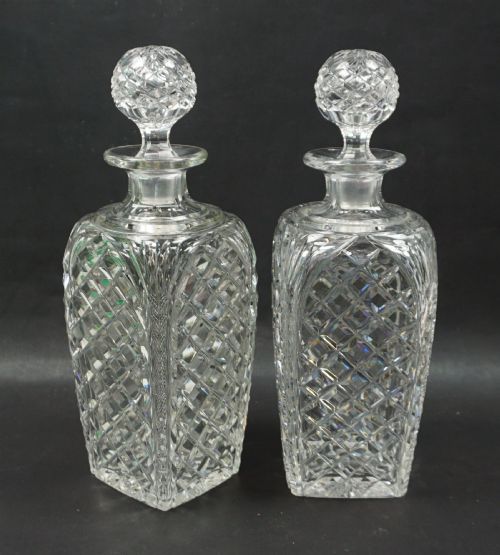
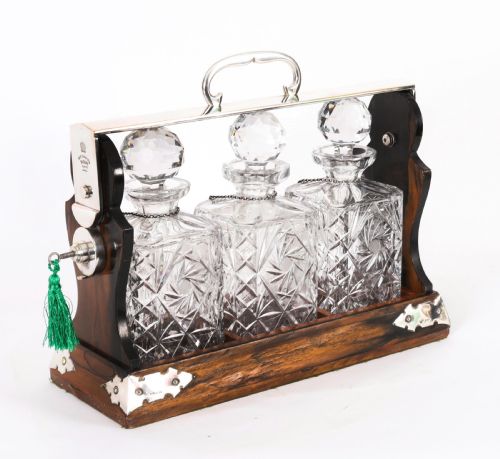

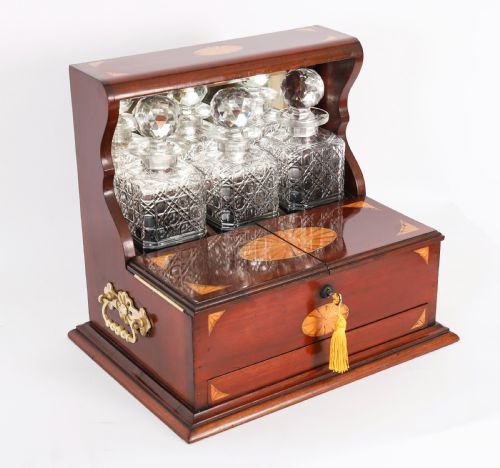


Edwardian Crystal Tantalus
An edwardian crystal tantalus is a locking spirit cabinet designed to secure expensive liquor from unauthorised access while proudly displaying the cut crystal decanters within.
Edwardian Crystal Tantalus
An edwardian crystal tantalus combines secure metal locking mechanisms with fine timber frames to house matching sets of spirit decanters. These pieces function simultaneously as elegant barware and practical home security for domestic hosts.
The versions most commonly met on this page span the Edwardian period and late Victorian era, constructed from solid oak, golden oak, or pollard oak. Many examples integrate games compendiums, dry bar storage, or humidor compartments alongside the bottle frames.
Makers housed either two or three cut crystal decanters within the wooden frames, secured by a hinged metal bar that locks over the stoppers. This clever design prevents the removal of the decanters unless the matching key is inserted and turned.
How they were made
Cabinetmakers constructed the frames using durable timbers such as oak, walnut, coromandel, and satin wood, frequently employing fine marquetry inlay and brass mounts. These wooden bodies house fitted interiors designed to hold heavy glassware securely during carriage or daily use.
Metalworkers fabricated the locking bars, handles, and hinges in brass or silver plate, with specialised firms like Hukin and Heath supplying patented locking mechanisms. The decanters themselves feature heavy cut crystal glass and cut glass, shaped into square sections or tapered forms.
Invented specifically to frustrate thirsty but honest butlers, the tantalus turned pouring a stiff drink into an exercise in locksmithing.
What varies in quality
The grade of timber and the complexity of the housing determine the tier of the piece, moving from simple two-bottle oak frames to elaborate games compendiums veneered in coromandel or satin wood. Integrated dry bar compartments and humidor sections elevate the utility and desirability of the object.
The execution of the cut crystal decanters and the mechanical precision of the locking system dictate the overall standard. Original working locks with matching keys and undamaged sterling silver mounts or silver plate separate the finer examples from standard production.
Betjemann·Hukin and Heath
The Edwardian Crystal Tantalus Glossary
- Tantalus
- A locking drinks cabinet that holds decanters firmly in place so they remain visible yet unreachable without a key. The name derives from the mythological figure Tantalus, who suffered eternal thirst despite water being close at hand.
- Games compendium
- A fitted box containing equipment for multiple parlour games, frequently incorporated into the base or sides of larger tantalus cabinets. These multifunctional pieces represent the high standard of Edwardian home entertainment.
- Coromandel
- A dense, heavily figured exotic timber imported from Asia, prized by cabinetmakers for luxury Victorian and Edwardian boxes. Its rich dark brown colour and contrasting light grain make it highly decorative.
- Silver plate
- A thin layer of silver fused to a base metal, commonly utilised on the handles, bars, and mounts of spirit frames. This technique provided the lustrous appearance of solid silver at a more accessible cost.
- Pollard oak
- Oak timber obtained from pollarded trees, noted for its tightly clustered knots and highly decorative grain patterns. Makers selected this distinctive wood for high-end cabinet fronts.
Edwardian Crystal Tantalus: Frequently Asked Questions
How does a tantalus lock work?
A metal retaining bar passes over the glass stoppers of the decanters, fixing them firmly into individual recesses in the wooden base. Turning the key engages a mechanism that secures the upright holding arm, preventing the bar from lifting.
Without the key, the decanters cannot be tilted or removed from the frame. This ingenious security measure protected household spirits from domestic staff and guests.
Were all tantalus sets made in pairs?
Tantalus frames were produced to hold specific configurations, most commonly containing two or three decanters. Four-bottle sets and single decanter frames also appear in the record, alongside variations paired with games boxes.
The number of bottles dictated the overall length of the oak or walnut base and the complexity of the locking mechanism required to secure them.
How do I distinguish Edwardian from Victorian examples?
Victorian pieces tend to display heavier proportions, darker woods, and more robust Gothic Revival or elaborate brass mounts. Edwardian versions frequently embrace lighter golden oaks, simpler geometric lines, or refined inlay work.
Examining the timber choice, hardware style, and registration marks helps establish the likely decade of manufacture within the broader nineteenth and early twentieth century span.
Can I replace a missing key?
Patented locks by makers such as Betjemann or Hukin and Heath often require specialised keys to operate the internal spring mechanisms. Replacing a lost key involves consulting a specialist locksmith experienced in antique furniture hardware.
Many surviving pieces retain their original working locks and matching keys, which remains a key consideration for collectors.