



Edwardian China Showcase
An Edwardian china showcase brings glass, mahogany, and satinwood together to frame porcelain with genuine period elegance.
Edwardian China Showcase
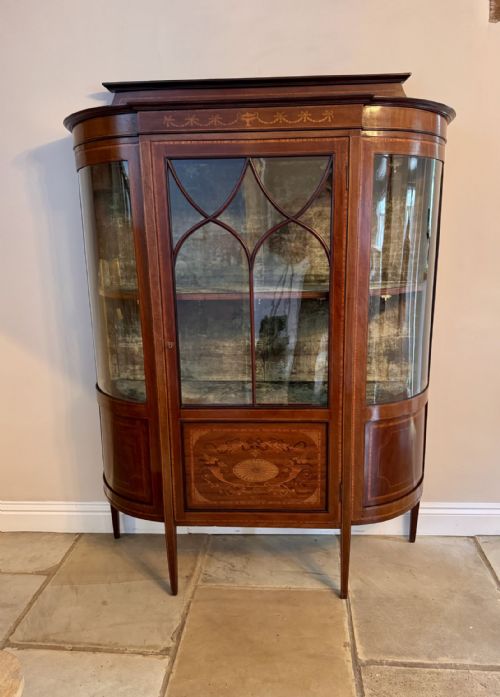
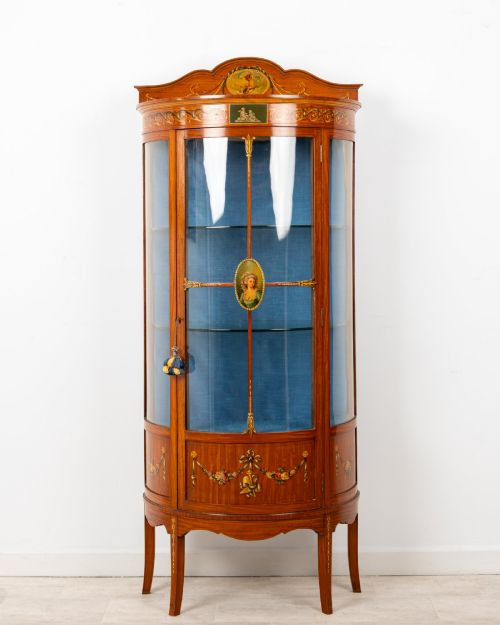
An Edwardian china showcase stands as a refined piece of furniture designed to protect and display delicate ceramics. When searching for an edwardian china showcase, buyers encounter display cabinets and wall cabinets shaped by the aesthetics of 1900, 1910, and the wider Edwardian period.
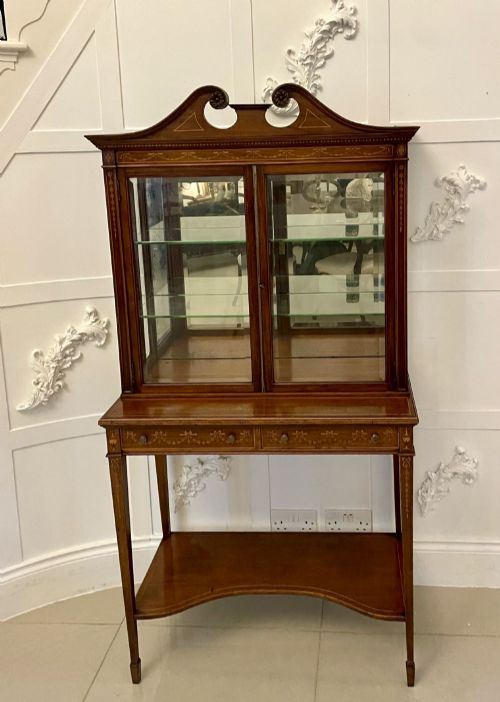
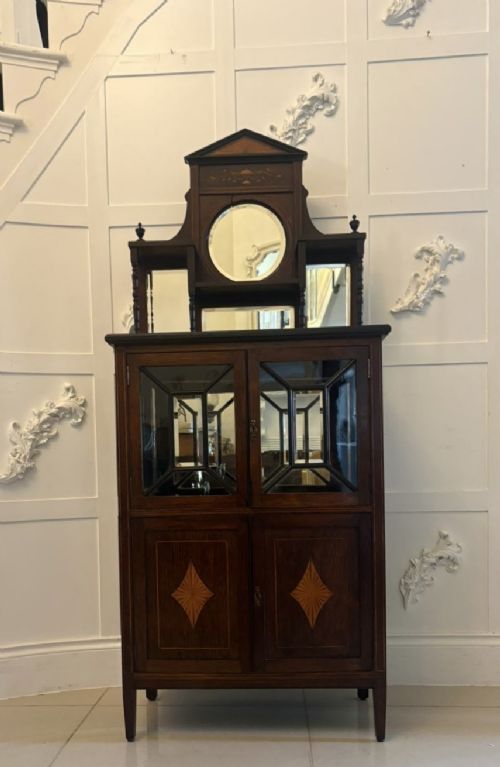
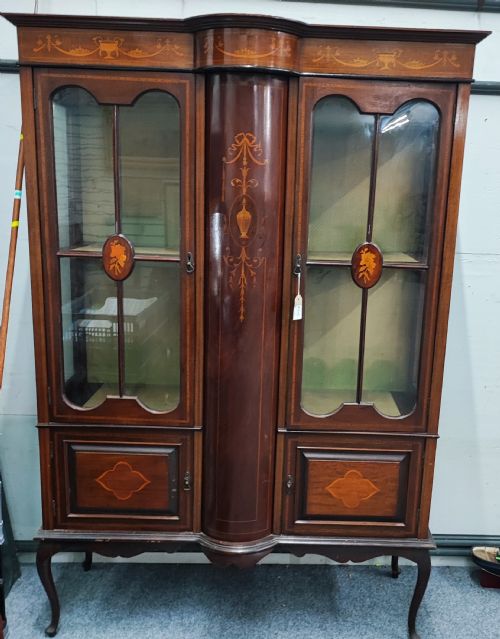
The most common examples on this page are floor-standing display cabinets formed in mahogany, often enriched with satinwood inlay, bow fronts, and glass panels. These pieces reflect revival styles such as Sheraton Revival alongside original Edwardian and Art Nouveau designs.
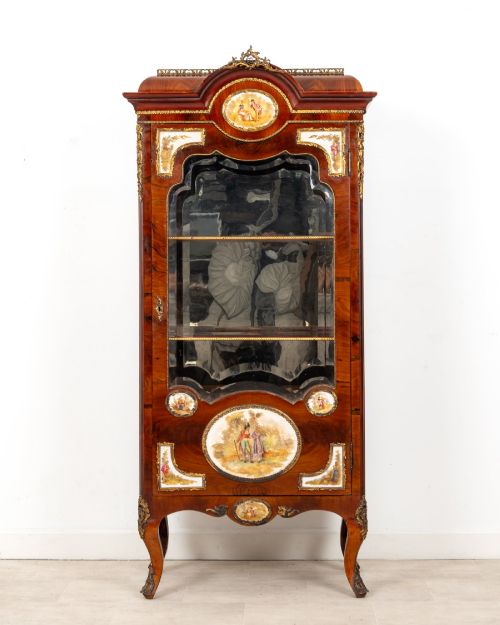
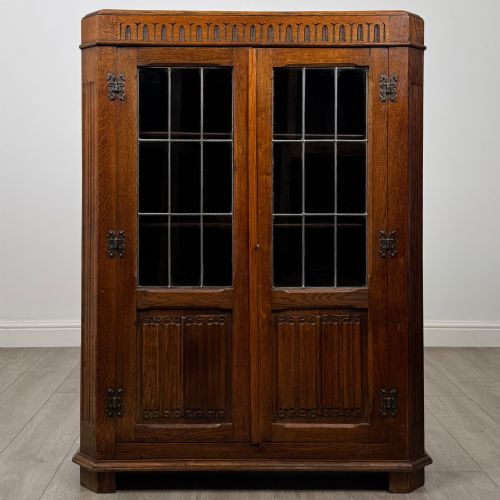
Beyond standard freestanding vitrines, the selection includes wall-hanging variants and distinct forms utilising oak, walnut, and kingwood. Each piece serves the dual purpose of practical storage and decorative exhibition for fine china.
Materials and construction methods
Cabinetmakers constructed these showcases using solid timbers and supportive secondary woods, applying mahogany and satinwood veneers for decorative impact. Marquetry, floral inlay, and painted details were meticulously integrated into the woodwork to enhance the surface appearance.
Glass panels were secured within wooden frames or leaded cames, frequently paired with mirrored backs to reflect light through displayed porcelain. Brass hardware, including hinges and locks, completed the assembly of doors and internal shelving.
Edwardian China Showcase Retail Price Guide 2026
Typical asking prices for edwardian china showcase among the pieces listed under this phrase on Sellingantiques today, from the lower quarter to the upper quarter. They describe what is for sale here now, not the wider market.
Listings feature pieces spanning the late nineteenth century through to 1910, encompassing Edwardian, Victorian, and nineteenth century eras.
Distinctions in construction and design
The degree of hand-carved detail and the complexity of marquetry inlay distinguish finer cabinets from simpler utilitarian pieces. Crisp joinery in bow-front structures and the integration of painted satinwood or kingwood elevate the standard of manufacture.
Material selection plays a primary role, where choice timbers like figured mahogany, walnut, and satinwood denote higher ambition in the workshop. The inclusion of mirror backs, leaded glass, and polished brass fittings further separates the exceptional examples from standard production.
The Edwardian China Showcase Glossary
- Vitrine
- A glass-fronted cabinet designed specifically for displaying porcelain, curiosities, or fine china. These enclosures protect delicate items from dust while offering maximum visibility.
- Bowfront
- A convex, outwardly curved front section on a cabinet. This curved woodwork requires advanced joinery skills to shape the glass and frame accurately.
- Marquetry
- Decorative woodwork where thin pieces of coloured wood, shell, or ivory are fitted into a veneer to form patterns. It frequently decorates Edwardian mahogany surfaces.
- Linenfold
- A carved wooden panel motif resembling folded parchment or linen fabric. This technique appears on specific revival oak pieces.
- Sheraton Revival
- A furniture style drawing inspiration from late eighteenth-century neoclassical designs, characterised by slender proportions, satinwood inlay, and painted motifs. It heavily influences Edwardian cabinetmaking.
Edwardian China Showcase: Frequently Asked Questions
What is an Edwardian china showcase used for?
These cabinets were designed to hold and exhibit porcelain tea sets, figurines, and decorative ceramic collections safely. The enclosed glass structure protected fragile items from dust while allowing them to be viewed from the room.
Today, they continue to serve their original purpose in domestic interiors. Collectors utilise the internal shelving and glass panels to present antique china and glassware securely.
How do I identify an Edwardian cabinet?
Edwardian cabinets typically date from the early twentieth century, spanning roughly 1900 to 1910. They frequently combine mahogany with satinwood inlay, bow fronts, or subtle Art Nouveau influences.
Examining the construction methods, glass type, and secondary timbers helps separate Edwardian pieces from later reproductions. The presence of period revival styles like Sheraton Revival or Chippendale Revival is also characteristic.
Are wall-hanging showcases common?
Wall cabinets appear alongside standard floor-standing display pieces in this category. They provide a compact option for rooms with limited floor space.
These smaller showcases retain the glazed doors and fine timber construction of larger vitrines. They hang securely to display select porcelain pieces at eye level.
How should I care for timber display cabinets?
Maintaining these pieces involves keeping them away from direct sunlight and dramatic fluctuations in humidity. Gentle dusting with a dry, soft cloth preserves the polished mahogany, walnut, and satinwood surfaces.
Avoid using harsh chemical polishes that can degrade nineteenth-century or Edwardian finishes. Ensuring the glass and brass hardware remain clean maintains the structural and visual integrity of the showcase.