

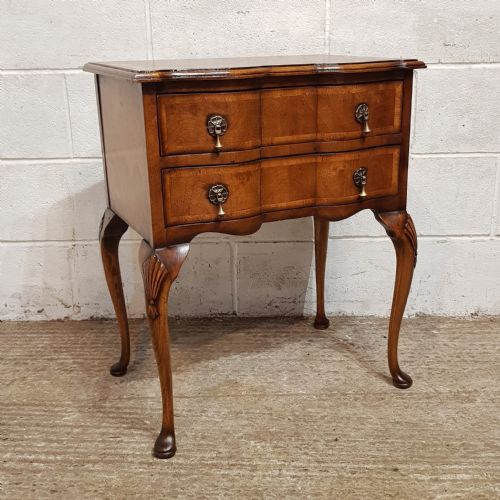


Edwardian Burr Walnut Chest
An edwardian burr walnut chest brings rich grain and compact elegance into a room, offering both practical storage and distinctive decorative warmth.
Edwardian Burr Walnut Chest
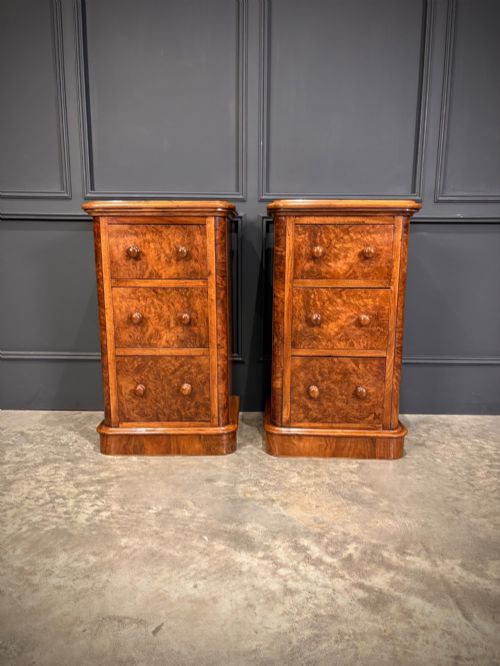
You are most likely to meet standard drawer configurations on this page, alongside narrower bedside variants and occasional pieces finished with matching veneers. The Edwardian examples sit alongside Victorian and later twentieth-century iterations sharing similar forms.
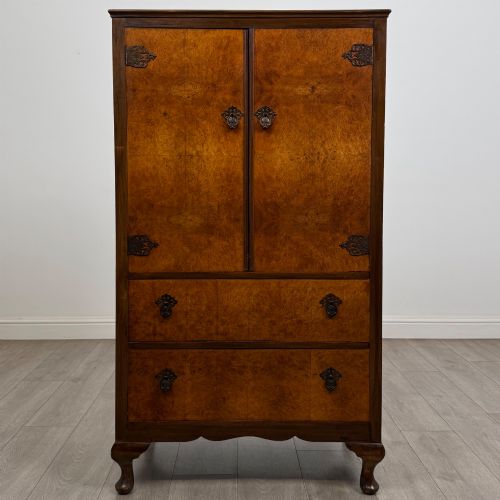
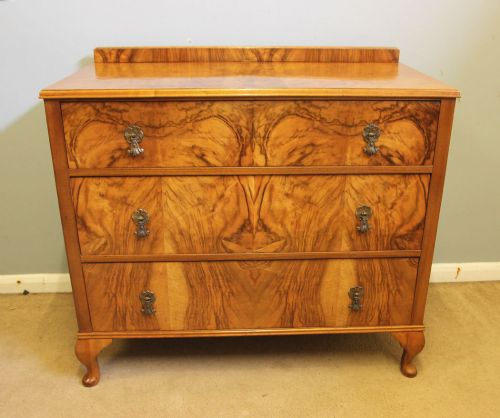
Makers of the period utilised the natural swirling patterns of walnut growth to create striking symmetrical panels on drawer fronts and tops. These storage items served polite household functions in bedrooms and dressing rooms, prioritizing visual texture alongside everyday utility.
How they were made
Cabinet makers constructed the foundational carcases using secondary timbers such as oak and pine before applying thin layers of burr walnut veneer. This technique allowed workshops to display highly decorative knot wood across large surfaces while maintaining structural stability.
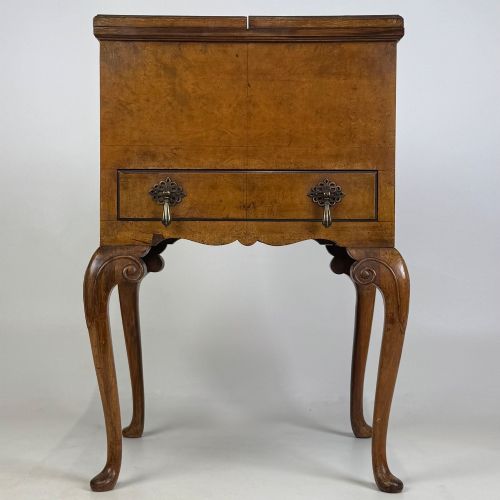
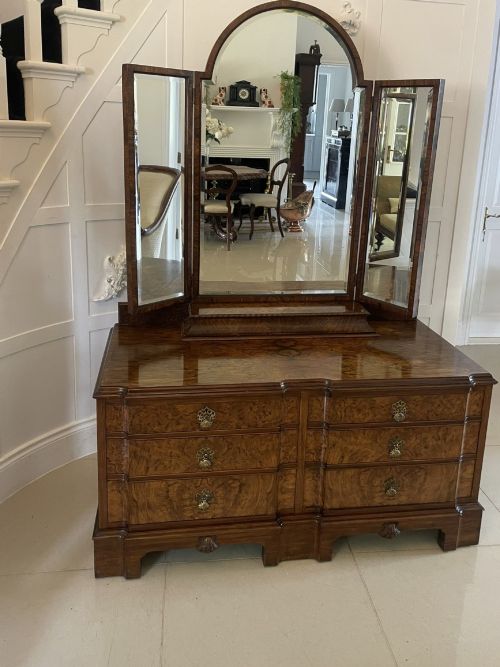
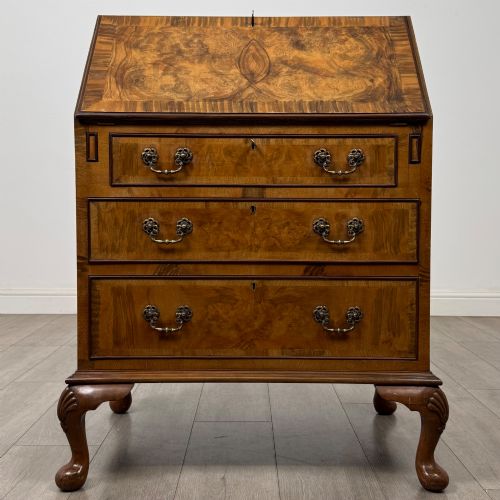
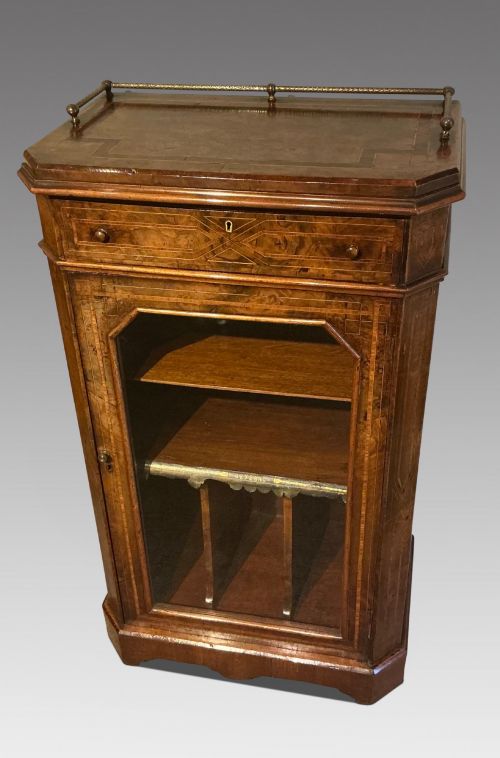
Brass handles, escutcheons, and occasional mirror glass or glazing completed the construction of these pieces. Workshops relied on precise matching of the walnut veneers to create continuous patterns across multiple drawer fronts.
Listings feature pieces spanning the Victorian and Edwardian eras through the 1920s and 1930s, constructed in walnut, burr walnut, oak, and pine.
What varies in quality
The distinction between ordinary production and superior work rests upon the selection and matching of the veneer. Workshops handling finer stock aligned the swirls of the burr grain meticulously across the entire front of a chest.
Secondary wood selection and the crispness of edge mouldings also separate standard cabinetwork from exhibition examples. Finer pieces demonstrate careful attention to internal drawer construction and hardware integration.
Maurice Adams·Whytock and Reid·WC Burt
The Edwardian Burr Walnut Chest Glossary
- Burr walnut
- A figured timber obtained from the knot growths of walnut trees, prized for its swirling grain patterns. Cabinet makers sliced this wood into thin veneers for decorative surfaces.
- Veneer
- A thin layer of figured wood applied to a stable secondary timber carcase. This technique allowed craftsmen to showcase expensive grain patterns economically.
- Serpentine front
- A furniture front curving outward in the centre and inward at the sides. This shape requires advanced woodworking skill to veneer accurately.
- Tallboy
- A tall chest of drawers, often constructed in two stacked sections. These items maximised vertical storage space in bedrooms.
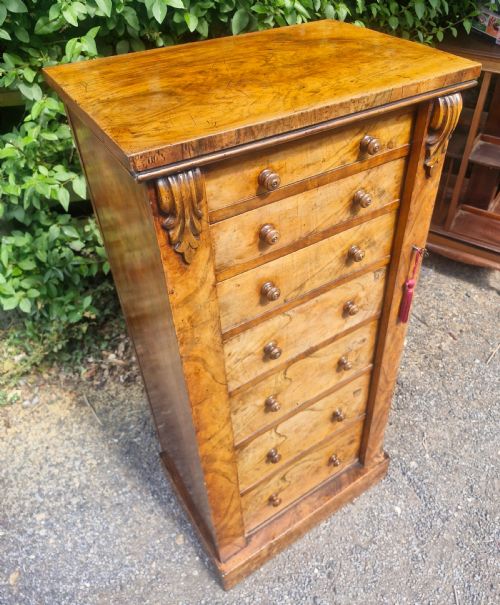
- Wellington chest
- A vertical locking chest of drawers secured by a hinged side locking bar. The design originated in the nineteenth century for secure document storage.
Edwardian Burr Walnut Chest: Frequently Asked Questions
How do I care for burr walnut?
Keep wooden furniture away from direct sunlight and excessive heat sources to prevent the veneer from drying or cracking over time. Dust gently with a dry cloth and apply occasional appropriate wax polish to maintain the surface.
Avoid using modern liquid sprays containing silicones or harsh chemicals. Proper humidity control in the room preserves both the secondary carcase and the delicate surface veneers.
Where should I place a bedside chest?
These compact storage items suit bedroom layouts alongside standard bed heights, providing convenient surface space for lamps and small objects. Their finished backs and detailed grain patterns allow them to sit effectively in various light conditions.
Ensure the dimensions match your specific clearance requirements, particularly where doors or adjacent furniture might restrict drawer opening.
Are these chests suitable for modern homes?
The compact proportions and warm tones of Edwardian drawer units integrate smoothly into contemporary interior schemes. They provide functional storage while introducing historic character and texture to a room.
Their varied drawer arrangements accommodate modern clothing or accessories while maintaining traditional aesthetic standards.