
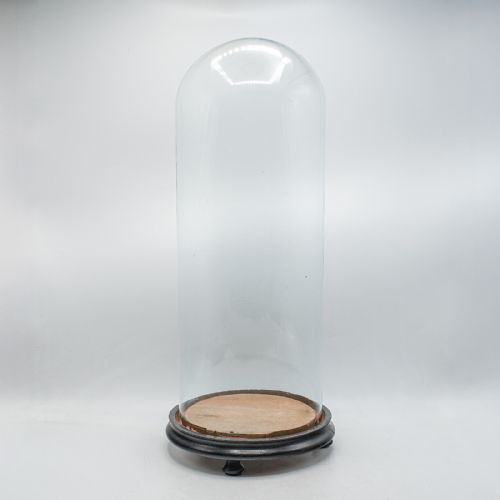


Ebonised Base Taxidermy
These ebonised base taxidermy pieces combine preserved specimens with dark wooden plinths and glass domes, bringing Victorian and Edwardian natural history straight into a room.
Ebonised Base Taxidermy
When you search for ebonised base taxidermy, you are looking at display domes, cloches and showcases protecting birds, dioramas and botanical specimens. The forms span tall display domes, oval collector's cases, ovoid clock domes and wide specimen showcases.
Most examples you meet on this page date from the Victorian and Edwardian periods, stretching from the 1860s through to approximately 1905. These pieces served as scientific study objects and parlour ornaments in British homes, housing specimens ranging from kestrels and birds of paradise to Indian stuffed birds.
The setup typically pairs a blown glass cover with a turned or moulded wooden base stained to resemble ebony. Certain pieces sit on timber plinths lined inside with fabric or baize, whilst others function as botanical collector's domes and ornament showcases.
Materials and construction
Makers utilised clear glass for the protective domes and cloches, paired with timber for the heavy circular, oval or ovoid bases. The wood received an ebonised finish to create a deep, dark appearance that contrasted with the specimens inside.
Interiors were frequently lined with fabric, velvet, felt or baize to provide a neat floor for the taxidermy mounts and botanical displays. The glass covers were blown by hand, often leaving minor bubbles and waviness in the pane.
Listings feature Victorian and Edwardian pieces incorporating glass, ebonised wood, timber, fabric, felt, velvet and baize.
Factors that separate examples
Quality rests significantly on the clarity and historic integrity of the blown glass dome, alongside the neatness of the ebonised turnings on the timber base. Original linings of velvet, felt or baize also contribute to the completeness of an antique display.
The skill of the taxidermy work dictates the overall desirability of the piece, with named practitioners commanding particular attention. The balance between the scale of the glass cover and the proportion of the wooden plinth determines visual success.
A Pollard·James Gardner
The Ebonised Base Taxidermy Glossary
- Ebonised wood
- Timber treated with stain or polish to imitate genuine ebony, providing a uniform dark finish for display bases.
- Glass dome
- A blown glass cover designed to protect delicate specimens from dust and handling.
- Cloche
- A bell-shaped glass cover traditionally utilised to shield plants or fragile objects.
- Collector's dome
- A specialised glass case built to house botanical specimens, insects or small taxidermy mounts.
- Baize
- A coarse woolen fabric frequently utilised to line the interior floors of display cases and bases.
Ebonised Base Taxidermy: Frequently Asked Questions
What periods do these pieces date from?
The pieces span the Victorian and Edwardian eras, with dates recorded from the 1860s through to circa 1905.
Most items you encounter cluster around the late Victorian period and the early twentieth century.
How were glass domes made originally?
Glassmakers blew the domes by hand, which explains why older examples display minor surface irregularities and bubbles.
The resulting covers were shaped to fit snugly into grooves cut into the ebonised wooden bases.
What was inside these display cases?
The interiors contained taxidermy specimens such as kestrels, birds of paradise and various foreign birds.
Some examples also served as botanical collector's domes for plants and scientific specimens.
How do you care for an antique dome?
Keep the glass clean with a soft dry cloth and avoid moving the heavy dome by the top alone.
Position the piece away from direct sunlight to protect the fragile feathers and fabric linings inside.