






Easel Back Picture Frame
An easel back picture frame holds a photograph upright with a hinged rear leg, offering a portable display solution for desks and mantelpieces.
Easel Back Picture Frame
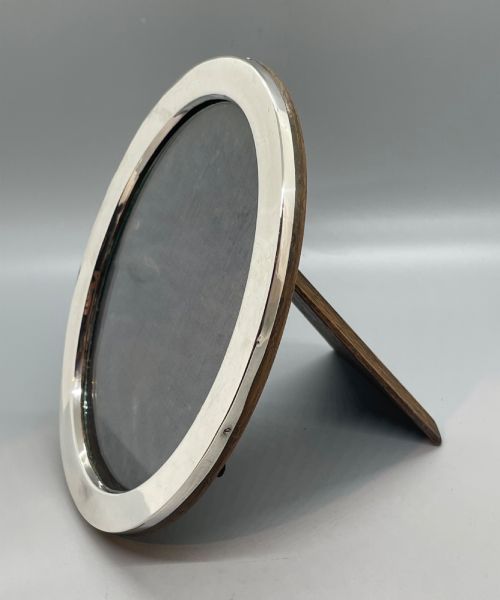
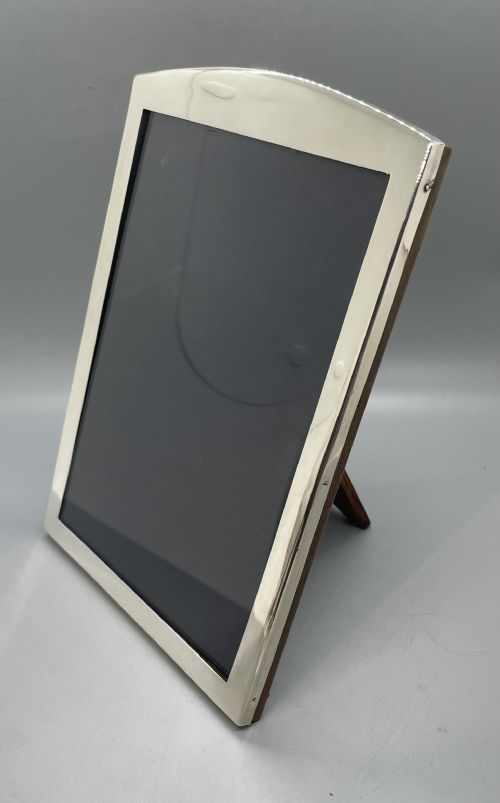
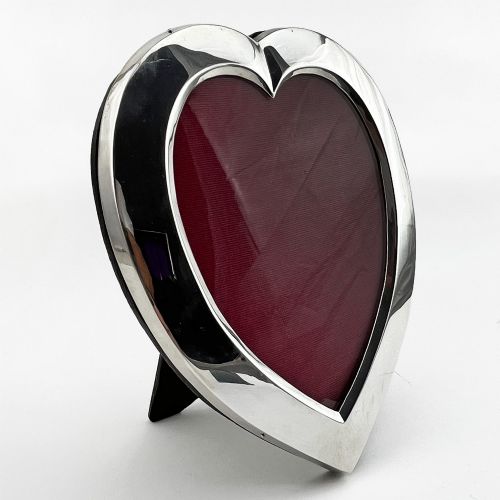
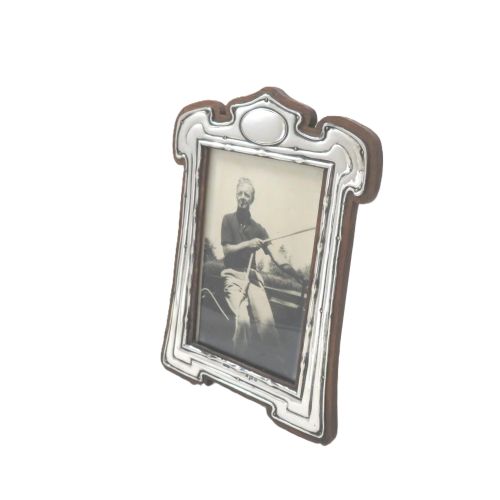
An easel back picture frame is designed for domestic display, featuring a folding rear support strut that allows the frame to stand securely on flat surfaces. The pieces encountered here span from the late Victorian and Edwardian eras through the mid-twentieth century, showcasing both British assay office hallmarks and continental European silver work.
Makers ranged from notable silversmiths operating in Birmingham, Chester, and London to continental retailers, producing items intended for intimate domestic portraits. The survival of the original backing and integral stand remains central to the character of these functional desk accessories.
Materials and construction
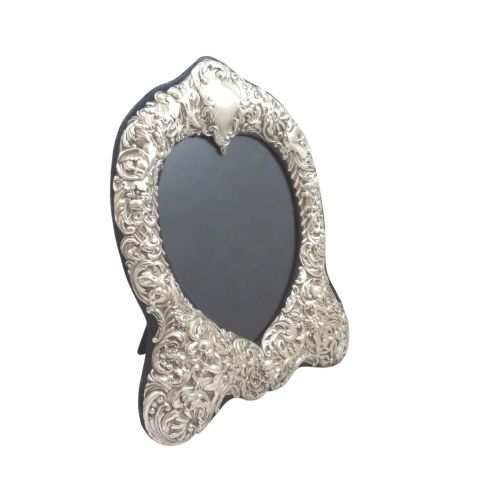
Construction relies upon thin gauge sterling silver or 800 silver sheets shaped by stamping, embossing, or hand engraving to form the decorative border. This metal front is mounted securely onto a rigid structural backing made of wood, oak, or card, which provides the necessary thickness to support the display glass.
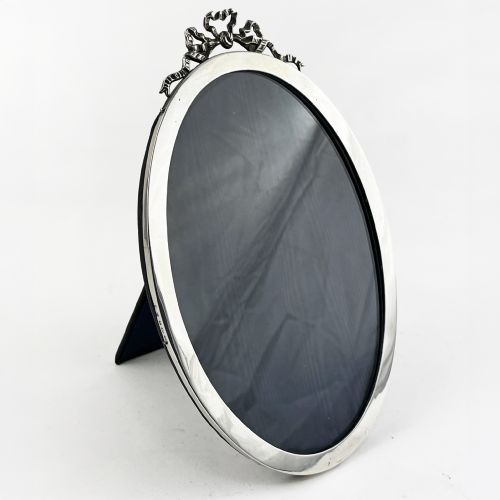
The characteristic rear stand is typically integrated into a fitted backing material constructed from leather, velvet, or fabric, secured with small brass hinges and pivoting arms. Glass protects the photographic aperture, held in place behind the silver bezel by small metal tabs or sliding wooden panels.
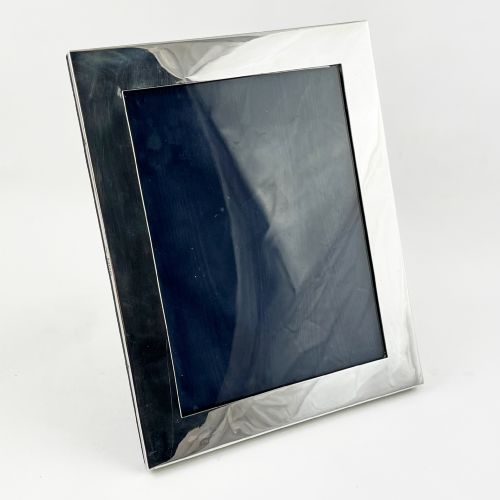
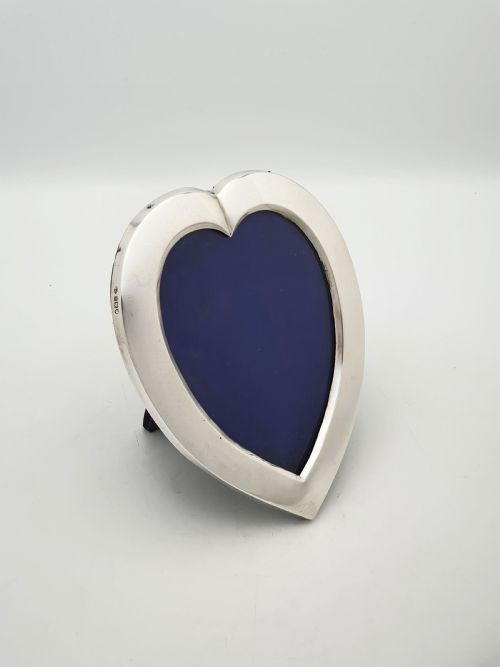
The inventory includes heart-shaped, oval, and rectangular formats backed with wood, leather, or velvet.
Determinants of quality
Quality in these frames is determined by the weight and gauge of the silver used for the front mount, alongside the crispness of the embossed or engraved detailing. Finer examples display deep relief work, clear assay office marks, and substantial metal thickness rather than thin foil overlays.
The integrity of the structural backing and the original supporting easel leg heavily influence the piece. Superior items retain their original fitted leather, velvet, or oak backs with functioning hinges, rather than later replacement struts or panels.
William Comyns·Henry Matthews·Walker & Hall·Pinci Roma
The Easel Back Picture Frame Glossary
- Easel back
- A hinged rear strut attached to a frame that allows it to stand upright on a flat surface. This structural addition distinguishes desk frames from wall-hanging alternatives.
- Sterling silver
- An alloy containing 92.5 percent silver by weight, widely used for British picture frames bearing assay office hallmarks. This metal standard ensures durability while maintaining a bright reflective surface.
- Assay mark
- A stamped symbol indicating the purity of the metal, the town of testing, and the year of manufacture. These small stamps provide precise dating for British pieces.
- Micro mosaic
- Tiny coloured glass tesserae assembled to form intricate pictorial motifs on the frame surface. This technique appears on nineteenth-century continental gilt metal examples.
- Bezel
- The grooved rim or frame that holds the glass and photograph securely in place. It forms the primary decorative border visible from the front.
Easel Back Picture Frame: Frequently Asked Questions
How do I date a silver frame?
Dating relies upon the small stamped assay office hallmarks usually located near the outer edge of the silver mount. These letters and symbols indicate the specific year the piece was tested and registered.
Additional dating clues come from the overall style, such as Victorian scrollwork or Edwardian plain borders, alongside the construction methods used for the backing board.
What materials support the back?
Many frames utilise fitted wooden panels made of oak or pine, which are then covered in black leather, blue velvet, or fabric. The hinged easel leg is usually anchored directly into this inner wooden structure.
On finer examples, the backing materials are colour-coordinated to complement the silver front and provide a stable angle for desk display.
Are these frames meant for desks?
These pieces were originally manufactured for domestic placement on writing desks, dressing tables, and mantelpieces where portraits of family members could be viewed closely. The built-in easel support allowed them to stand without requiring wall fixings.
Today, they serve the same decorative purpose in domestic interiors, holding contemporary prints or vintage photographs alike.
How do I clean the silver?
Cleaning requires a soft cloth and a mild silver polish applied gently around the embossed or engraved details to avoid removing the underlying metal. Care must be taken to protect fragile backing materials like velvet or leather from moisture during the process.
Avoiding harsh chemical dips preserves the original patina and any remaining dark highlights in recessed areas of the design.