




Drop Stud Earrings
Drop stud earrings combine the security of a fixed post with the movement of a dangling cluster, spanning periods from Edwardian to the mid-twentieth century.
Drop Stud Earrings
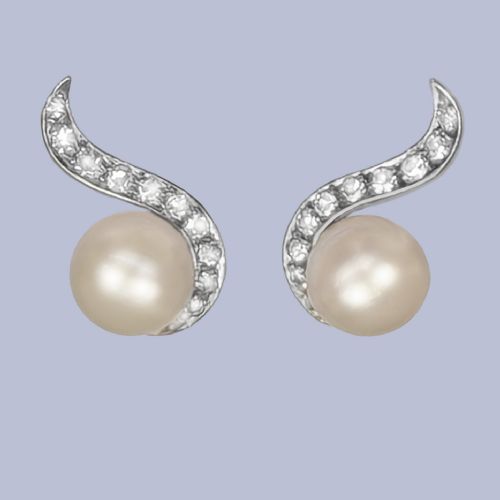
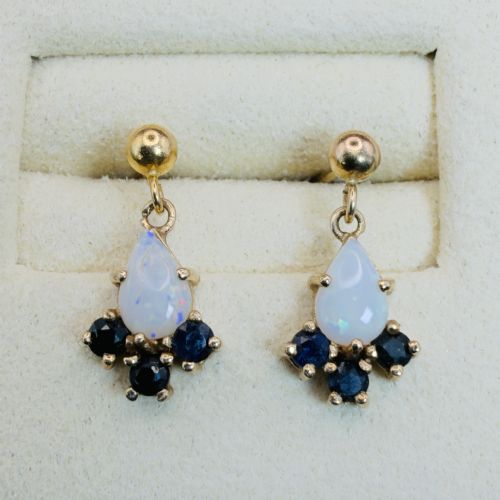
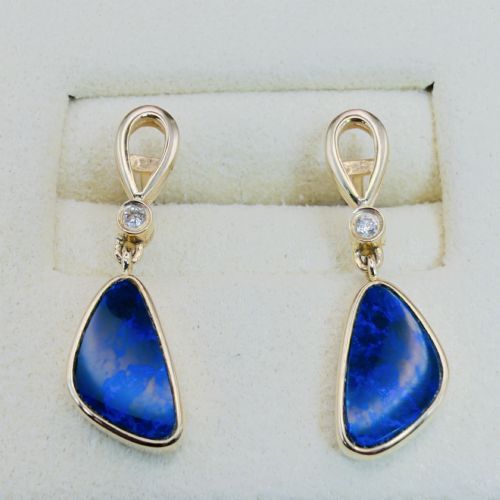
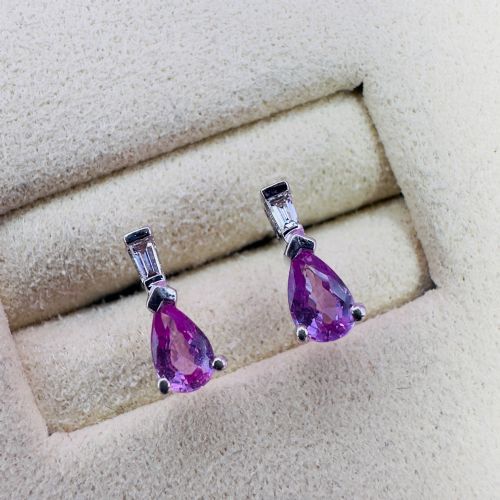
When people search for drop stud earrings, they find a hybrid design that sits close to the earlobe before suspending gemstones or pearls below. These pieces bridge the gap between simple studs and elaborate chandelier designs by offering subtle motion without excessive weight.
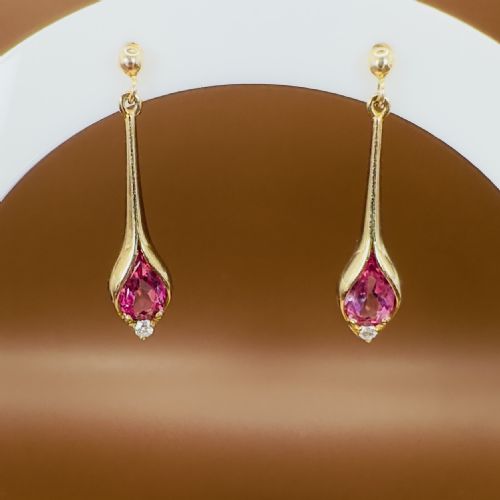
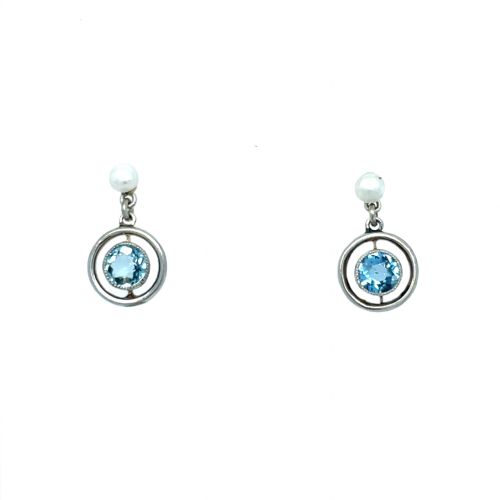
The selections span distinct historical periods, with Edwardian examples sitting alongside Art Deco geometry and 1950s or 1960s modernist clusters. Pear cuts and oval drops dominate the forms, suspended on straightforward posts or secure clip mechanisms.
Materials range from 9ct yellow and white gold to platinum, set with diamonds, pearls, aquamarines, garnets and opals. This variety reflects mid-century tastes alongside revivals of earlier Victorian and Edwardian aesthetics.
Materials and Construction
Goldsmiths utilised 9ct and 18ct gold alongside platinum to fabricate the structural mounts for these earrings. White gold and platinum gained particular favour during the Art Deco era to contrast sharply against diamonds and coloured gems.
Gemstones including sapphires, topazes, opals and amethysts are commonly faceted into pear or oval cuts to catch the light during movement. Pearls and coral provide opaque, rounded counterpoints to the faceted stones within cluster configurations.
Drop Stud Earrings Retail Price Guide 2026
Typical asking prices for drop stud earrings among the pieces listed under this phrase on Sellingantiques today, from the lower quarter to the upper quarter. They describe what is for sale here now, not the wider market.
Materials recorded on this page include black boulder opal, pink topaz, jadeite, hematite, and green chalcedony.
Assessing Quality and Execution
The calibre of a pair rests upon the symmetry of the matching stones and the precision of the setting work. Master lapidaries ensured that dangling elements shared exact weight distribution and colour saturation.
Structural integrity at the hinge or post junction determines longevity, as drop designs endure continuous movement during wear. Heavier platinum and 18ct gold frames offer greater durability than thinner 9ct alternatives.
The Drop Stud Earrings Glossary
- Cluster
- A stone setting arrangement where a central gem is surrounded by a ring of smaller stones. This technique maximises visual impact and light reflection.
- Pear cut
- A teardrop-shaped gemstone combining a brilliant-cut round end with a pointed apex. It is frequently utilised in dangling drop configurations.
- Post and clip
- A fastening combination utilising a traditional pin through the piercing paired with a hinged clip for stability. This mechanism supports heavier drop weights securely against the earlobe.
- Platinum
- A dense, silvery-white precious metal prized for its strength in fine jewellery making. It holds delicate gemstone settings securely without adding excessive bulk.
Drop Stud Earrings: Frequently Asked Questions
How do drop stud earrings differ from standard drops?
Standard drop earrings typically suspend directly from a hook or wire passing through the piercing. Drop stud earrings secure firmly via a fixed post against the lobe, anchoring the dangling portion just below.
This configuration keeps the decorative cluster oriented forward and prevents the earring from rotating during wear.
Can I wear vintage drop earrings every day?
Daily wear depends on the specific materials and construction of the piece. Sturdier gold settings with robust posts handle regular rotation well, whereas delicate antique Edwardian mounts require more mindful handling.
Gemstones like pearls and opals also demand gentle care to avoid surface scratches from daily friction.
How do I identify an Art Deco pair?
Art Deco pieces display geometric precision, stark colour contrasts, and frequent use of platinum or white gold. Look for trapezoid cuts, calibré-cut sapphires, and symmetrical arrangements that reflect 1920s modernism.
These designs often favour sharp lines over the flowing curves typical of earlier Edwardian work.