

Dog Clip Watch Chain
A dog clip watch chain secures a pocket timepiece with a functional spring lever, translating utility into substantial jewellery.
Dog Clip Watch Chain
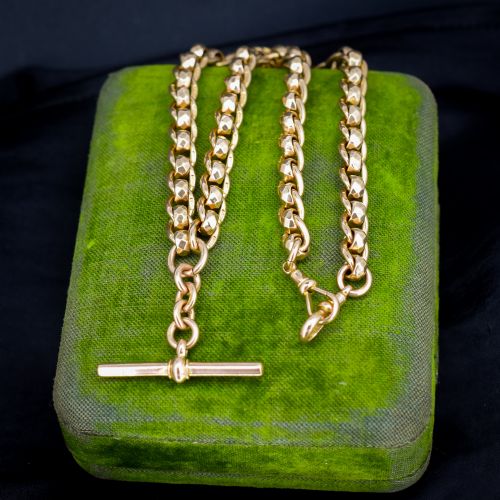
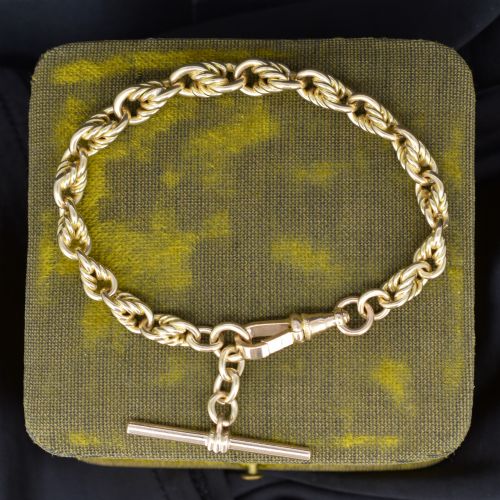
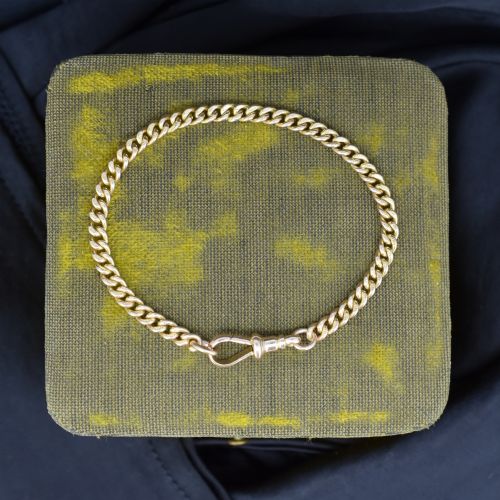
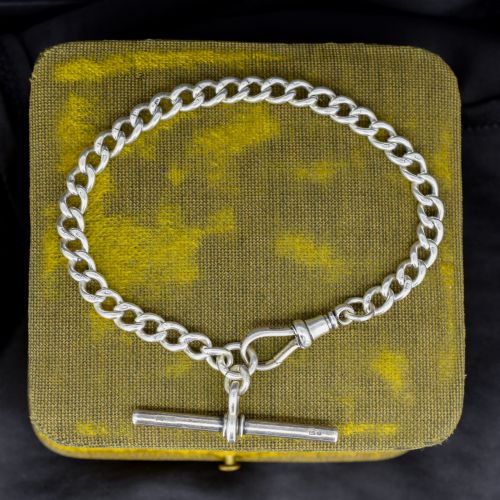
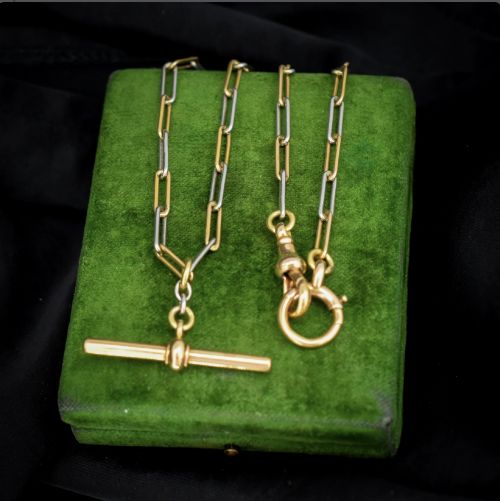
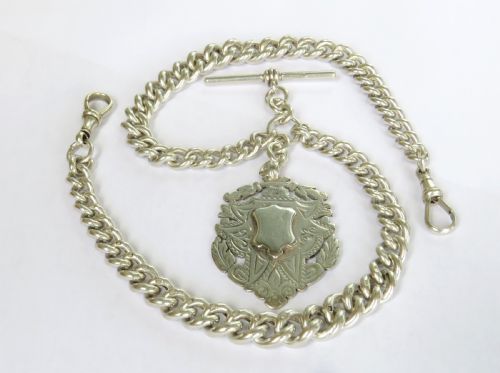
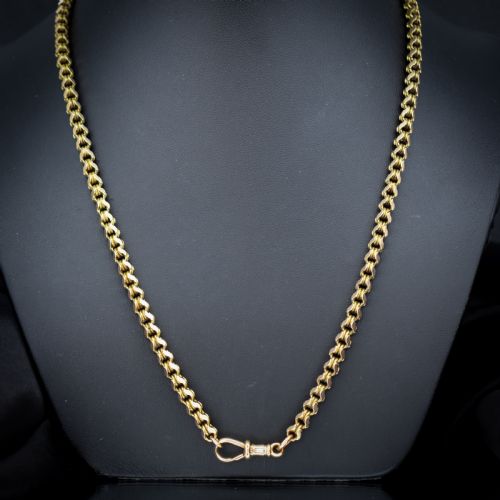
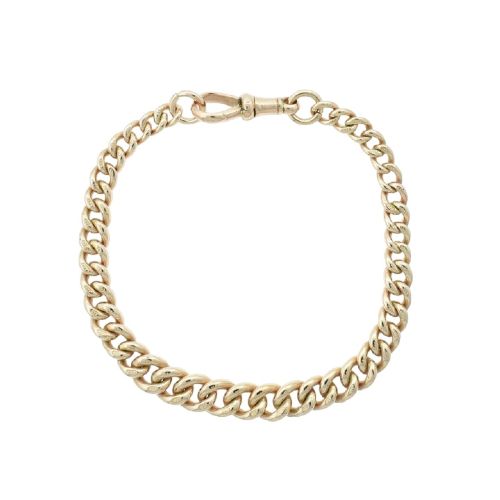
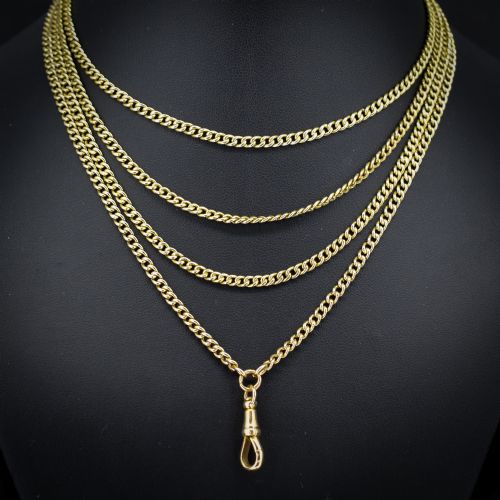
A dog clip watch chain functions as a versatile piece of jewellery originating from pocket watch equipment, now worn as necklaces and bracelets. These items appear across Victorian, Edwardian, and later twentieth-century periods, spanning lengths from short wristlets to long guard chains.
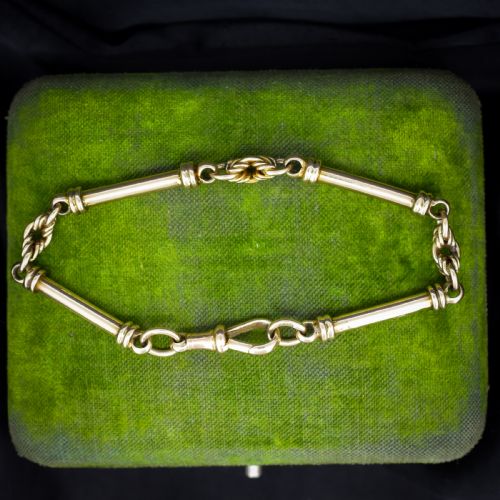
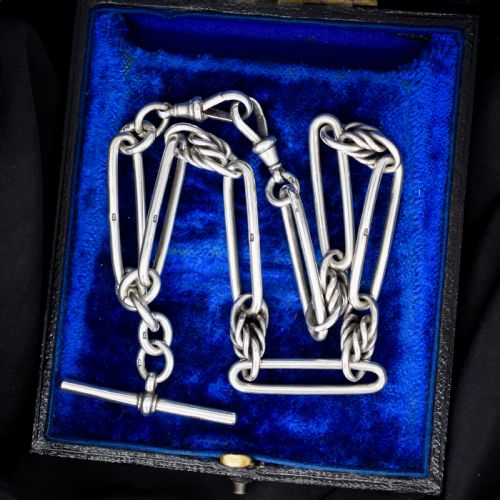
The primary forms include Albert chains, long guard chains, and various link necklaces fitted with spring-loaded swivel clasps. Buyers frequently encounter 9ct gold, 15ct gold, and sterling silver pieces featuring trombone, curb, belcher, and fancy link patterns.
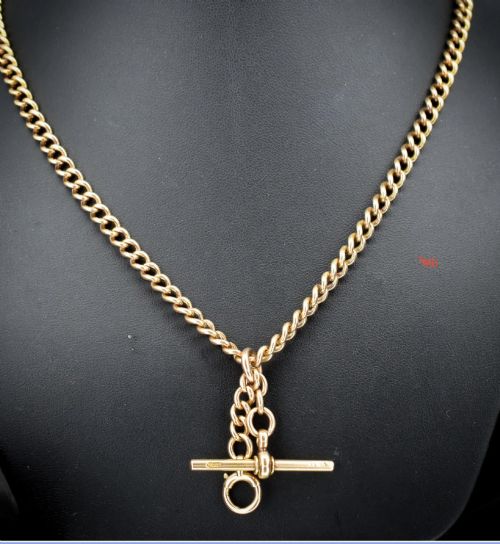
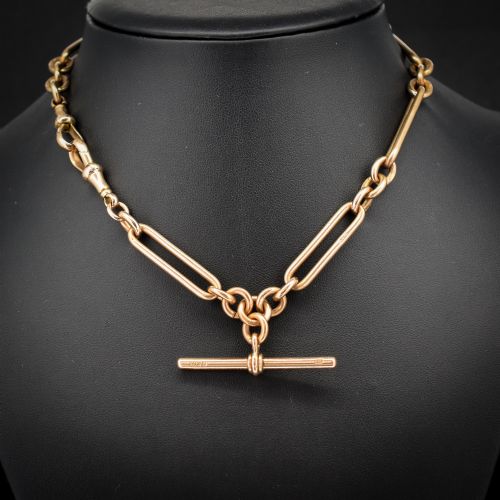
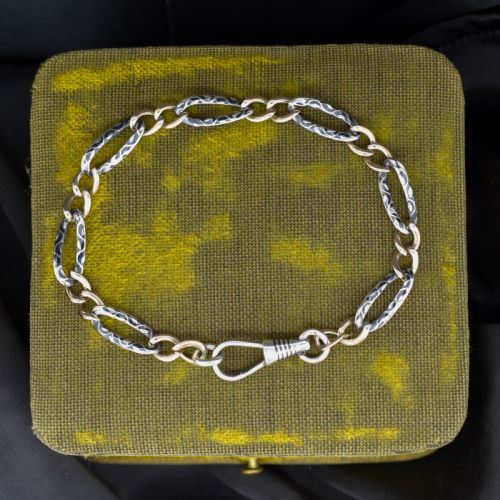
Shorter lengths often function as bracelets or necklaces with T-bars and dog clips, whilst longer continuous lengths double around the neck. The integration of bolt rings and swivel mechanisms allows the wearer to attach pendants or secure the chain end to end.
Materials and Construction
Goldsmiths and silversmiths utilised 9ct gold, 15ct gold, 18ct gold, and sterling silver to fabricate these links by hand or using early mechanical stamping. Metal colour varies through yellow, rose, and white gold iterations alongside niello silver accents.
Individual links, whether tubular bars, love knots, paper links, or flat curbs, connect through soldered or closed rings to form flexible strands. The defining dog clip mechanism incorporates an internal steel spring that operates the thumb lever to open and close the snap hook.
Dog Clip Watch Chain Retail Price Guide 2026
Typical asking prices for dog clip watch chain among the pieces listed under this phrase on Sellingantiques today, from the lower quarter to the upper quarter. They describe what is for sale here now, not the wider market.
Periods represented across the inventory include Victorian, Edwardian, and the early twentieth century up through nineteen sixty.
Quality Variations
Substance and weight distinguish heavier solid metal constructions from lighter hollow or stamped alternatives. Heavier chains maintain structural integrity across decades of daily wear without the denting or crushing seen in thinner walled examples.
The precision of the link junctions and the snap tension of the dog clip dictate mechanical excellence. Crisp hallmarking and firm spring action indicate superior manufacturing standards upheld by regional assay offices.
The Dog Clip Watch Chain Glossary
- Dog clip
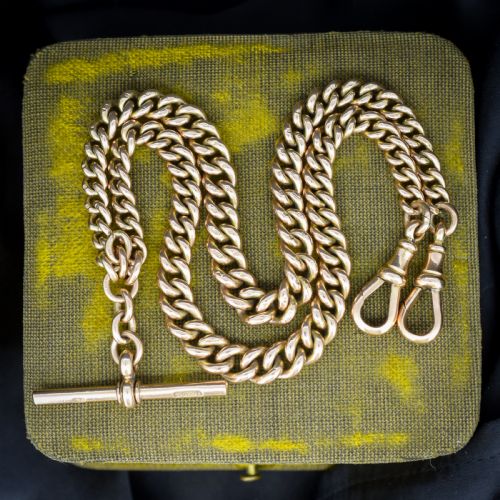
- A spring-loaded swivel clasp resembling a dog leash snap hook. This mechanism secures pocket watches or allows the chain to fasten onto itself.
- T-bar
- A short transverse bar attached to the centre of a watch chain. It slips through a buttonhole to anchor the chain securely.
- Long guard chain
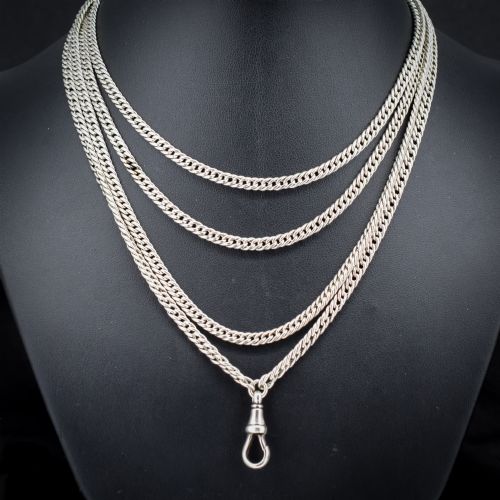
- An extended necklace length designed to loop multiple times around the neck. These pieces often incorporate slide mechanisms and dog clips.
- Graduated link
- A pattern where links decrease in size progressively from the centrepiece towards the ends. This layout distributes visual weight evenly across the chain.
Dog Clip Watch Chain: Frequently Asked Questions
How do I wear a dog clip watch chain as a necklace?
Open the spring-loaded dog clip and attach it directly to any link along the chain to create a custom-length loop. Alternatively, clip it to a bolt ring or incorporate a pendant.
Longer guard chains wrap twice around the neck for a layered effect, whilst shorter Albert chains rest neatly on the collarbone with the T-bar acting as a decorative pendant drop.
What is the difference between an Albert chain and a guard chain?
An Albert chain is a shorter length traditionally meant for securing pocket watches, often fitted with a T-bar and single or double dog clips. These sit across a waistcoat or function as shorter necklaces and bracelets.
Guard chains measure significantly longer, sometimes exceeding fifty inches, and were originally used to suspend long operational chains or opera glasses without a T-bar.
How can I date my gold watch chain?
Examine the links and the dog clip for small stamped hallmarks indicating the assay office, metal purity, and date letter. British pieces frequently bear stamps for specific years and gold carat standards such as 9ct or 15ct.
Stylistic elements like trombone links or love knot motifs also point towards Victorian and Edwardian manufacturing periods when specific link shapes gained popularity.
Are these chains solid gold or plated?
The pieces listed here consist of solid precious metals such as 9ct gold, 15ct gold, 18ct gold, and sterling silver rather than gold plating. Hallmarks stamped directly onto the metal verify the solid purity standard.
Solid construction ensures the metal retains its integrity through generations of wear, allowing the links and dog clips to be polished and repaired safely.