


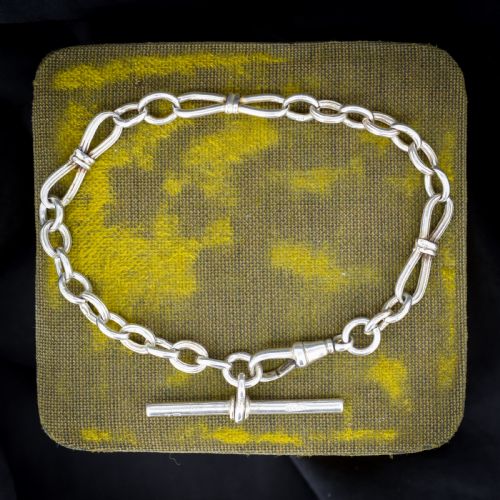

Dog Clip Bracelet
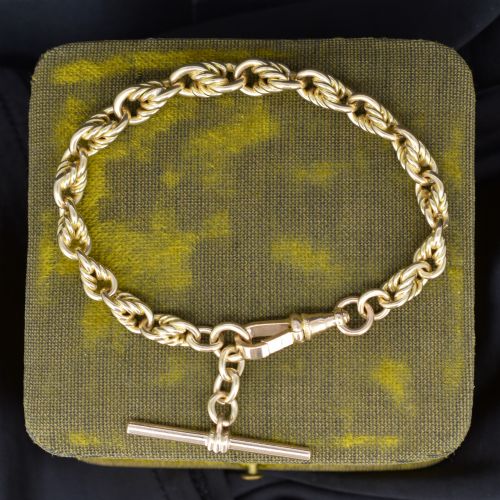
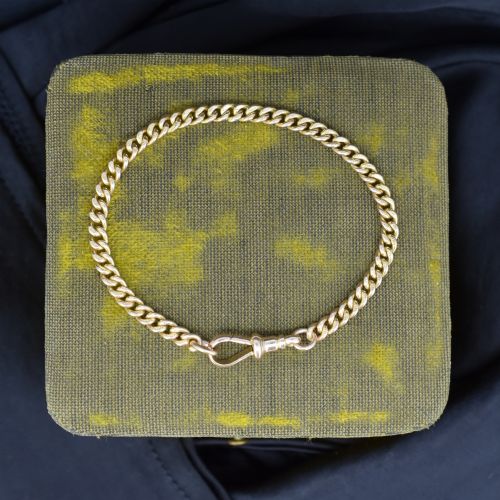
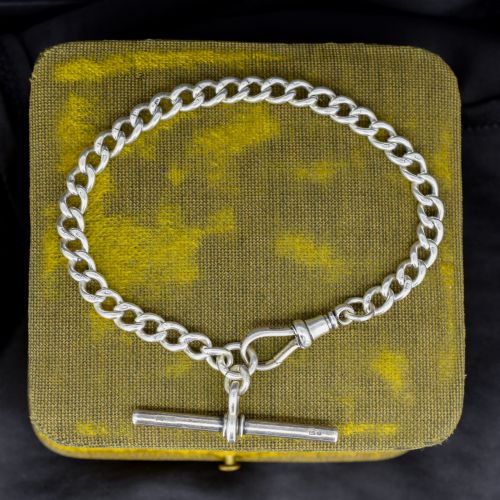
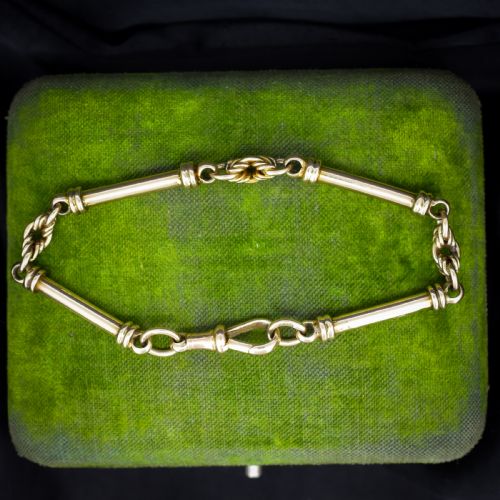
A dog clip bracelet is a sturdy antique wrist ornament fitted with a functional swivel clasp originally designed for watch chains.
Dog Clip Bracelet
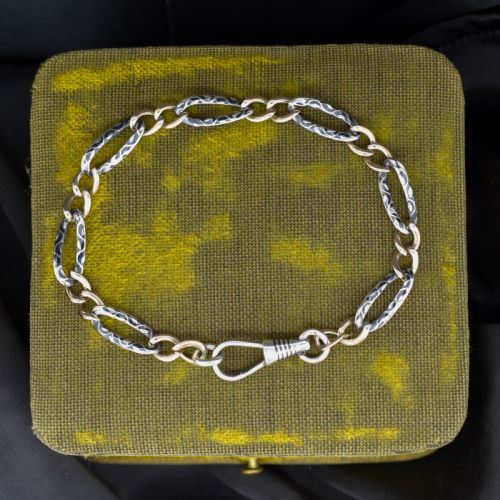
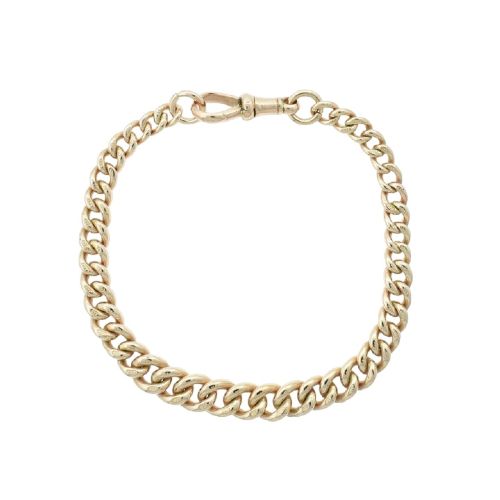
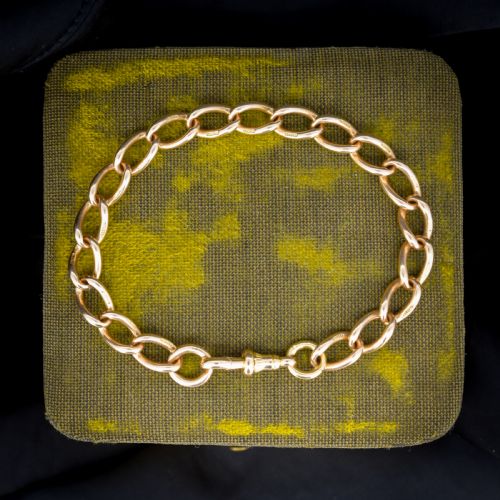
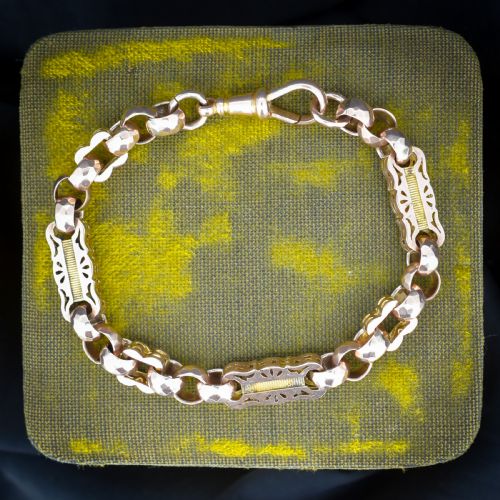
A dog clip bracelet pairs substantial link chains with a distinctive spring-loaded swivel fastening mechanism borrowed from utilitarian watch attachments. These pieces originate from the Victorian, Edwardian, nineteen-hundreds, and nineteen-sixties eras, showcasing robust construction meant for daily wear.
The defining characteristic remains the spring-gate dog clip itself, which serves as both the functional clasp and a prominent decorative feature at the centre of the wrist.
How they were made
Metals span sterling silver, niello silver, nine-carat yellow gold, nine-carat rose gold, and fifteen-carat gold, reflecting the prevailing preferences of the nineteenth and twentieth centuries. Goldsmiths and silversmiths formed individual links by hand or utilised early mechanical stamping to create uniform curb, belcher, and fancy link patterns.
The dog clips themselves require precise spring tension within a swivel housing, demanding meticulous metalworking skill to ensure long-term durability. Artisans frequently combined differing gold colours or integrated decorative elements like stars and bars directly into the chain structure.
Dog Clip Bracelet Retail Price Guide 2026
Typical asking prices for dog clip bracelet among the pieces listed under this phrase on Sellingantiques today, from the lower quarter to the upper quarter. They describe what is for sale here now, not the wider market.
Listings span Victorian, Edwardian, nineteen-hundred, and nineteen-sixty periods, utilising sterling silver, niello, and gold up to fifteen carats.
What varies in quality
The weight of the metal and the substantial feel of the links distinguish heavier archival pieces from lighter everyday wearable items. Heavier chains demand more precious metal and often retain crisper detailing on fancy links and swivel mechanisms.
The integrity of the spring mechanism within the dog clip determines its ongoing usability and mechanical preservation. Pieces that maintain strong snap action in the gate and smooth rotation in the swivel demonstrate superior original manufacture.
The Dog Clip Bracelet Glossary
- Dog clip
- A spring-loaded swivel clasp historically used to secure pocket watches to waistcoats or watch chains. This mechanism forms the primary closure on these bracelets.
- Curb link
- A chain design featuring interlocking uniform links that lie flat against the wrist. This pattern provides significant structural strength for daily wear.
- Belcher link
- A chain style made of broad, slightly rounded links that are thicker than they are wide. This form offers a classic appearance frequently seen on Victorian examples.
- Niello
- A black metallic alloy of sulphur, silver, lead, and copper used as an inlay on engraved metal surfaces. It creates striking dark contrasts against silver backgrounds.
- T-bar
- A small horizontal metal bar attached by a short chain drop, originally designed to slip through a waistcoat buttonhole. These frequently accompany watch chain bracelets.
Dog Clip Bracelet: Frequently Asked Questions
What is a dog clip bracelet?
A dog clip bracelet is a piece of arm jewellery constructed from a linked chain and secured by a spring-gate swivel clasp. These items frequently derive from converted nineteenth and early twentieth-century pocket watch chains.
They combine robust utilitarian hardware with decorative link patterns, making them practical for daily wear while retaining distinct historical character.
How do you open a dog clip?
To open the dog clip, press the small protruding lever or thumbpiece inward toward the body of the clasp to compress the internal spring. This opens the gate, allowing the loop to attach to a ring or link.
Releasing the lever causes the spring to snap the gate shut securely, holding the bracelet in place on the wrist.
What metals are used in these bracelets?
These pieces utilise sterling silver, niello silver, nine-carat yellow gold, nine-carat rose gold, and higher-purity fifteen-carat gold. Different periods favoured particular alloys, such as rose gold during the Victorian era and yellow gold in Edwardian pieces.
Silver variants often feature intricate detailing or contrasting black niello inlay work alongside traditional polished finishes.
How do I care for antique gold and silver?
Maintain your bracelet by storing it flat in a dedicated box to prevent the heavy links from tangling or scratching. Avoid wearing it during rigorous physical activities that might strain the swivel mechanism of the dog clip.
Clean the metal gently with a soft microfibre cloth, keeping harsh chemical dips away from niello work and hollow links.