

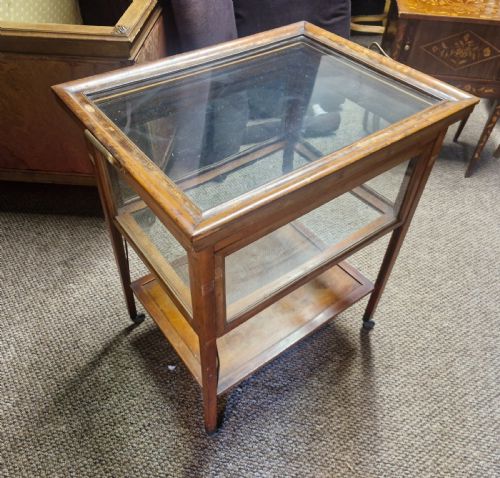


Display Tray Table
A display tray table brings together the utility of a serving surface and the theatre of a showcase, typically arriving in mahogany, satinwood, or brass from the Edwardian era or the nineteenth century.
Display Tray Table
A display tray table operates as both a functional piece of furniture and a platform for presenting objects, spanning occasional tables, étagères, and tea trolleys. These pieces often feature removable trays or glass-topped compartments designed to keep items secure while visible.
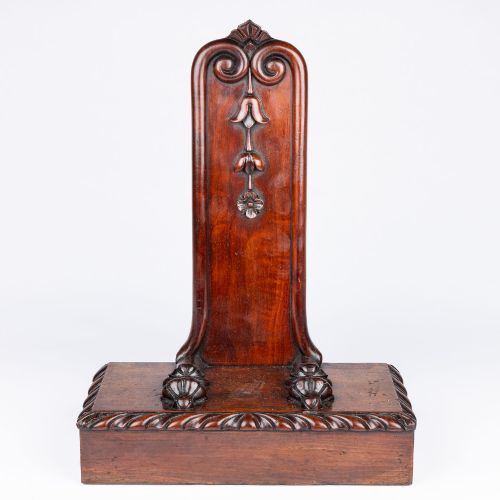
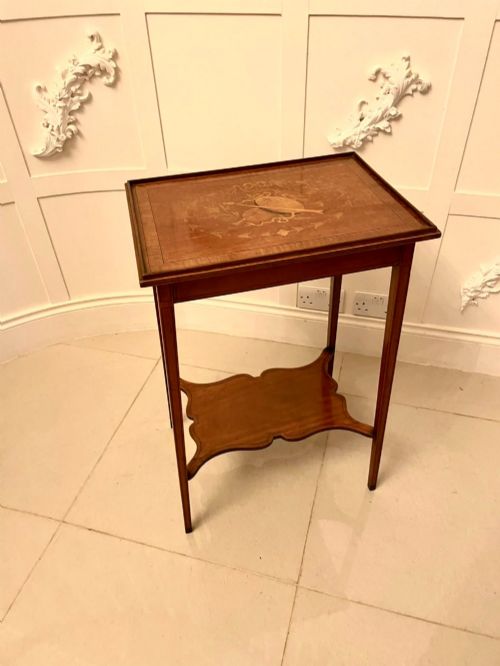
Most examples encountered on this page date from the Edwardian period, the nineteenth century, and the late Victorian era, with occasional incursions into Regency and Georgian styles. Such tables appear frequently in mahogany and satinwood, sometimes taking the form of two-tier etageres or side tables.
The domestic role of these tables has shifted from formal tea service and the display of silver plate to general interior decoration and storage. Buyers select them to anchor a room while offering a dedicated surface for small collectables, glassware, or porcelain.
Materials and construction
Makers utilised solid timbers and veneers, predominantly pairing mahogany and satinwood with brass mounts, glass inserts, and mirrored surfaces. Marquetry and inlay feature strongly on Edwardian and Sheraton Revival pieces, adding decorative contrast to the wood grain.
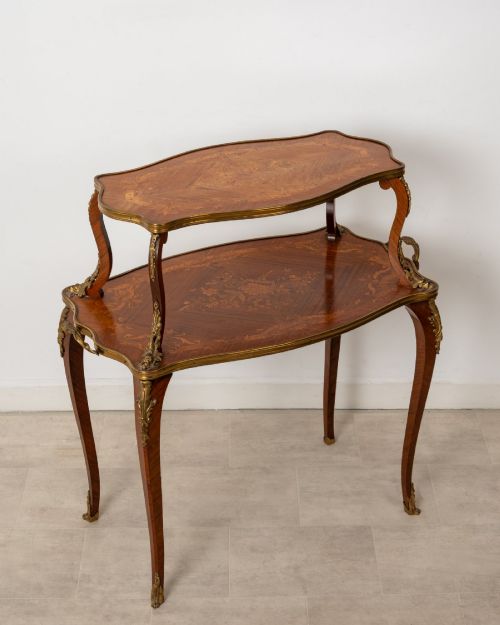
Structural forms rely on tiered configurations, such as the two-tier étagère, supported by slender legs or pedestals. Metal elements like silver plating, brass, and mirrored glass create reflective qualities that enhance the display function of the upper tray or plateau.
Display Tray Table Retail Price Guide 2026
Typical asking prices for display tray table among the pieces listed under this phrase on Sellingantiques today, from the lower quarter to the upper quarter. They describe what is for sale here now, not the wider market.
The inventory includes two-tier étagères, drinks cabinets, and mirrored plateau tables.
Distinctions in quality
Quality rests upon the precision of the cabinet work, particularly in the execution of marquetry, inlay, and the joinery connecting multiple tiers. Superior examples demonstrate tight joints, carefully selected timber grains, and well-fitted glass or mirrored trays that sit flush within their frames.
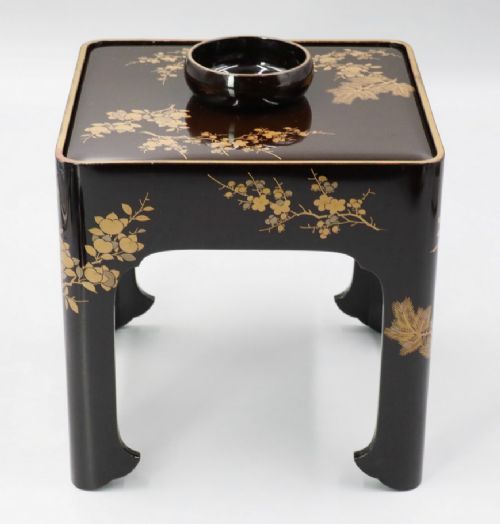
The refinement of secondary materials also separates standard production from finer pieces. Heavy cast brass, genuine silver plating, and carefully polished lacquer indicate a higher tier of manufacture, whereas simpler constructions rely on plain mahogany or oak without decorative banding.
The Display Tray Table Glossary
- Étagère
- A set of open shelves or trays for displaying small objects. This tiered furniture form became popular in the nineteenth century for drawing rooms.
- Marquetry
- Decorative veneer work forming pictures or geometric patterns using various woods. Craftsmen cut thin slices of tinted or naturally coloured timber to fit precisely into a design.
- Plateau
- A mirrored or metal tray placed in the centre of a table or sideboard. These surfaces reflect candlelight and showcase silver or glass tableware.
- Satinwood
- A durable, lustrous timber with a yellowish-golden sheen used extensively in cabinet making. It frequently appears as decorative banding or inlay on mahogany furniture.
- Sheraton Revival
- A late nineteenth and early twentieth-century design style inspired by the late eighteenth-century work of Thomas Sheraton. Pieces in this style utilise light woods, symmetrical inlay, and neoclassical motifs.
Display Tray Table: Frequently Asked Questions
What is an etagere?
An etagere is a piece of furniture consisting of multiple open shelves or trays designed for display. These tiers allow for the arrangement of decorative objects across different levels.
They appear frequently in mahogany and satinwood from the Edwardian period and the nineteenth century. The design serves both practical storage and visual presentation.
How do I date a display table?
Dating relies on identifying the primary timbers, construction techniques, and stylistic revivals present in the piece. Edwardian and late nineteenth-century items often combine mahogany with delicate satinwood inlay.
Earlier Georgian and Regency examples display heavier proportions and different joinery methods. Examining the underside and secondary woods helps confirm the period of manufacture.
Where should I place a tray table?
These tables suit sitting rooms, hallways, or studies where they can function as occasional surfaces or display stands. Their compact footprints allow them to sit beside seating or against walls without dominating the room.
Tables with glass trays or mirrored surfaces work well to reflect light in darker corners. They accommodate small collections, lamps, or serving items depending on their depth.
Are the trays removable?
Many tray tables feature lifts or drop sides that allow the upper surface to be detached from the base. This characteristic harks back to their original domestic use for serving tea or carrying items.
Fixed trays are also common, particularly on etageres and multi-tiered occasional tables. Checking the specific construction of each piece clarifies whether the top functions independently.