
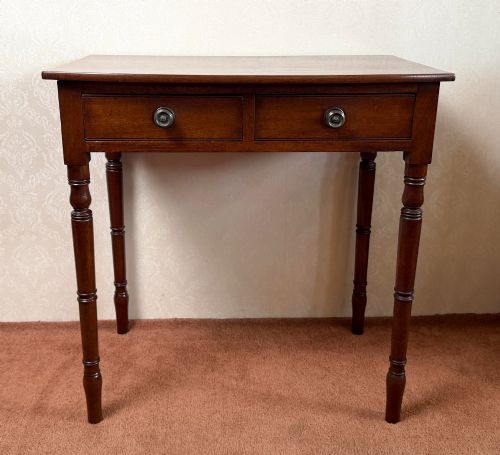
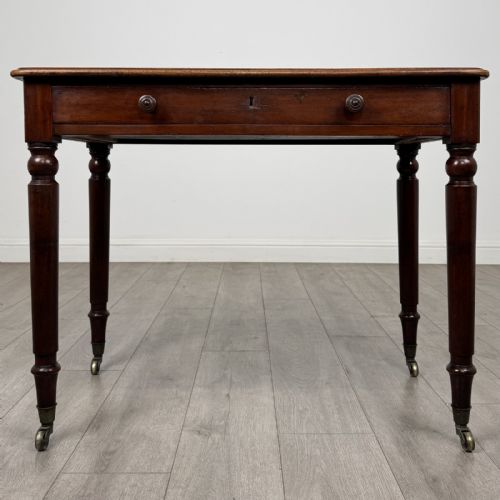
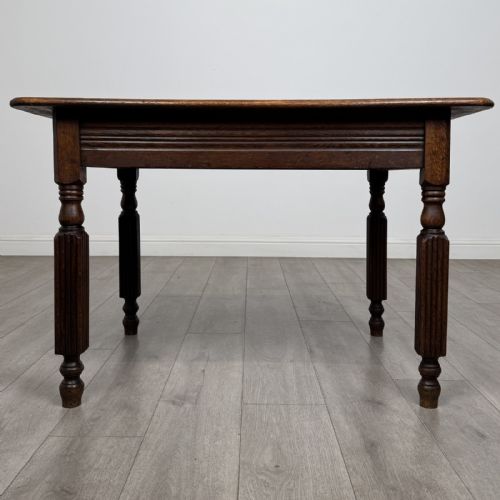
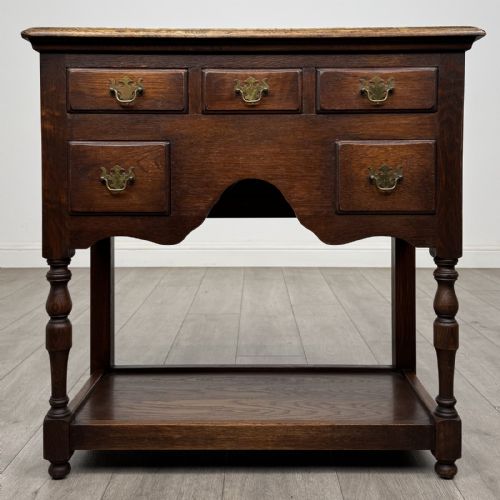
Desk with Turned Legs
A desk with turned legs offers sturdy character and practical writing space, shaped from timber and shaped by the hands of earlier cabinetmakers.
Desk with Turned Legs
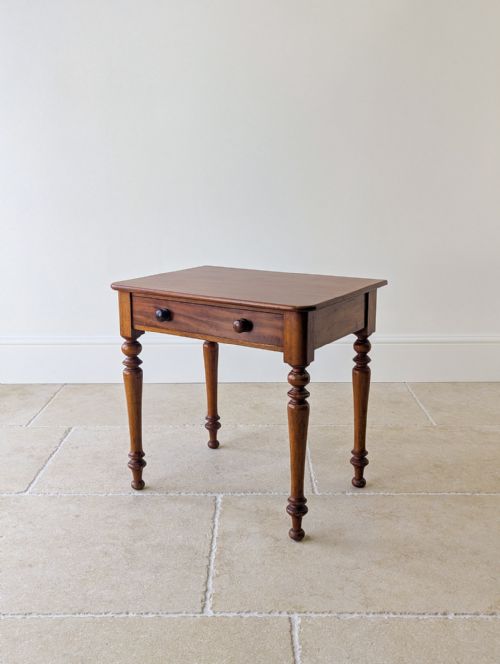
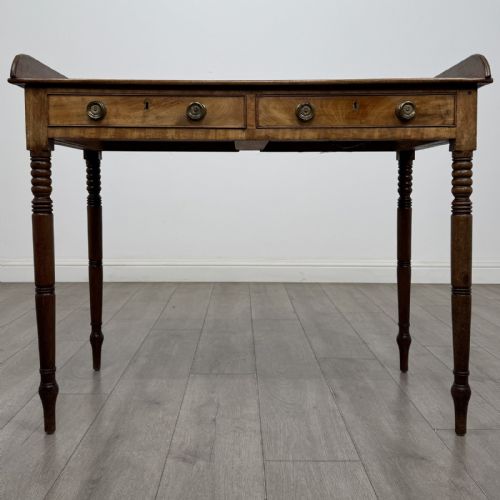
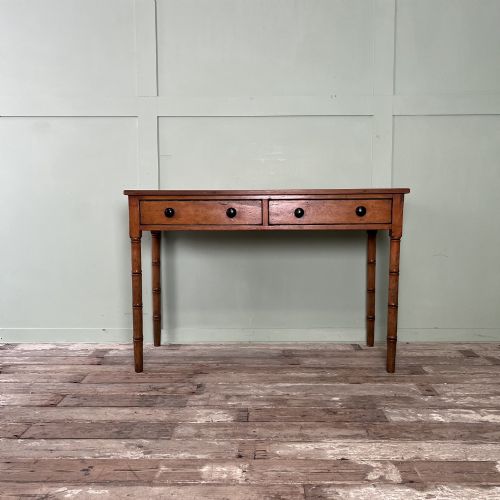
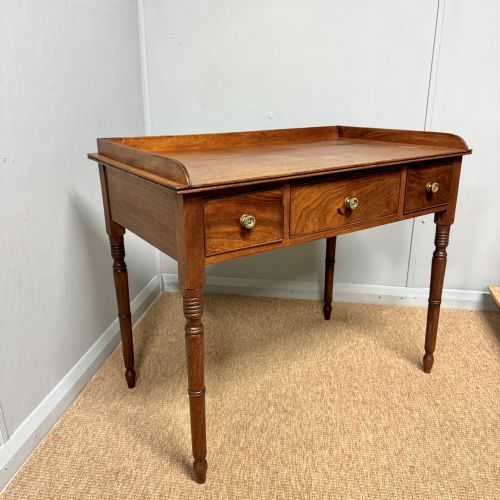
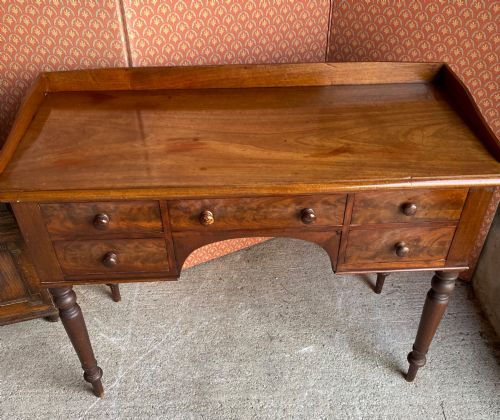
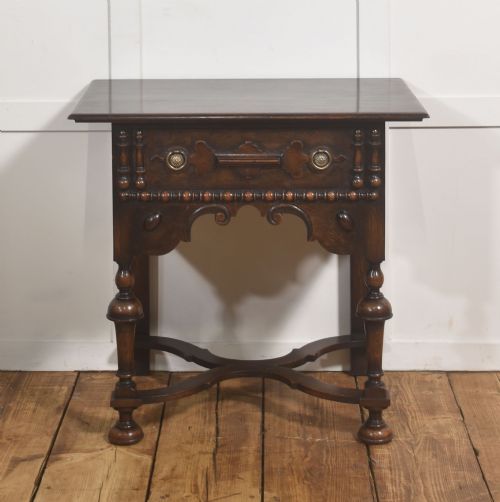
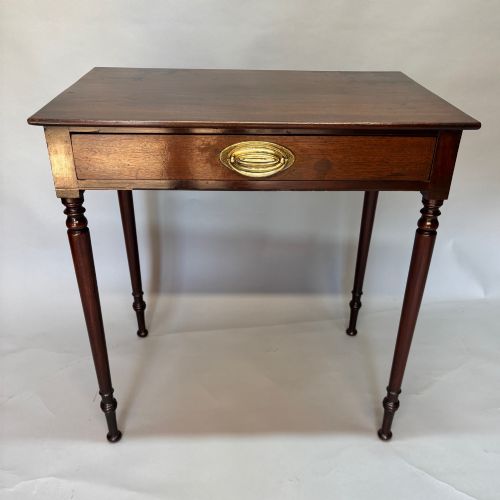
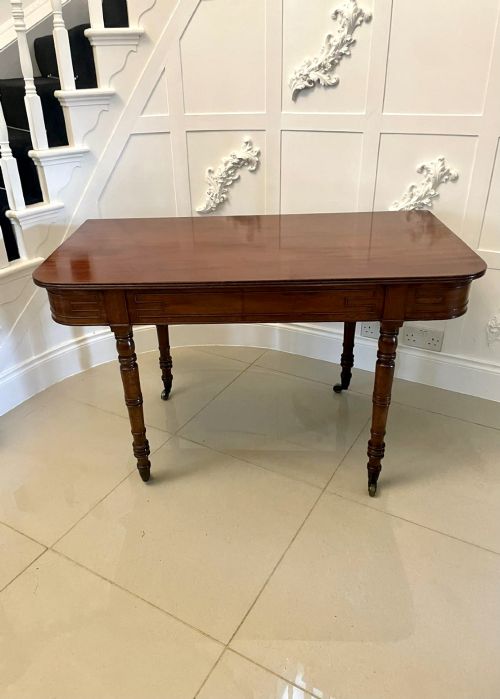
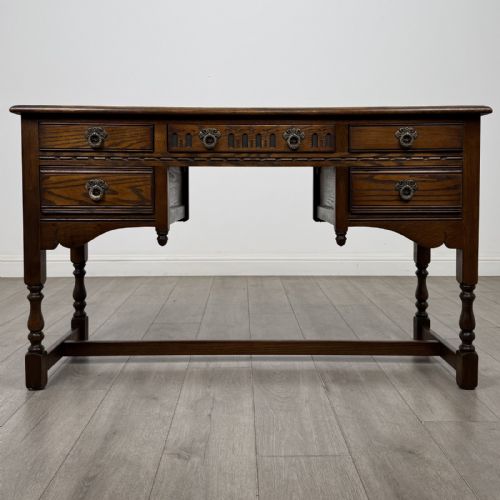
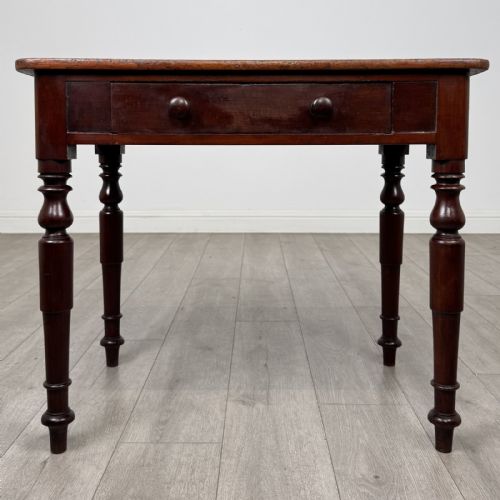
A desk with turned legs combines a functional writing surface with structural supports shaped on a lathe. These pieces appear frequently across Victorian, Georgian, and early twentieth-century periods, often taking the form of writing tables, side tables, and compact bureaus.
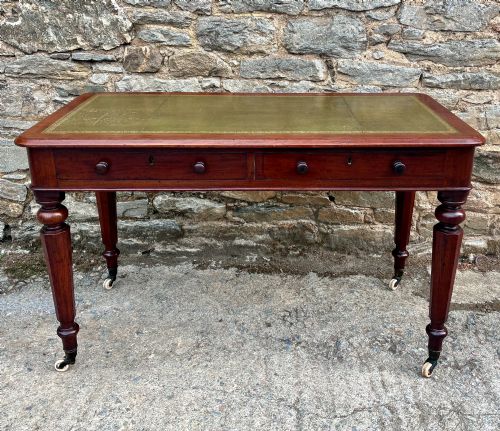
The materials span native and imported timbers, including mahogany, oak, walnut, pine, and elm. Many examples incorporate leather writing surfaces, brass castors, and useful drawers set into the frieze.
Originating largely from British workshops, these tables served domestic studies, libraries, and parlours. The turned supports range from simple bobbin forms to robust barley twist and stretchered configurations.
How they were made
Cabinetmakers utilised solid timbers such as mahogany, oak, and walnut for the primary frames and drawer linings, supplementing them with secondary woods like pine in concealed areas. Turnery on the legs was achieved using a lathe to produce consistent cylindrical and spiralled profiles.
Surfaces frequently received inset leather panels, sometimes with gilt tooling, while brass handles and castors provided functional hardware. Joinery relied on traditional methods including dovetails for drawers and mortise and tenon joints for the structural framework.
Several pieces arrive equipped with original castors, ensuring your desk remains mobile enough to chase the afternoon sunlight around the study.
What varies in quality
The calibre of a piece rests upon the selection of timber and the precision of the joinery. Dense, finely figured mahogany or quarter-sawn oak displays superior material choice compared to utilitarian pine or mixed hardwoods.
Execution of the turnery and the retention of original fittings, such as brass handles and leather inserts, separate standard production items from finer workshop output. Crisp carving, neat dovetailing, and balanced proportions determine the standing of each example.
James Mein of Kelso·J A Mein Edinburgh Cabinet Maker·Heals of London
The Desk with Turned Legs Glossary
- Turned legs
- Supports shaped by rotating timber against a cutting tool on a lathe. This process creates cylindrical, bobbin, or spiral profiles.
- Frieze
- The horizontal structural member beneath the tabletop which frequently houses one or more drawers. It provides rigidity to the underframe.
- Stretchers
- Horizontal cross-braces connecting the legs of a table for added stability. They appear frequently on earlier oak and country examples.
- Bobbin legs
- A form of turnery resembling a string of spools or bobbins stacked end to end. This style is characteristic of seventeenth-century revival and nineteenth-century vernacular furniture.
- Dovetail
- A joint formed by interlocking wedge-shaped fingers, used primarily in drawer construction. It provides high tensile strength without relying solely on glue.
Desk with Turned Legs: Frequently Asked Questions
How do I date a desk with turned legs?
Dating relies on identifying the primary timber, construction methods, and hardware styles. Mahogany and walnut frequently indicate Georgian or Victorian periods, whilst specific turnery like bobbin or barley twist points towards revival styles or earlier vernacular traditions.
Examine the drawer linings and joinery for signs of hand tools versus machinery. Secondary woods such as pine and the presence of original castors also help narrow the decade of production.
Are these desks suitable for daily computer work?
Many of these writing tables offer adequate surface depth for a laptop and daily paperwork. The inclusion of frieze drawers provides convenient storage for modern stationery.
Buyers should check the kneehole height and overall dimensions against their seating requirements. Compact side tables and writing desks adapt well to domestic office spaces.
How should I care for the leather top?
Leather writing surfaces benefit from gentle cleaning with a slightly damp cloth followed by a neutral leather cream. Avoid harsh chemical cleaners and excessive moisture.
Maintaining a stable room temperature prevents the leather from drying and cracking. Occasional application of specialist dressing preserves the supple texture of the hide.