



Deep Buttoned Leather Settee
A deep buttoned leather settee provides enduring seating comfort, combining traditional upholstery methods with rich hide finishes for living spaces.
Deep Buttoned Leather Settee
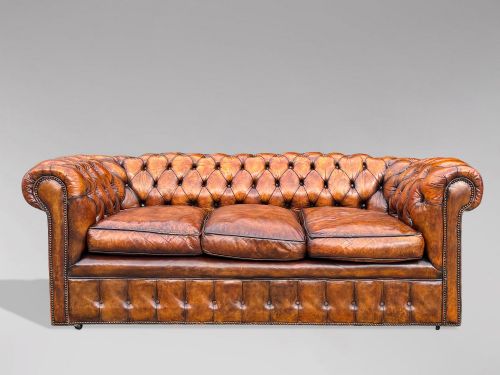
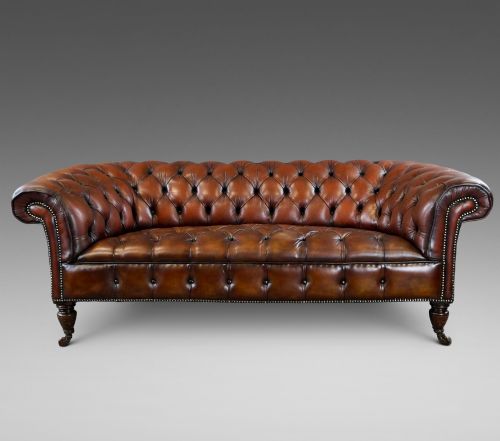
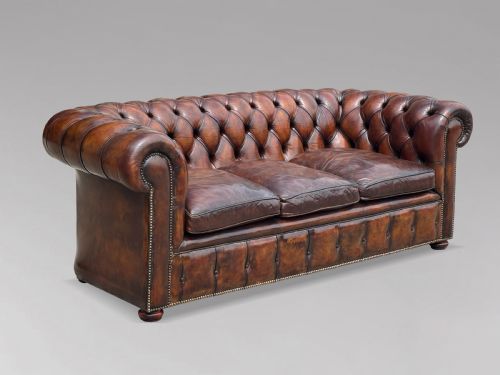
When searching for a deep buttoned leather settee, buyers encounter various forms including traditional Chesterfields, corner sofas, and conversational seats dating from the nineteenth century into the twentieth century. These seating pieces typically feature prominent tufted upholstery across the backrest and arms, established in periods such as the Victorian era and the 1930s.
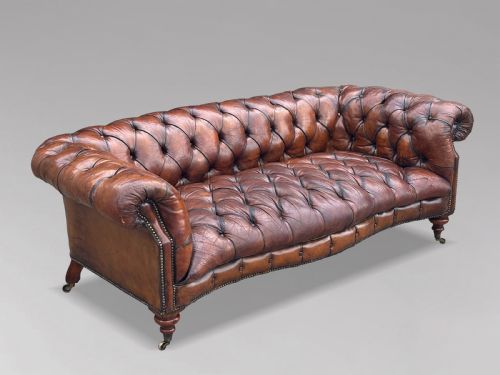
The most common version on this page is the Victorian or later Chesterfield sofa upholstered in brown, green, or hand-dyed leather. Alongside standard three-seater and two-seater options, listings include specific variations like spoon-back settees, serpentine fronted designs, and occasional mahogany or walnut framed examples.
Materials and construction methods
Frames utilise sturdy timbers such as mahogany, walnut, and general hardwood or timber foundations to support the structure. Interior construction often relies on traditional stuffing materials like horsehair, paired with coil springs for resilience.
Upholstery consists of leather hides secured by deep buttoning techniques and finished with brass detailing. Makers frequently applied hand-dyed treatments to the leather surfaces.
Deep Buttoned Leather Settee Retail Price Guide 2026
Typical asking prices for deep buttoned leather settee among the pieces listed under this phrase on Sellingantiques today, from the lower quarter to the upper quarter. They describe what is for sale here now, not the wider market.
Object forms on this page include standard sofas, corner configurations, bench seating, chaise longues, and complete suite combinations.
Factors of quality and execution
The standard of a deep buttoned leather settee rests upon the integrity of the internal frame and the precision of the tufting work. Superior examples demonstrate rigorous joinery in woods like mahogany or walnut and even tension across the hide.
The grade of the leather and the preservation of original materials also differentiate pieces. Items retaining untouched original hides or properly executed restorations display greater structural and aesthetic coherence than inferior alternatives.
Howard And Sons·Hampton And Sons
The Deep Buttoned Leather Settee Glossary
- Chesterfield
- A traditional style of upholstered sofa featuring rolled arms and a back of the same height, heavily tufted with buttons. It remains a defining form within antique seating.
- Buttoning
- The technique of pulling upholstery tight with twine tied to deep-set buttons, creating a diamond-patterned dimpled surface. This method secures internal padding while adding texture.
- Horsehair
- A traditional stuffing material utilised for interior upholstery padding in older seating. It provides firm, breathable support beneath the leather cover.
- Show frame
- A wooden structural framework left exposed around the upholstered elements of a settee. These visible sections are frequently carved from hardwoods like walnut or mahogany.
- Serpentine front
- A furniture front curved in a wave-like shape, featuring a convex centre flanked by concave curves. This contour adds visual movement to the base of the settee.
Deep Buttoned Leather Settee: Frequently Asked Questions
What is a deep buttoned leather settee?
A deep buttoned leather settee is a traditional upholstered seating piece characterised by recessed buttons forming a tufted pattern across the leather hide.
These items encompass various historic forms, most notably Victorian Chesterfields alongside Edwardian and mid-century variations.
How do I care for antique leather?
Maintaining antique leather requires keeping the material away from direct heat sources and direct sunlight to prevent drying and cracking.
Regular gentle dusting and the occasional application of appropriate leather conditioning products help preserve the suppleness of the hide.
Are these settees comfortable for daily use?
Many examples are constructed with traditional coil springs and generous padding, providing substantial support for regular seating.
Their ergonomics depend on the specific internal stuffing and the depth of the seat platform.
How do I identify a Victorian Chesterfield?
Victorian examples typically exhibit robust timber frames, traditional horsehair stuffing, and heavy leather upholstery secured with deep tufting.
Stylistic cues include rolled arms, low backs, and occasionally turned wooden legs fitted with brass castors.