





Decorative Glass Decanter
These decorative glass decanter pieces offer practical service and display presence, combining cut crystal, silver plate, and enamel across Victorian and Edwardian periods.
Decorative Glass Decanter
When you search for a decorative glass decanter, you find a varied group of serving vessels designed for wine, spirits, and liqueurs. The selection spans claret jugs, tantalus sets, spirit ewers, and scent barrels originating from the nineteenth and early twentieth centuries.
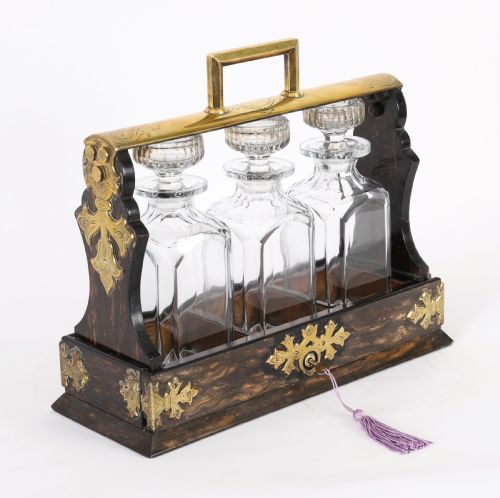
The pieces on this page lean heavily towards Victorian and Edwardian aesthetics, alongside French Rococo Revival and Art Nouveau examples. You encounter matched pairs of ewers, single cut crystal decanters housed in coromandel woodtantalus frames, and gilt bronze-mounted glass barrels.
Most items combine glass with metal mounts, notably silver plate, brass, and ormolu. Forms range from tall dessert wine jugs to intimate liqueur ewers and cranberry glass collections intended for dining and drawing room use.
How they were made
Makers shaped the vessels using heavy lead glass and crystal, applying deep wheel-cut facets and intricate geometric patterns to catch the light. Coloured glass varieties, including deep blue and cranberry hues, required specific mineral oxides added during the blowing process.
Metalwork components such as silver plate, brass, and gilt bronze were cast and chased to form handles, collars, hinges, and stands. Ormolu mounts and enamel details provided ornate decorative contrast to the clear and coloured glass bodies.
Some Victorian spirit barrels came with tiny taps so tightly ground you could dispense gin without waking the cat.
What varies in quality
The crispness of the glass cutting defines the visual weight of each piece, where sharper facets and balanced proportions separate finer production from heavier, utilitarian output. The integration between glass bodies and metal mounts reveals the maker's care, with tightly fitted collars and secure hinges indicating superior construction.
The Decorative Glass Decanter Glossary
- Tantalus
- A locked wooden frame holding decanters to prevent unauthorized access while displaying the contents through the bars. It typically secures three cut crystal bottles.
- Claret Jug
- A tall serving vessel specifically shaped for red wine, combining a glass body with a hinged metal mount, handle, and spout. They frequently feature silver-plated or gilt bronze mounts.
- Ormolu
- Finely ground high-carat gold applied to a bronze base using a mercury amalgamation process, popular in French decorative metalwork. It yields a rich, warm metallic lustre.
- Ewer
- A large jug with a wide spout and looped handle, historically used for water or wine at the table. In later periods, they served as decorative spirit jugs and dessert wine servers.
- Cranberry Glass
- A type of transparent red glass produced by adding gold chloride to the molten batch. It gained popularity during the Victorian era for decorative tableware.
Decorative Glass Decanter: Frequently Asked Questions
What is a tantalus?
A tantalus is a secure wooden frame fitted with a locking mechanism that encloses glass decanters. It allowed hosts to display fine spirits while restricting access to servants or guests.
These frames often utilise decorative hardwoods like coromandel and house matched cut crystal bottles with stoppers.
How do I use a claret jug?
Claret jugs serve wine at the dining table, featuring a hinged lid and handle designed for one-handed pouring. They combine glass bodies with silver-plated mounts.
Ensure the metal mounts are cleaned gently and avoid submerging wooden or antique plated components in water.
What is Mary Gregory glass?
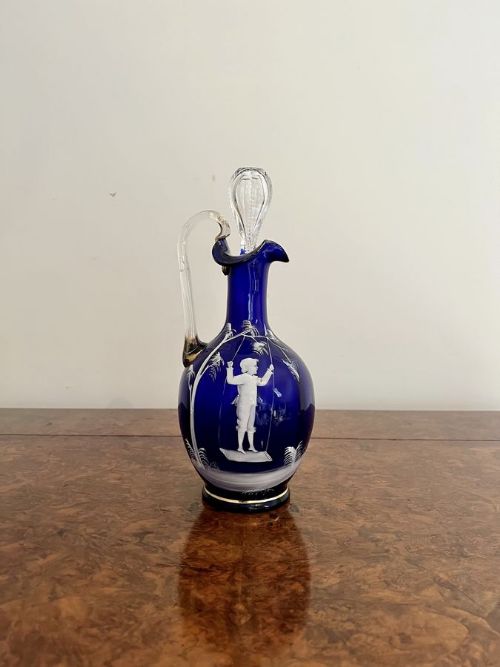
Mary Gregory glass refers to glassware decorated with painted white enamel silhouettes depicting children in pastoral settings. This style appeared frequently on Victorian coloured glass pieces.
The enamel work is fired onto the surface, creating a distinct raised white design against blue, cranberry, or green glass.
How are Victorian and Edwardian decanters different?
Victorian decanters often display heavier cut crystal patterns, ornate silver plating, and revivalist styles such as Rococo curves. Edwardian pieces lean towards lighter proportions and cleaner lines.
Both eras utilise high-quality lead glass, but the mounting hardware and decorative motifs reflect changing tastes around the turn of the twentieth century.