





Decorative Bronze Frame
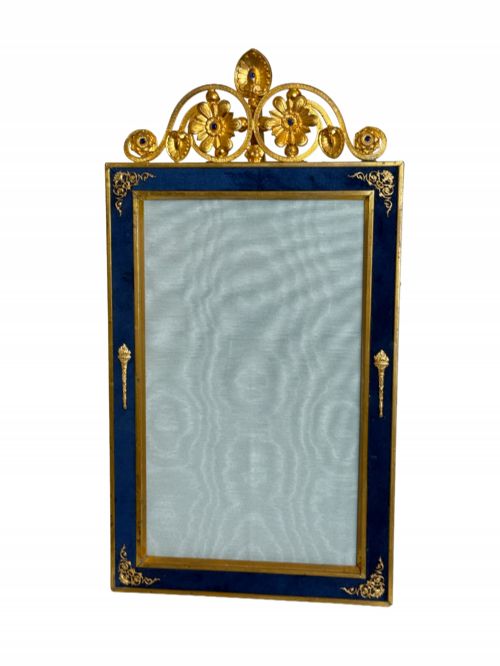
A decorative bronze frame brings warmth and structural weight to a mantel or wall, combining cast metal with glass and velvet.
Decorative Bronze Frame
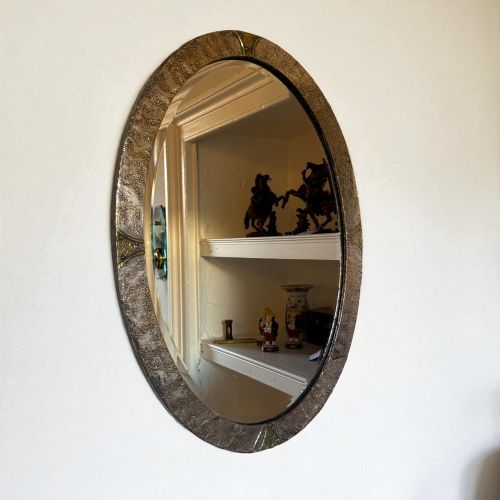
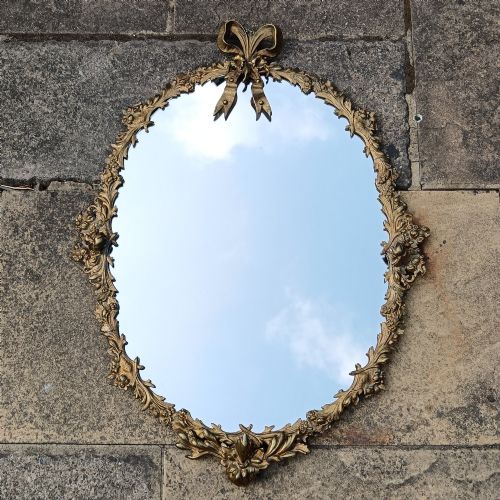
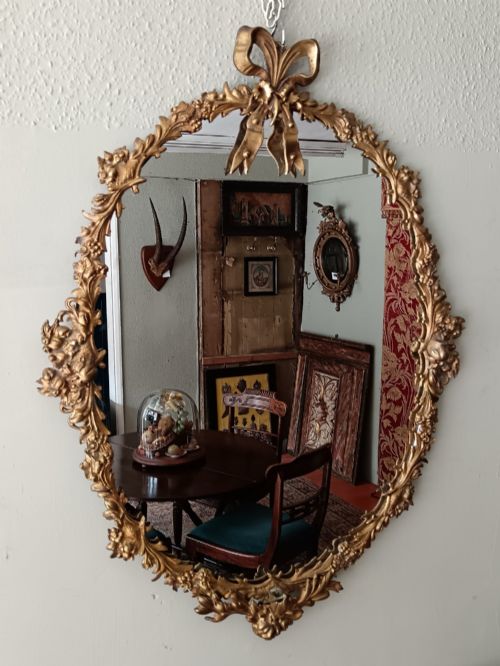
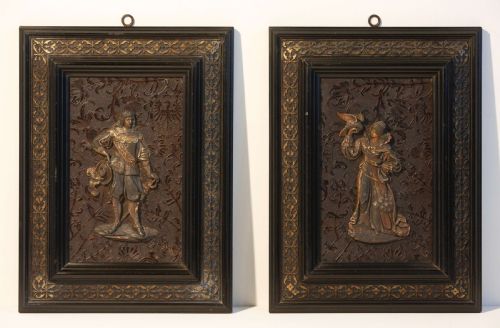
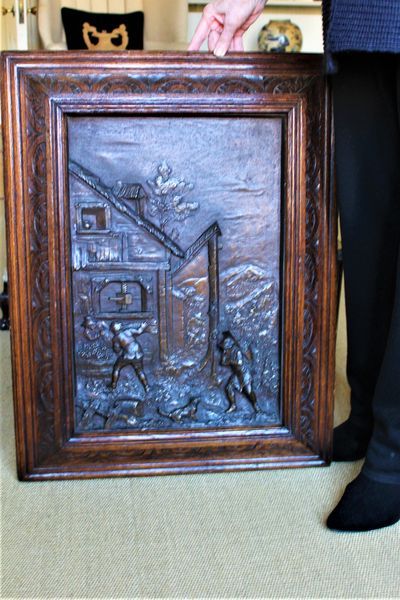
A decorative bronze frame encompasses wall mirrors, picture frames, photo frames, wall plaques, and bells originating from periods between 1870 and the 1920s. These pieces frequently draw upon historical vocabularies, showing influences from Louis XVI Revival, French Empire, Baroque Revival, and Arts and Crafts design.
The objects on this page range from small tabletop photo frames and hanging mirrors to large wall pieces and relief plaques. Many incorporate materials such as gilt bronze, brass, wood, glass, bevelled glass, velvet, and hammered metal to create textured displays.
How they were made
The fabrication of these pieces relies on casting bronze, brass, or white metal, often followed by gilding or the application of dark gilt finishes. Many items incorporate hammered metal techniques to build surface texture by hand.
Makers integrated structural elements such as bevelled glass and paste stones into the metal mounts, backing some pieces with wood and plush velvet to support photographs or mirrors.
Decorative Bronze Frame Retail Price Guide 2026
Typical asking prices for decorative bronze frame among the pieces listed under this phrase on Sellingantiques today, from the lower quarter to the upper quarter. They describe what is for sale here now, not the wider market.
Materials documented across the collection include gilt bronze, brass, hammered metal, velvet, and bevelled glass.
What varies in quality
The refinement of the casting dictates the sharpness of detail in relief work and architectural motifs, separating intricate French revival frames from simpler utilitarian pieces. Crisp chasing and deep relief separate superior metalwork from softer production.
The choice of secondary materials, such as heavy bevelled glass plates and rich velvet backings, influences the overall substance and longevity of the object.
The Decorative Bronze Frame Glossary
- Ormolu
- Gilded bronze applied to decorative objects and furniture mounts, popular in French pieces. This finish gives a warm golden tone to the metal surface.
- Bevelled glass
- Glass with an angled edge cut and polished to a specific width around the periphery. It catches the light and adds depth to mirrors and photo frames.
- Paste stones
- Faceted glass or crystal cut to imitate gemstones and set into metal frames. They add colour and sparkle to decorative metalwork.
- Relief
- Sculptural technique where figures or ornamentation project from a flat background. It is commonly found on cast bronze plaques and picture frames.
- Louis XVI Revival
- A 19th-century style drawing on classical symmetry, ribbons, and swags. Pieces in this manner reflect neoclassical French design.
Decorative Bronze Frame: Frequently Asked Questions
How do I clean a bronze frame?
Dust gently with a soft, dry brush to protect any delicate gilding or patination. Avoid harsh chemical cleaners that can strip surface treatments.
Keep bronze away from excessive moisture to prevent corrosion of the metal and damage to internal wood or velvet components.
Are these frames meant for walls or tables?
Many examples are designed as wall mirrors or wall plaques with hanging fixtures built into the reverse. Others function as picture or photo frames, often featuring two-way stands for tabletop display.
Check the orientation and backing of each piece to determine its original intended placement in a room.
What periods do these pieces come from?
The selection spans the late 19th century through the Edwardian era, including Victorian, 1880, 1890, 1900, and 1920 items. Stylistic markers often correspond to revival movements such as Baroque and Louis XVI.
Design choices from these decades frequently borrow historical motifs to create ornate decorative objects.
What is the difference between bronze and brass?
Bronze is an alloy primarily of copper and tin, whereas brass is an alloy of copper and zinc. Both metals appear across these listings, sometimes with gilded or dark finishes applied.
Visual inspection of the metal's tone and weight often helps differentiate the two materials in antique objects.