
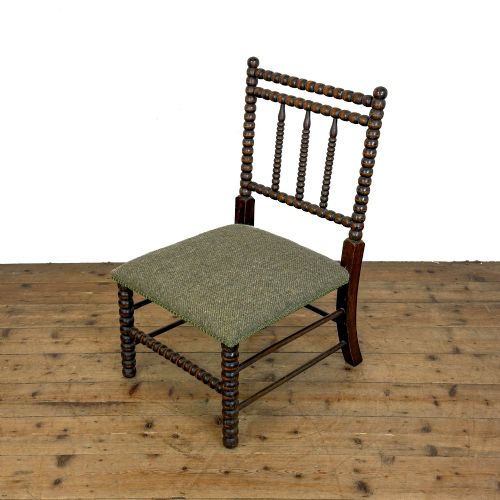


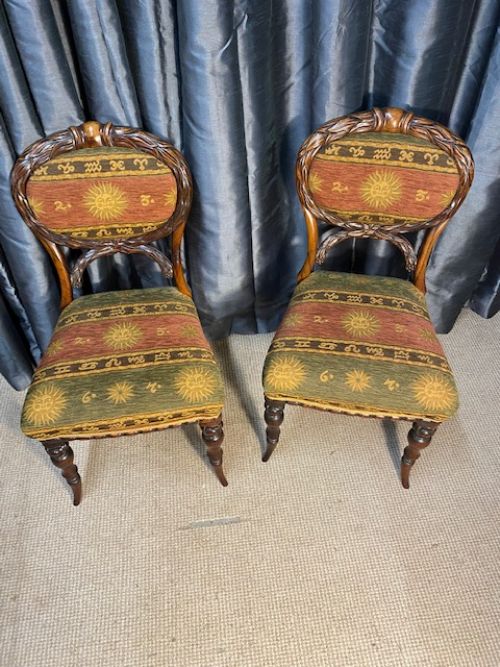

Dark Green Accent Chair
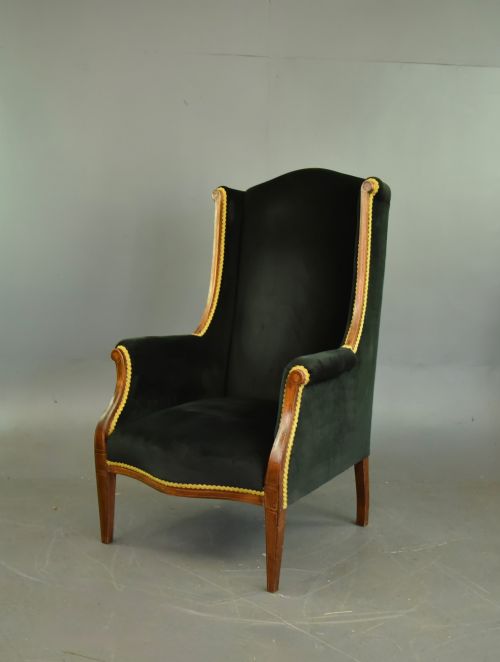
A dark green accent chair brings rich colour and period character to a room, drawing the eye with deep upholstery.
Dark Green Accent Chair
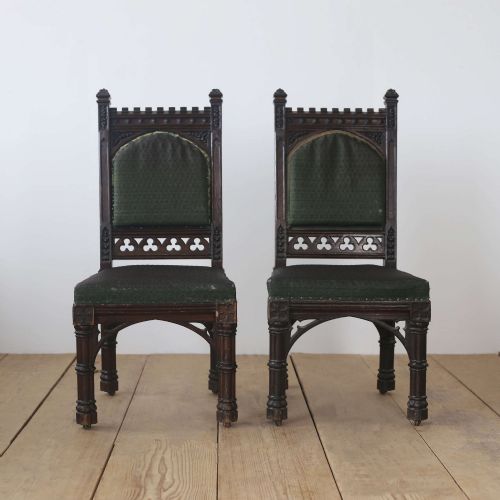
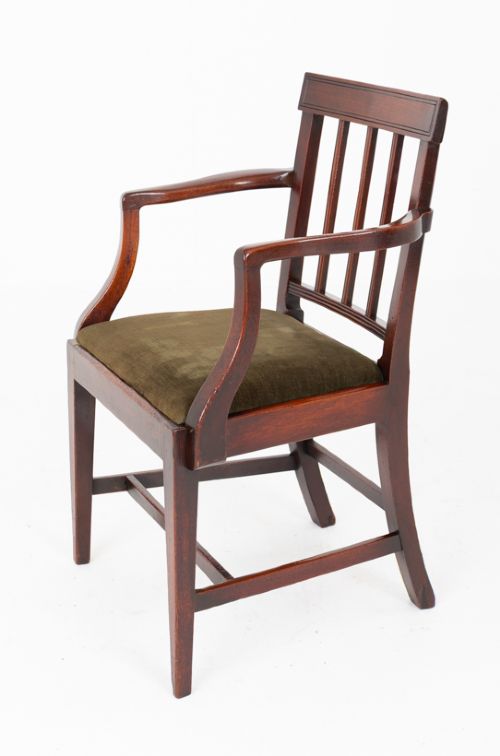
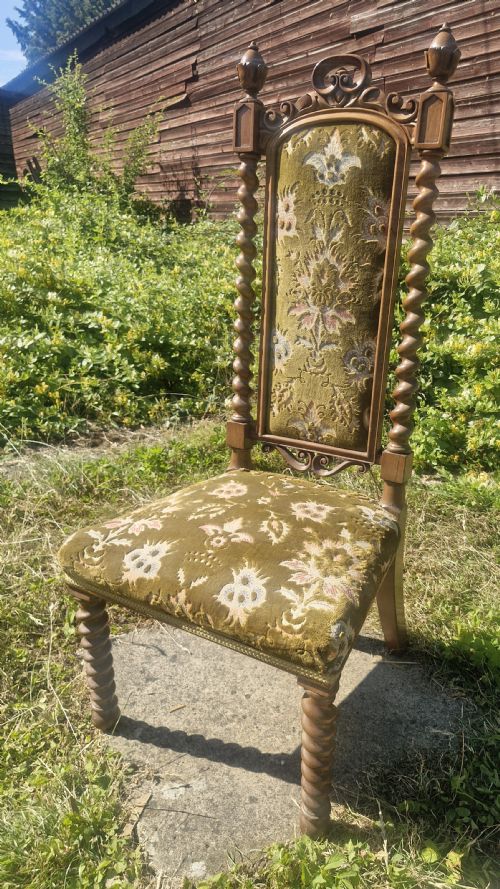
A dark green accent chair appears in various historical guises, ranging from Victorian and Edwardian seating to Georgian and Regency designs. Buyers seeking a dark green accent chair will encounter armchairs, side chairs, hall chairs, and bedroom chairs upholstered in velvet and fabric.
The selection includes robust oak carvers, walnut frames, and mahogany armchairs alongside exotic woods like rosewood and Chinese export hardwood. These pieces serve as functional seating and striking visual focal points within a study, drawing room, or bedroom.
How they were made
Frames take shape in solid timbers such as mahogany, oak, walnut, and rosewood, often featuring hand-carved details and turned components like bobbin turnings. Selected pieces incorporate fine inlay work or ebonised finishes to accentuate the wood grain.
Upholstery relies on traditional fabrics including green velvet and hand-stitched tapestry, secured to timber frames alongside brass hardware. Construction methods span from Georgian joinery to Victorian showwood framing and Edwardian cabinetmaking.
One nineteenth-century oak hall chair proudly wears the label whimsical, proving that even formal Victorian entrance furniture retained a sense of humour.
What varies in quality
Excellence in these chairs rests upon the depth of the timber carving and the architectural proportion of the frame, where fluid curves and balanced joinery elevate a piece. Finer examples display crisply executed details, from intricate back splats to well-turned legs.
The choice and execution of materials also dictate standing, with rich veneers, substantial hardwoods, and quality velvet or tapestry upholstery distinguishing more ambitious workshops from utilitarian items.
Louis Majorelle
The Dark Green Accent Chair Glossary
- Armchair
- A seating furniture piece equipped with side supports for the arms. These range from heavy throne chairs to lighter drawing room seats.
- Showwood
- Exposed timber framing on an upholstered chair where the polished wood forms part of the visual design around the back and arms.
- Carver
- An armchair designed with arms, traditionally placed at the head of a dining table or used as a desk and study seat.
- Inlay
- Decorative ornamentation created by embedding pieces of contrasting wood or other materials into the flush surface of the primary timber.
- Velvet
- A woven tufted fabric with a dense pile, frequently utilised on these chairs to provide a soft texture and deep green hue.
Dark Green Accent Chair: Frequently Asked Questions
Where do I place a dark green accent chair?
These chairs find natural homes in drawing rooms, studies, and bedrooms, where their distinctive upholstery adds a focal point of colour. They function well beside a fireplace, in a corner reading nook, or as a standalone desk seat.
Because the forms span from compact Edwardian occasional chairs to imposing Victorian throne armchairs, scale dictates placement. Smaller side and bedroom chairs slip easily into tight spaces, while large carved oak armchairs demand room to breathe.
How do I identify a Victorian chair?
Victorian seating often displays heavier proportions, robust timbers like mahogany and oak, and deep buttoned or showwood upholstery styles. Details such as balloon backs, ebonised finishes, and bobbin turnings point firmly toward nineteenth-century production.
Makers of this era frequently drew inspiration from earlier Gothic or Jacobean styles, resulting in heavily carved woodwork. Examining the construction underneath and the type of timber used helps confirm the Victorian origin.
What is a hall chair?
Hall chairs were traditionally placed in the entrance halls of grand houses as rigid, upright seating for visitors waiting to be received. They often feature solid timber seats and elaborately carved wooden backs without upholstery.
These chairs prioritised visual impact and heraldic or decorative carving over comfort. Their sturdy wooden construction and formal stance make them striking accent pieces in modern hallways.
Are these chairs suitable for daily use?
Most period chairs were built using solid hardwoods like oak, mahogany, and walnut, ensuring structural integrity that lasts for generations. However, nineteenth-century and earlier seating may require careful handling compared to modern mass-produced furniture.
Upholstery condition varies across older pieces, and webbing or padding might need professional attention if intended for heavy daily sitting. Selecting sturdy armchairs or carvers provides reliable support for everyday domestic environments.