



Dark Brown Horn Carving
Dark brown horn carving brings together dense organic material and sculptural depth, offering collectors tactile pieces shaped across the eighteenth and nineteenth centuries.
Dark Brown Horn Carving
Dark brown horn carving encompasses a range of functional and decorative objects shaped from organic materials, including water buffalo horn, stag antler, and pressed horn. Buyers searching for dark brown horn carving will encounter diverse forms such as libation cups, hallstands, snuff boxes, flasks, daggers, pipes, and powder horns.
The pieces span multiple periods from the eighteenth century through the Edwardian era, reflecting both refined Asian artistry and European folk art traditions. You are most likely to meet nineteenth-century items on this page, alongside specific examples from 1800, 1880, 1890, and 1910.
Originating from varied stylistic contexts like Qing Dynasty Asian art, Victorian country house interiors, French Empire, maritime folk art, and Black Forest workshops, these carvings display remarkable versatility. Each object demonstrates how artisans utilised the natural tonal depth and grain of horn and antler to create lasting decorative utility.
Materials and methods of construction
Makers utilised organic materials such as horn, stag antler, bone, and coconut shell, frequently combining them with supportive wooden elements like oak, linden wood, and brass mountings. These natural substances were shaped using cutting, piercing, and surface carving techniques suited to the fibrous nature of the material.
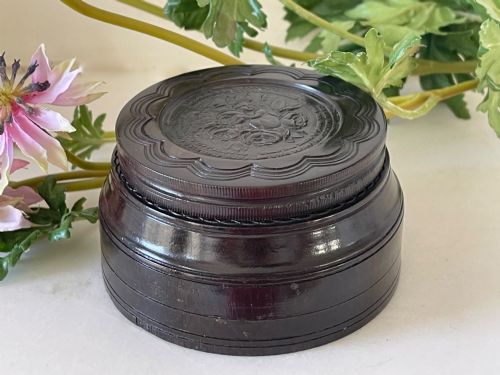
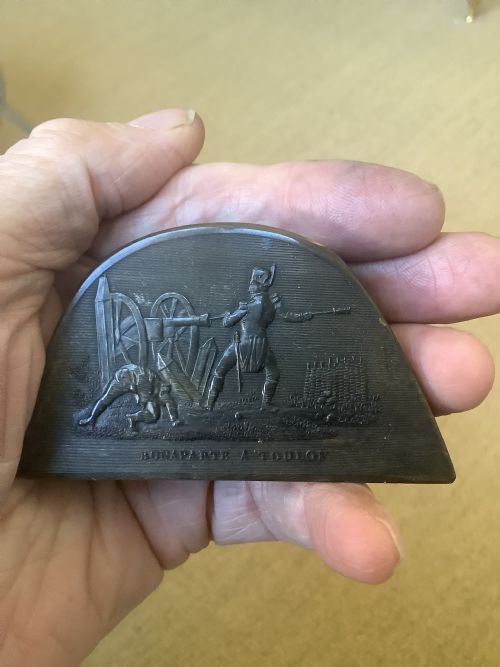
Some items, such as snuff boxes, employed pressed horn techniques to achieve precise moulded shapes like Napoleon's bicorn hat, while others relied entirely on hand carving to render intricate figures, foliage, and crests.
Napoleon's famous bicorn hat survives here reincarnated in pressed horn as a tiny container for tobacco snuff.
Distinctions in quality
Quality rests upon the crispness of the carving and the preservation of the material's natural dark brown tones and surface sheen over time. Superior examples exhibit confident, deep relief work that respects the organic contours of the horn or antler without cracking.
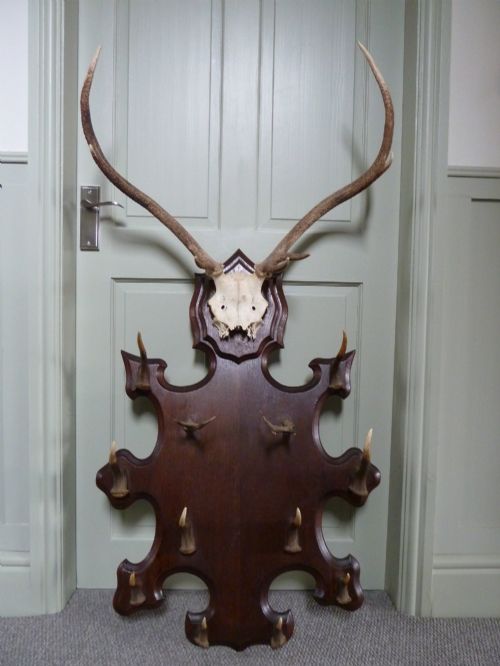
The integration of secondary materials, such as secure brass mounts on powder horns or solid wooden shields behind antlers, also indicates the level of craftsmanship invested in the piece.
The Dark Brown Horn Carving Glossary
- Libation cup
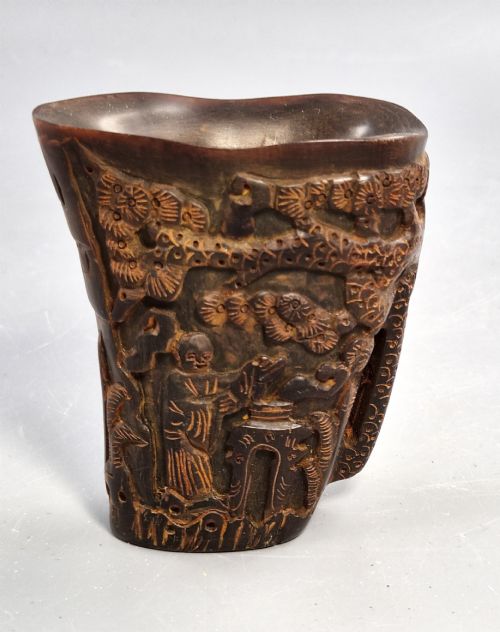
- A ceremonial vessel carved from horn, often featuring intricate figural scenes and motifs in high relief. These cups demonstrate advanced thinning and shaping of water buffalo horn.
- Powder horn
- A hollowed animal horn used to carry gunpowder, frequently engraved or carved with topographical, military, or decorative designs. They served a vital practical purpose for marksmen.
- Pressed horn
- A manufacturing technique where horn is softened by heat and pressure in metal dies to create detailed three-dimensional objects. This method allowed for consistent production of items like small boxes.
- Bug bear flask
- A carved coconut shell flask, often associated with sailors and maritime folk art traditions. The dark fibrous husk provides a distinctive textured surface for folk carvers.
- Trench art
- Objects fashioned by soldiers and prisoners from military debris and natural materials during periods of conflict. These items bridge folk art and historical record.
Dark Brown Horn Carving: Frequently Asked Questions
What is dark brown horn carving?
Dark brown horn carving refers to decorative and functional objects sculpted from animal horn, antler, and related organic substances across the eighteenth, nineteenth, and early twentieth centuries.
These pieces range from Chinese libation cups and European snuff boxes to hallstands and powder horns, showcasing varied cultural traditions and carving techniques.
How were horn carvings used originally?
Many of these pieces served practical daily functions, such as holding gunpowder, storing snuff, dispensing tobacco through carved pipes, or hanging coats in country houses.
Others held ceremonial or decorative value, functioning as display vessels, wall decor, or maritime mementos shaped by sailors.
How do I date a horn carving?
Dating relies on stylistic clues, historical motifs, and the associated material context, such as Qing Dynasty conventions, Victorian country house aesthetics, or First World War trench art.
Examining the wear patterns, mounting hardware like brass, and secondary woods such as oak helps place pieces within periods like the eighteenth century, 1800, or the late nineteenth century.
How should I care for antique horn?
Antique horn requires stable environmental conditions away from direct sunlight, excessive heat, and extreme humidity changes to prevent drying and warping.
Minimal handling and avoiding harsh chemical cleaners preserve the natural sheen and dark brown tones of the organic material.