


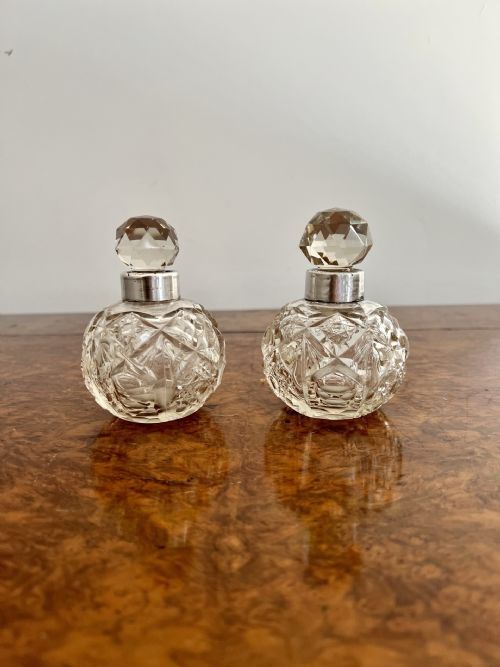
Cut Crystal Vanity Set
A cut crystal vanity set brings dressing table elegance to life, offering brilliant cut glass and precious mounts that collectors treasure.
Cut Crystal Vanity Set
When you search for a cut crystal vanity set, you are looking at dressing table accessories designed to hold perfumes, powders and cosmetics in style. These collections range from single scent bottles and jars to fitted cases complete with trays and silver mountings.
You are most likely to meet Victorian and Edwardian examples on this page, alongside Georgian pieces and Art Deco designs from the 1930s. They appear as pairs of scent bottles, individual vanity jars and complete sets housed in wood caskets.
The forms span practical perfume bottles with silver collars, shop display bottles, and vanity cases lined with velvet. Each piece reflects the dressing habits of past centuries, combining heavy glass with precious metal or enamel.
How they were made
The makers of these items combined heavy cut glass and cut crystal with solid silver, silver plate, and bronze mounts. Artisans shaped the glass through deep cutting techniques to catch the light, attaching silver collars or hinged lids by hand.
Fitted cases utilise fine timbers such as coromandel wood, lined internally with velvet to cushion the glass bottles and trays. Some vanity jars and perfume bottles feature coloured glass or delicate enamel work applied to the silver tops.
Cut Crystal Vanity Set Retail Price Guide 2026
Typical asking prices for cut crystal vanity set among the pieces listed under this phrase on Sellingantiques today, from the lower quarter to the upper quarter. They describe what is for sale here now, not the wider market.
Listings feature items spanning the Georgian, Victorian, Edwardian, and Art Deco periods, utilising cut crystal, solid silver, enamel, and coromandel wood.
What varies in quality
Quality in a cut crystal vanity set rests upon the depth and crispness of the glass cutting, alongside the substantial weight of the crystal. Finer pieces display complex geometric patterns that refract light sharply, while simpler items show shallower wheel cuts.
The metal mounts also separate standard examples from superior ones, particularly where solid silver collars bear clear hallmarks or makers' marks. Complete sets housed in fitted coromandel wood caskets represent a higher tier of craftsmanship than loose or mismatched accessories.
Jonathan Douglas·George Unite·Asprey
The Cut Crystal Vanity Set Glossary
- Cut crystal
- Heavy glass containing lead oxide, shaped with deep wheel-cut facets to maximise brilliance. This material forms the body of most dressing table bottles and jars.
- Sterling silver
- A silver alloy containing 92.5 percent pure silver by mass, frequently used for the collars, lids and mounts of dressing table accessories. Hallmarks on these mounts often indicate the year of manufacture and maker.
- Coromandel wood
- A dense, heavily grained dark timber imported from Asia, utilised for luxury vanity cases and caskets during the nineteenth century. It provides a durable and decorative exterior for fitted glass sets.
- Vanity jar
- A small, wide-mouthed container with a removable lid, designed to hold creams, powders or hairpins on a dressing table. These jars typically feature glass bases with matching silver or enamel tops.
- Scent bottle
- A small vessel designed to hold liquid perfume, fitted with a stopper and often an outer cap of silver or glass. Pairs of these bottles frequently form the centrepiece of a dressing table set.
Cut Crystal Vanity Set: Frequently Asked Questions
What pieces are in a set?
A traditional set includes items such as scent bottles, perfume bottles, and vanity jars designed for dressing table use. Some larger collections incorporate fitted trays and cases.
Surviving sets often vary in completeness, with many pieces gathered together over time rather than created as a single unit.
How do I date these items?
Dating relies heavily on hallmarks found on the silver collars and lids, which indicate the assay office and year. Stylistic details such as Art Deco geometric enamelling or Georgian crests also point to specific eras.
Materials like coromandel wood and specific cut glass patterns further help narrow down the period of manufacture.
Were they used daily?
These accessories were functional items used daily on dressing tables for holding perfumes, powders, and cosmetic preparations. Wealthy owners displayed them openly as part of their dressing routine.
Many survived because they were treated as decorative dressing room ornaments rather than everyday utensils.
How should I clean them?
Cleaning requires gentle care, especially around silver mounts, enamel work, and velvet linings which must be kept dry. Warm soapy water cleans the glass interior, but harsh abrasives can damage delicate cut crystal facets.
Silver parts benefit from specialist polishing cloths used sparingly to avoid touching the surrounding glass or fabric.