



Curved Bookcase
A curved bookcase brings architectural softness to a room, offering glazed display and shelf space shaped in bows, concaves and serpentine fronts.
Curved Bookcase
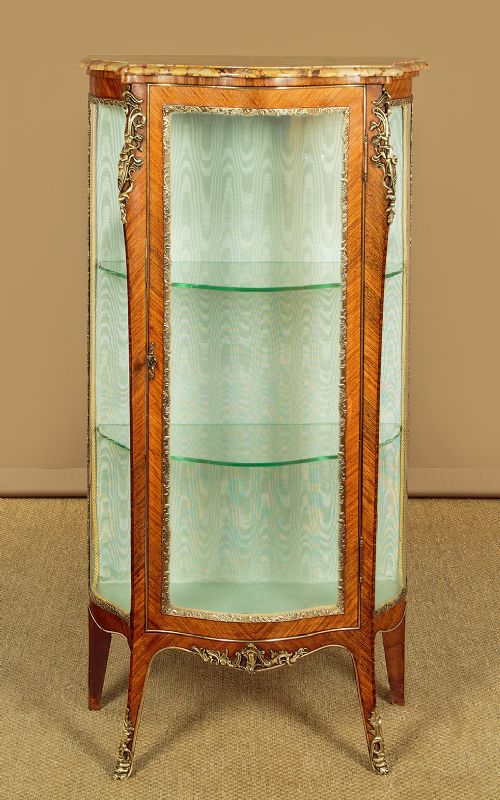
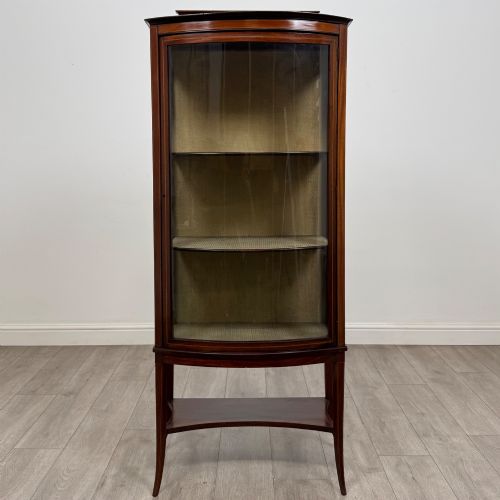
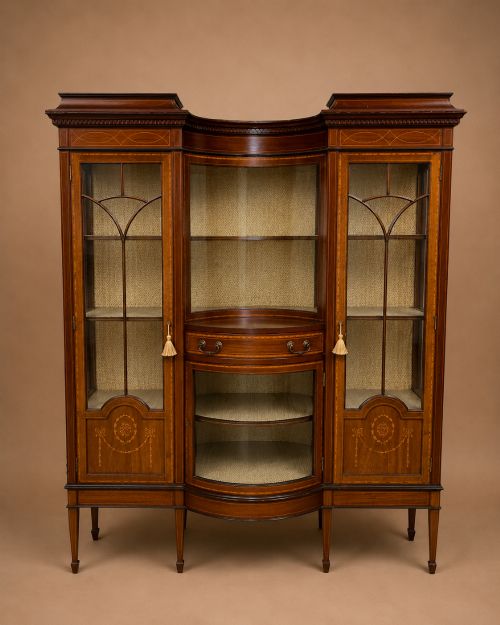
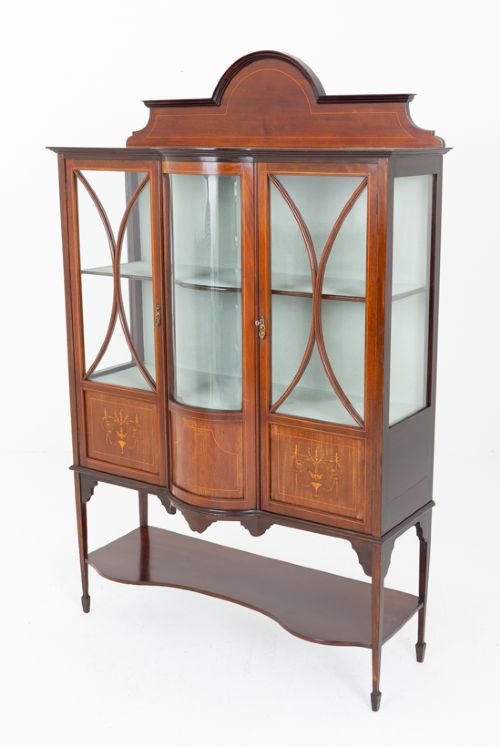
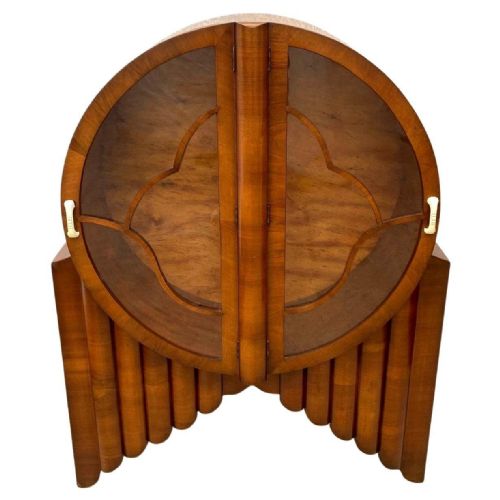
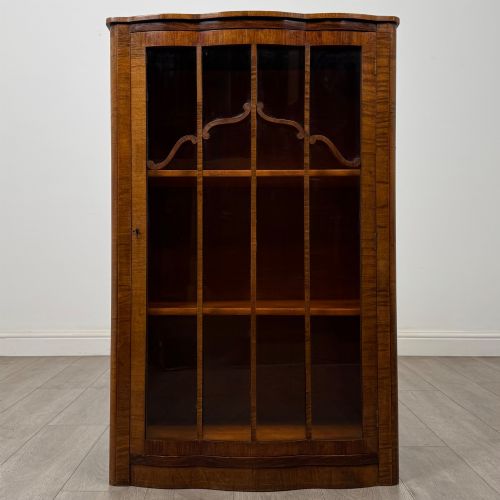
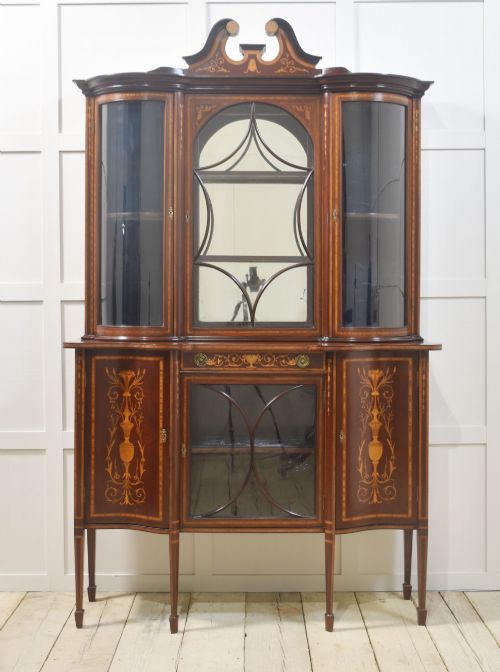
A curved bookcase on this page spans Victorian, Edwardian and Art Deco periods, encompassing bow-ended display cabinets, concave bookcases and circular vitrines. Makers built these pieces using mahogany, walnut and satinwood, often integrating glass doors and brass fittings to house books and porcelain.
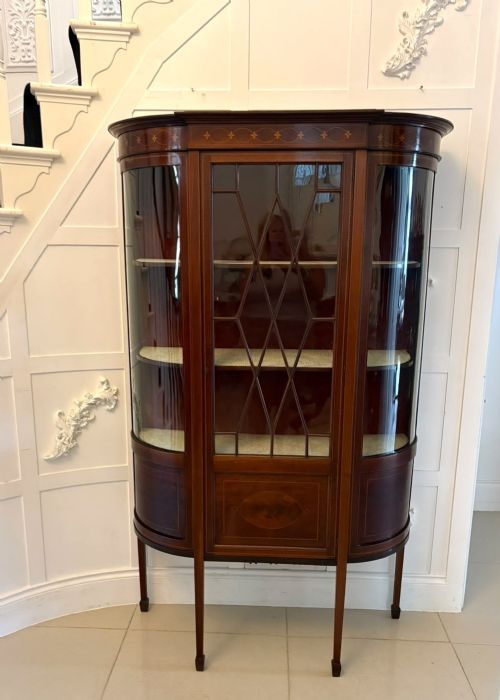
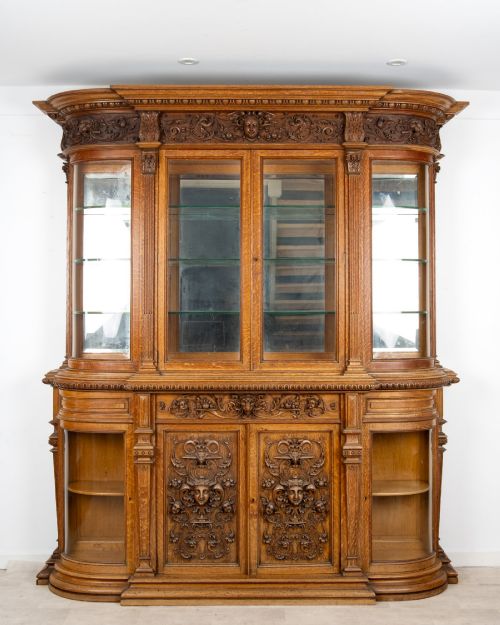
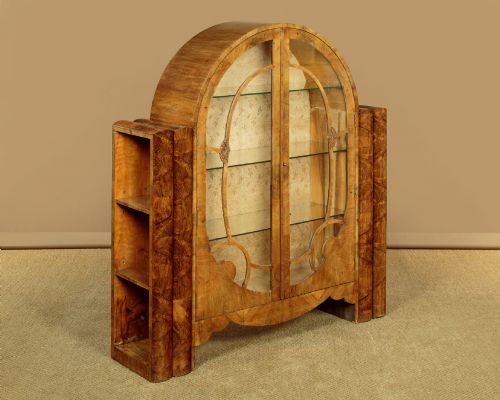
The most common forms you will encounter are Edwardian mahogany bow-ended display cabinets and 1930s Art Deco walnut circular cabinets. These variations range from modest two-part glazed units to monumental carved oak display cabinets and bureau bookcases.
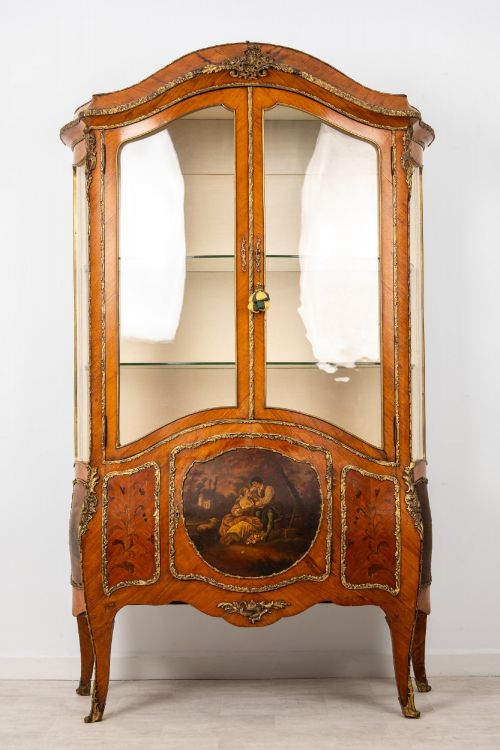
Origins stretch from English workshops to French cabinet makers working in Louis XVI and Louis XV styles. Regional variations include Dutch glazed display cabinets and English Sheraton Revival pieces with inlaid marquetry.
Materials and Construction
Cabinet makers constructed carcasses from solid timber frames, applying figured veneers of mahogany, burr walnut, kingwood and satinwood to curved surfaces. Achieving a smooth bow or concave front required steaming or laminating timber before applying intricate marquetry panels and brass or ormolu mounts.
Glazing presented a technical challenge, requiring curved glass panes fitted into wooden or brass frames. Makers integrated specialised hardware, such as Hobbs and Co locks, alongside adjustable wooden or glass shelving.
Curved Bookcase Retail Price Guide 2026
Typical asking prices for curved bookcase among the pieces listed under this phrase on Sellingantiques today, from the lower quarter to the upper quarter. They describe what is for sale here now, not the wider market.
Several 1930s examples are described as rocket cabinets, proving that even serious cabinet makers enjoyed a touch of space-age optimism.
Assessing Quality
Quality rests in the precision of the curved veneer work and the integration of secondary woods. Superior examples display seamless grain matching across serpentine or bow fronts, whereas lesser pieces reveal abrupt joins or lifting veneer.
Hardware and mounts distinguish workshop output, with fine cast ormolu, detailed marquetry and branded locks indicating higher execution. The clarity and original formation of curved glass panes also separate standard production from exceptional cabinet work.
Edwards and Roberts·Betty Joel·Maurice Adams·Paul Somani·Linke
The Curved Bookcase Glossary
- Bow front
- A cabinet front that curves outward in a convex shape. This profile softens the rectangular lines of standard furniture.
- Concave
- A surface that curves inward. In these listings, it describes bookcases and cabinets shaped to hug a corner or wall.
- Marquetry
- Decorative patterns formed by fitting small pieces of veneer into a wood ground. Makers used contrasting timbers like satinwood and mahogany to create floral or geometric motifs.
- Ormolu
- Gilt bronze mounts applied to furniture. It is common on French-influenced vitrines and credenzas from the nineteenth century.
- Vitrine
- A glass-fronted display cabinet designed for porcelain and decorative objects. These pieces often feature glass on the sides as well as the doors.
Curved Bookcase: Frequently Asked Questions
Where should I place a curved bookcase?
A curved bookcase suits corners or walls where a sharp right-angled piece would interrupt flow. Their rounded profiles work well in entrance halls, studies and drawing rooms.
Position them away from direct sunlight to protect timber veneers and historical glass panes from fading or thermal stress.
How do I clean curved glass?
Clean curved glass gently using a soft microfibre cloth and a mild glass cleaner sprayed onto the cloth rather than the glass. This prevents liquid from seeping behind old putty or wooden glazing bars.
Take care around antique leaded or brass-framed joints, as aggressive wiping can loosen delicate structural elements.
Can I adjust the shelves?
Many Edwardian and Art Deco cabinets feature adjustable wooden or glass shelves resting on brass pins or traditional track systems. This allows you to accommodate varying book heights and display collections.
Older Victorian and nineteenth-century pieces may have fixed shelving integral to the structural rigidity of the carcass.
How do I date a curved cabinet?
Dating relies on stylistic markers, timber choice and construction methods visible inside the carcass. Edwardian pieces often display Sheraton Revival inlay, while 1930s Art Deco examples utilise figured walnut and streamlined circular geometry.
Maker signatures, stamps on drawer linings or hardware brands like Hobbs and Co provide further chronological markers.