


Crystal Wine Bottle Stopper
Crystal wine bottle stopper components form part of decanters and ewers dating from the Georgian, Victorian, and Edwardian periods.
Crystal Wine Bottle Stopper
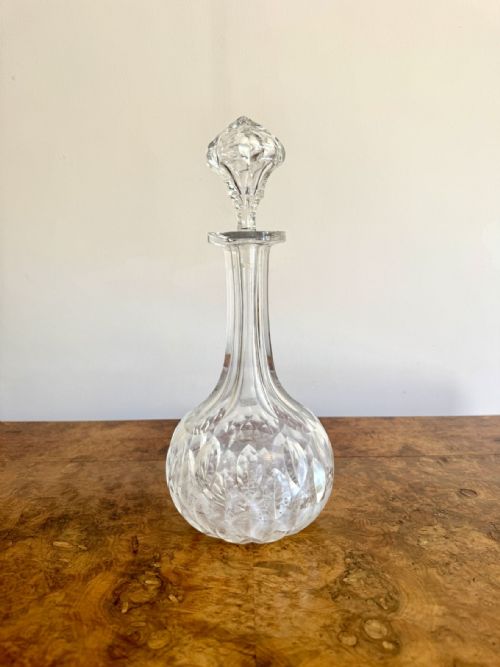
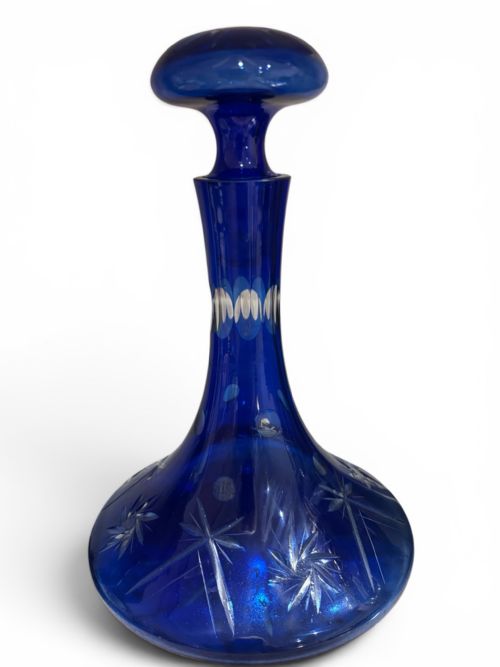
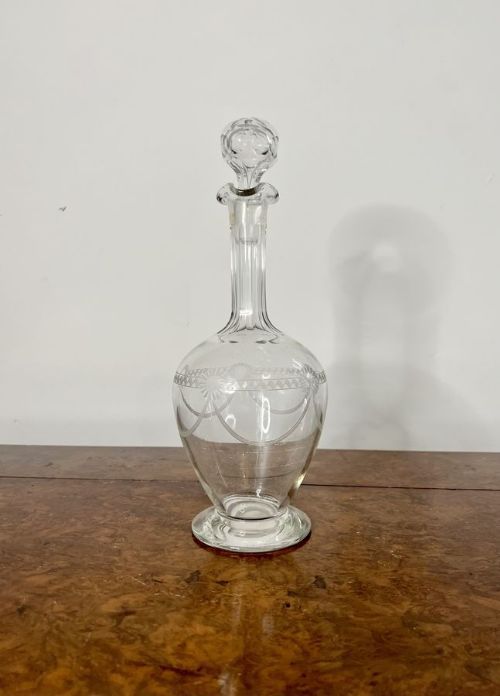
A crystal wine bottle stopper is typically found securing the neck of antique decanters, carafes, and ewers originating from the eighteenth, nineteenth, and early twentieth centuries. When searching for this phrase, a buyer encounters matching components and complete vessels spanning Georgian, Victorian, Regency, and Edwardian eras. The listings on this page reflect forms made from lead crystal, cut glass, and coloured glass such as cobalt and ruby overlay.
Most items appearing in this category comprise complete decanter vessels complete with their original stoppers, alongside pieces shaped in bell, shaft and globe, and shoulder formats. Origins range across English, French, and Bohemian workshops utilising traditional glass-forming methods. Buyers find items dating from around seventeen-seventy up to the early twentieth century.
How they were made
Materials span heavy lead glass, standard glass, and lead crystal, occasionally combined with silver collars such as those marked for Orfèvrerie Produx Saint Hilaire. Makers utilised glass-blowing techniques to shape the main body and the matching stopper, ensuring a snug ground fit between the stopper peg and the neck of the vessel.
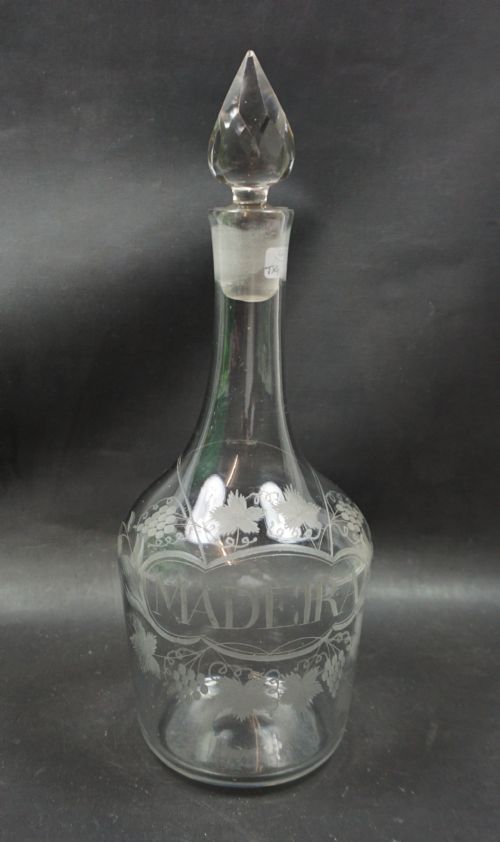
Surface decoration relied heavily on wheel-cutting, engraving, and overlay methods, seen in ruby and cobalt glass examples. Artisans faceted the crystal and glass to catch the light, producing geometric patterns, flutes, and engraved labels such as Madeira across Georgian and Victorian specimens.
Some stoppers fit so precisely after two centuries that they still hold a vacuum when pulled.
What varies in quality
Quality rests in the clarity of the crystal, the crispness of the cut facets, and the harmonious match between the stopper and the decanter body. Superior examples demonstrate heavy lead glass with deep, sharp cutting that remains smooth to the touch, whereas lesser pieces show softer moulding lines or cloudy metal.
The presence of matching pairs or sets, combined with undamaged rims and original ground stoppers, elevates a piece significantly. Finer vessels exhibit precise proportions in shaft and globe or bell shapes, reflecting the skill of the Georgian or Victorian glass cutter.
The Crystal Wine Bottle Stopper Glossary
- Lead crystal
- Glass containing a proportion of lead oxide, which increases the weight, refractive index, and clarity of the material. This composition allows for deeper and sharper facet cutting.
- Shaft and globe
- A decanter profile featuring a long, slender neck above a spherical or bulbous body. This form was particularly popular during the Victorian period.
- Ruby overlay
- A manufacturing technique where a thin layer of red glass is fused over a clear crystal base before being partially cut away to reveal the clear glass beneath.
- Ground stopper
- A bottle closure finished by grinding the peg against the inside of the decanter neck with an abrasive paste, creating a precise, airtight fit specific to that individual vessel.
- Georgian
- A stylistic period spanning the reigns of the four King Georges, characterised by heavy lead glass, mallet shapes, and intricate hand-engraving.
Crystal Wine Bottle Stopper: Frequently Asked Questions
Are antique decanter stoppers interchangeable?
Each stopper was traditionally ground by hand to fit the specific neck of its original decanter. Because of this bespoke manufacturing method, stoppers rarely interchange successfully between different bottles.
Attempting to force a stopper into the wrong vessel risks chipping the glass or getting the piece permanently stuck.
How do I clean inside an old decanter?
Cleaning requires warm water and mild detergent, avoiding harsh thermal shocks that can crack aged lead crystal. Specialised bottle brushes or non-abrasive cleaning beads help reach internal residues.
After washing, the vessel should be left upside down to dry completely before replacing the stopper.
What does shaft and globe mean?
Shaft and globe describes a traditional decanter silhouette featuring an elongated upper neck and a rounded lower body. This proportion provided stability on dining tables and made the vessel easier to pour from.
Examples of this design appear frequently among Victorian glass pieces.
How do I date a crystal decanter?
Dating relies on examining the pontil mark on the base, the style of cutting, and the overall shape of the vessel. Georgian pieces often feature polished pontils and simpler mallet or shaft forms, while Victorian items show heavier facet cutting and distinct stopper designs.
Comparing the manufacturing characteristics with documented period examples helps confirm the era.