

Crystal Lighting Fixture
A crystal lighting fixture brings genuine sparkle and period character into a room through cut glass drops and metal framing.
Crystal Lighting Fixture
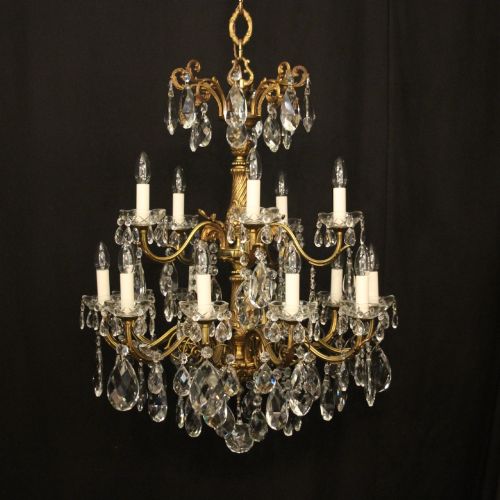
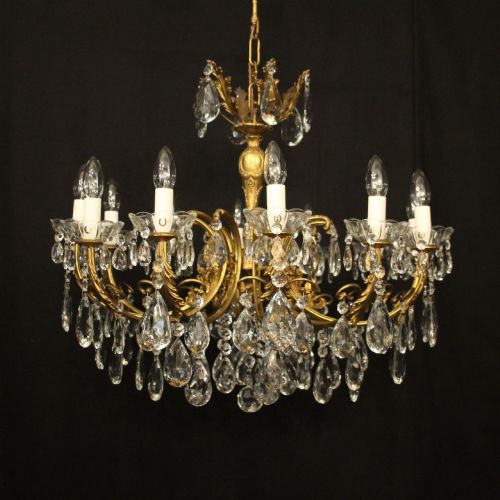
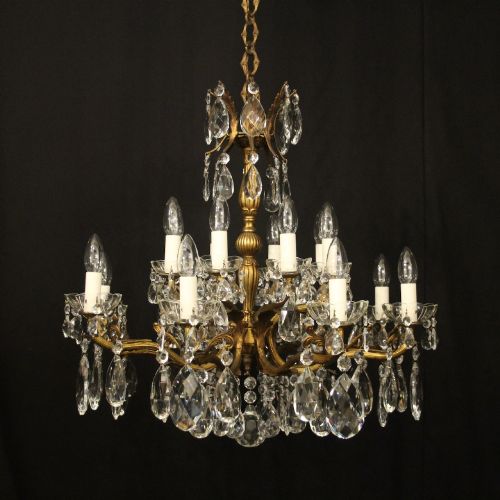
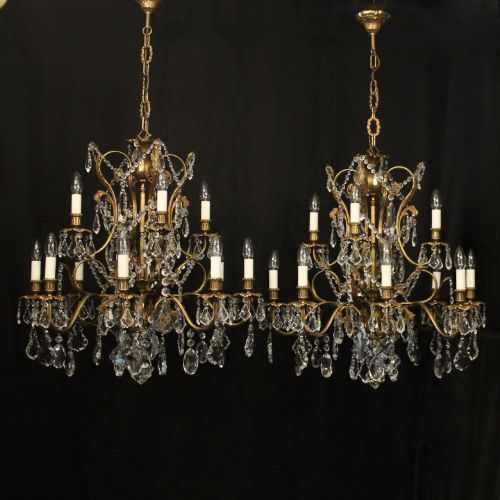
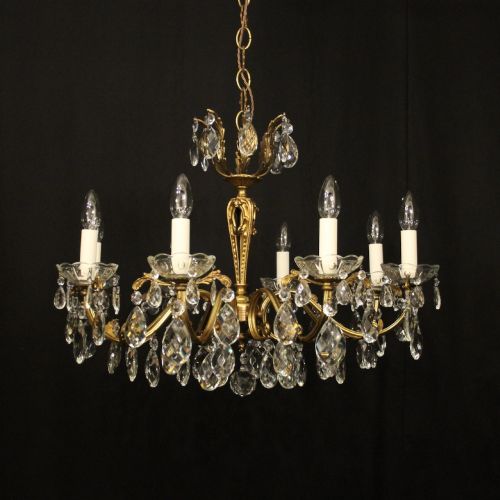
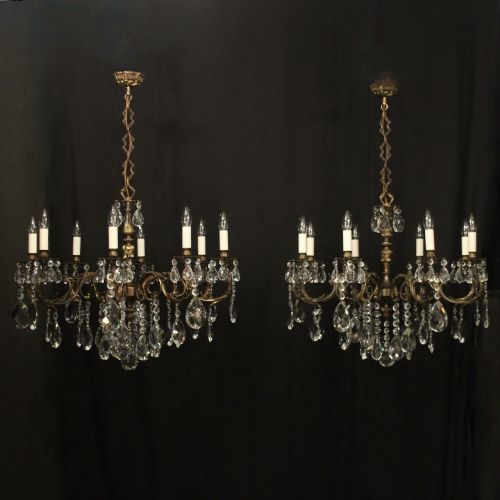
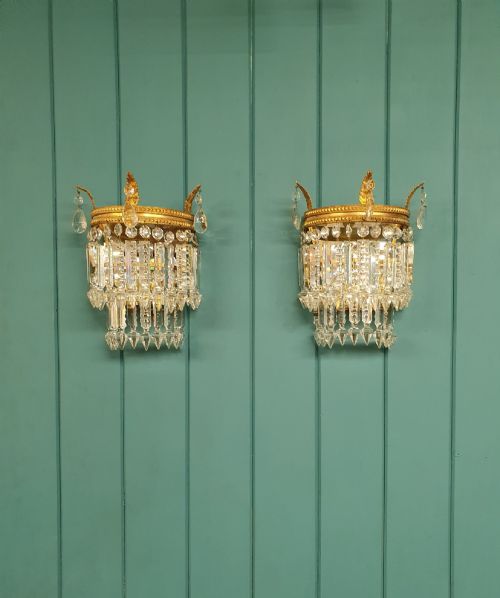
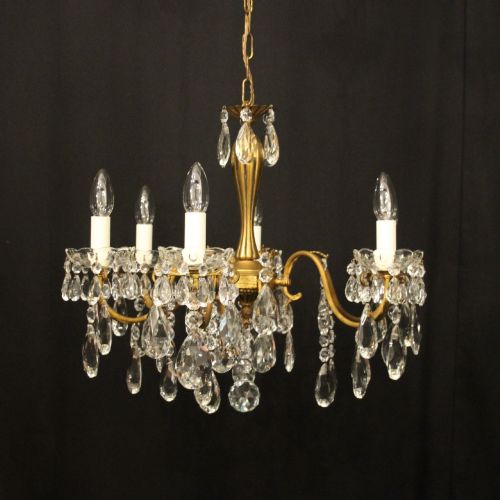
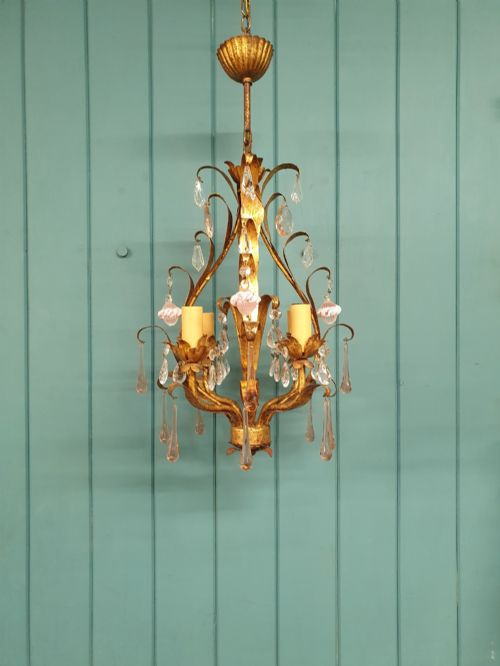
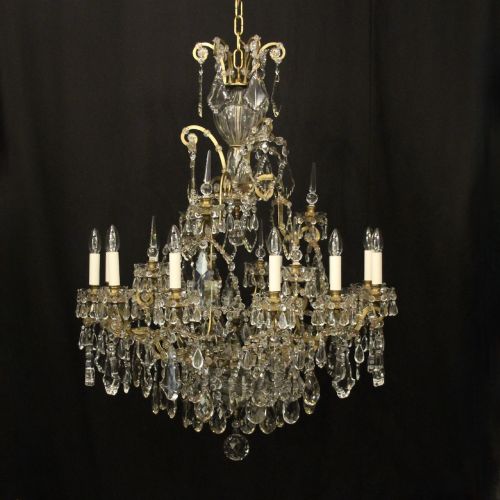
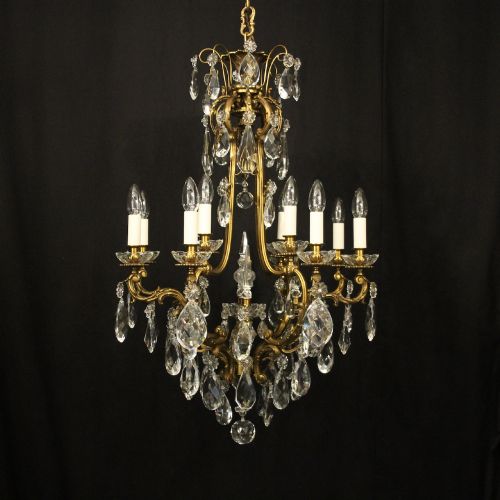
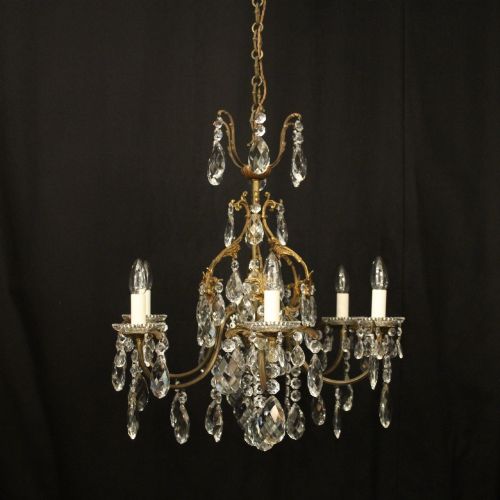
A crystal lighting fixture encompasses chandeliers, ceiling lights, wall sconces, and pendant lights designed to refract and scatter light around an interior. When searching for a crystal lighting fixture, you are most likely to encounter pieces originating from the nineteenth and early twentieth centuries, particularly French and Italian examples shaped by Rococo, Empire, and Edwardian aesthetic traditions.
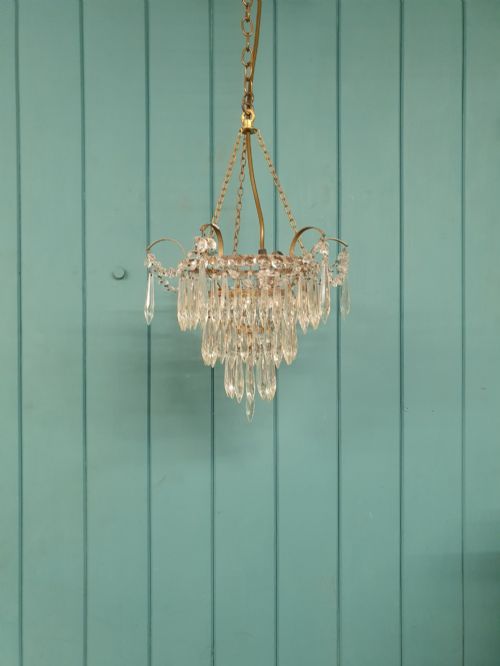
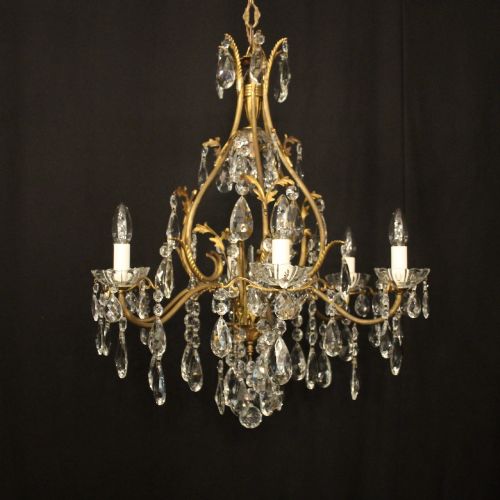
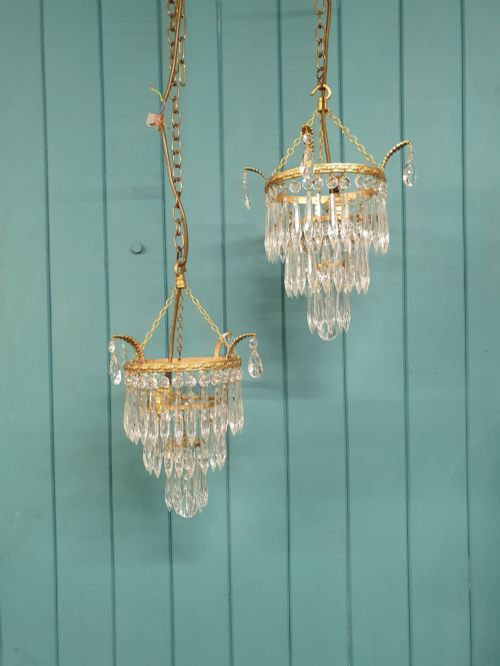
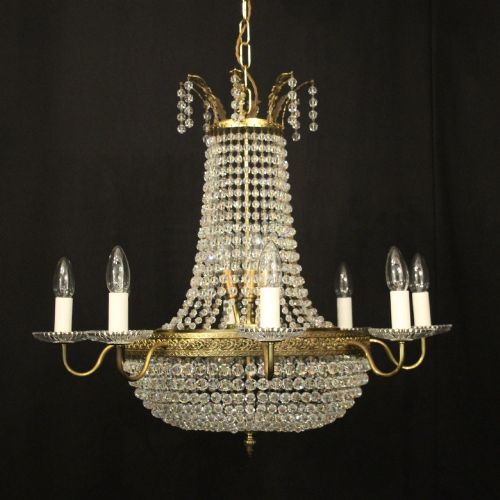
The selections span grand multi-light chandeliers featuring tent and waterfall configurations, birdcage designs, and spike tiers alongside compact wall lights and flush-mounted plafonieres. Materials such as brass, gilt bronze, and gilt metal serve as the structural framework, supporting extensive arrangements of cut glass drops, lustres, and pink glass elements.
Materials and construction methods
Makers constructed the primary framework of a crystal lighting fixture using cast and chased metals including brass, ormolu, gilt bronze, and gilt metal, which provided sturdy support for heavy glass assemblies. Armatures often received a layer of gold leaf or gilding to enhance reflection when illuminated by early electric bulbs or candles.
The optical components rely heavily on cut glass and crystal drops, formed individually by hand and faceted to maximise light dispersion. These prisms and drops attach to the metal branches using fine wire loops or metal pins, allowing movement and a resonant chime.
Crystal Lighting Fixture Retail Price Guide 2026
Typical asking prices for crystal lighting fixture among the pieces listed under this phrase on Sellingantiques today, from the lower quarter to the upper quarter. They describe what is for sale here now, not the wider market.
Listings feature crystal lighting fixtures spanning the Edwardian era back through the nineteenth century, executed in French Empire and Rococo Revival styles.
Assessing quality and execution
The distinction between standard domestic lighting and superior examples rests on the depth of hand-cutting on the crystal drops and the precision of the metalwork chassis. Finer pieces display crisp casting in the bronze or brass mounts, substantial weight in the glass components, and complex multi-tiered structures such as tent and waterfall arrangements.
Workmanship extends to the integration of decorative details like porcelain flowers, figural spelter elements, and balanced arm distribution that ensures the fixture hangs true and distributes illumination evenly.
The Crystal Lighting Fixture Glossary
- Tent and waterfall
- A classic chandelier configuration where a conical upper canopy of strung crystal beads drops down to a wider tiered fringe of hanging prisms. This arrangement creates a dense cascade of reflected light.
- Plafoliere
- A low-profile ceiling light fixture designed to sit close to the ceiling surface rather than hanging on a long drop chain or rod. These often combine brass frames with moulded or cut glass panels.
- Lustre
- A cut crystal pendant or drop suspended from the arms or crown of a lighting fixture to catch and refract illumination. They vary in shape from simple spear points to complex faceted teardrops.
- Ormolu
- Finely chased and gilded bronze used extensively in French metalwork to provide a rich golden finish. The technique involves applying a mercury and gold amalgam to the bronze base before heating.
Crystal Lighting Fixture: Frequently Asked Questions
How do I clean a crystal chandelier?
Maintenance requires gentle hand-cleaning using a mild solution of warm water and specialist glass cleaner applied with a soft cloth. Individual drops can be wiped in situ without dismantling the entire metal armature.
Avoid submerging wired metal components or using abrasive chemicals that might strip historical gilding from the bronze or brass framework.
Are antique chandeliers wired for modern electricity?
Many surviving fixtures have undergone rewiring at some point in their history to comply with contemporary electrical standards. It is advisable to have a qualified electrician inspect the internal wiring before installation in a domestic setting.
Conversion rarely alters the exterior appearance, as internal channels and traditional candle tubes conceal modern wiring safely.
How do I determine the correct size?
Scale depends entirely on the proportions of the room and the height of the ceiling. Large multi-tier tent and waterfall chandeliers require substantial vertical clearance, whereas compact flush-mounted plafonieres suit lower residential spaces.
Consider both the diameter of the spread arms and the overall drop length when matching a fixture to a specific interior.
What is the difference between glass and crystal?
True crystal contains mineral additives such as lead oxide that increase the refractive index and weight of the material, resulting in sharper prismatic dispersion. Standard glass lacks these dense additives and offers a softer, less brilliant sparkle.
Historical lighting often employs high-lead cut glass to maximise the play of light across the room.