

Crystal Ceiling Pendant
These crystal ceiling pendant fixtures bring focused brilliance and period character to a room.
Crystal Ceiling Pendant
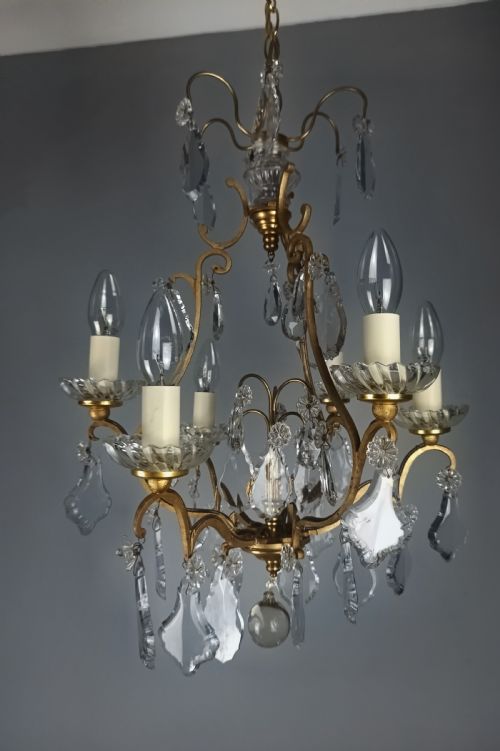
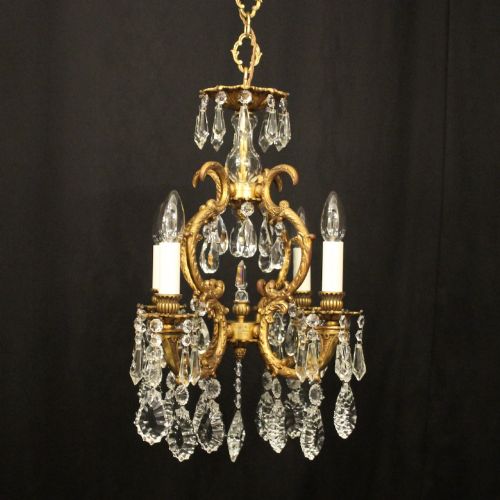
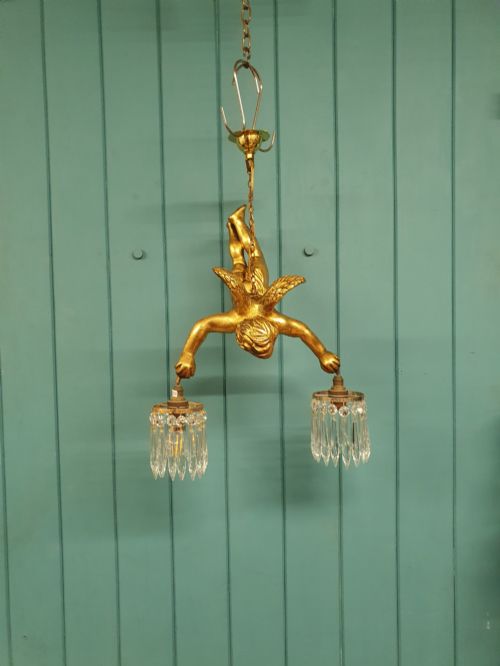
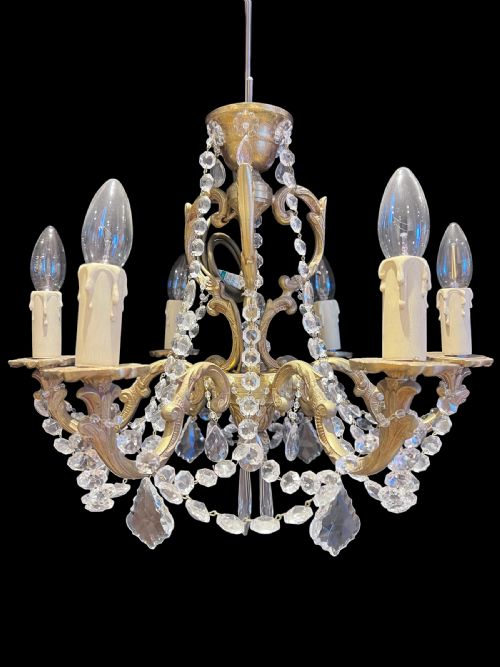
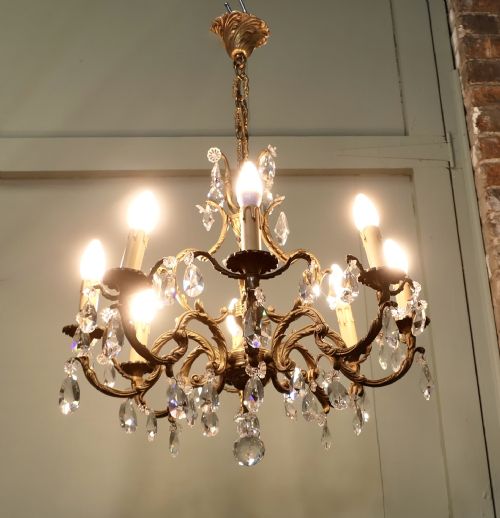
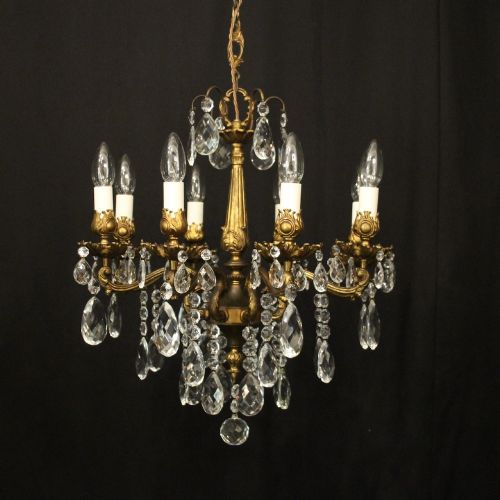
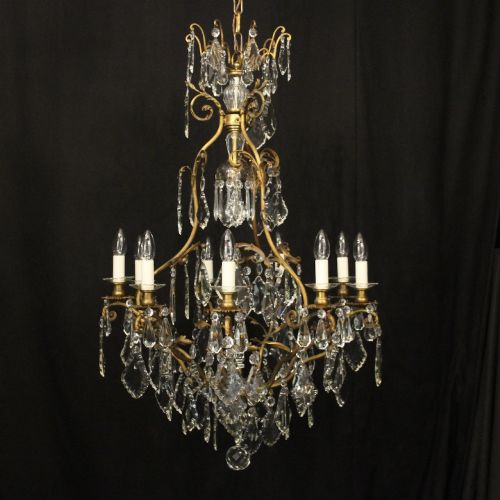
When you search for crystal ceiling pendant fixtures, you encounter hanging light sources designed to illuminate a space while catching the light through glass and metal components. The selection spans distinct forms, from single-light cut glass bowls and basket assemblies to multi-armed chandeliers originating across the nineteenth and early twentieth centuries.
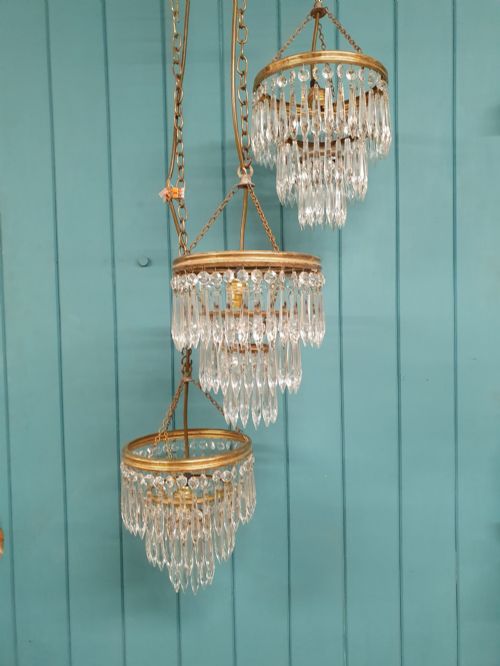
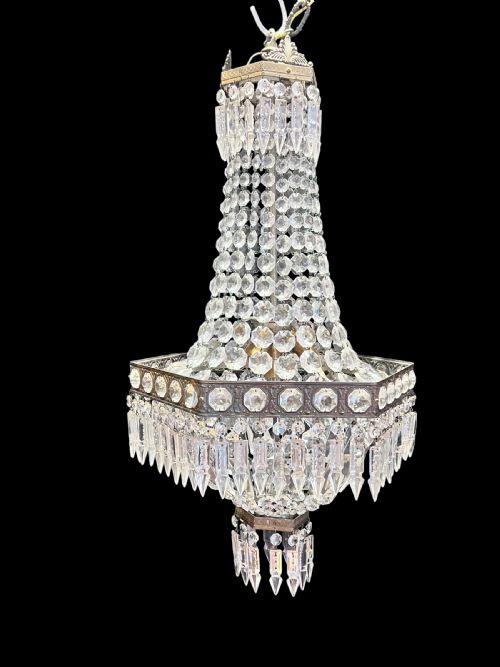
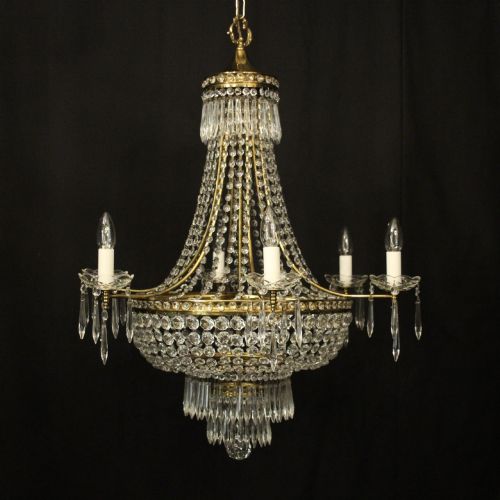
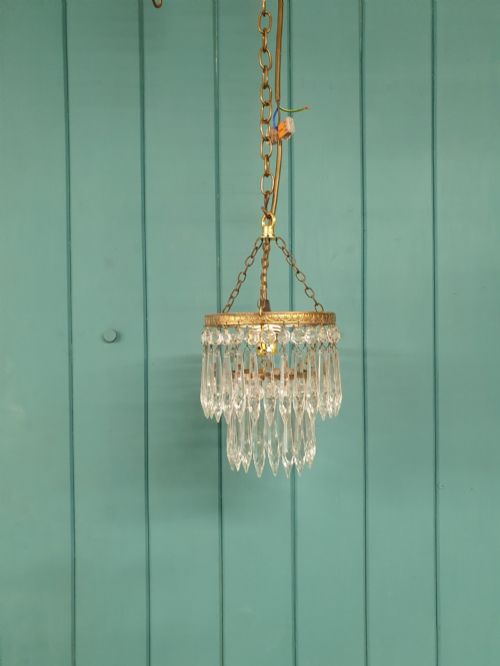
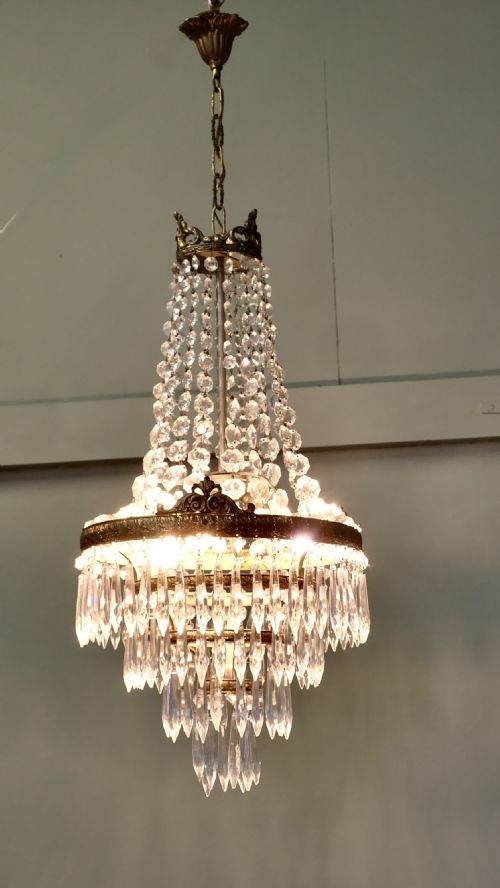
The version you are most likely to meet on this page is an early twentieth-century or Edwardian piece, frequently shaped as a dome, acorn, or plafonnier with a decorated brass gallery. French and Italian workshops predominate, offering styles that range from restrained Edwardian cut glass to elaborate French Empire tent and waterfall constructions.
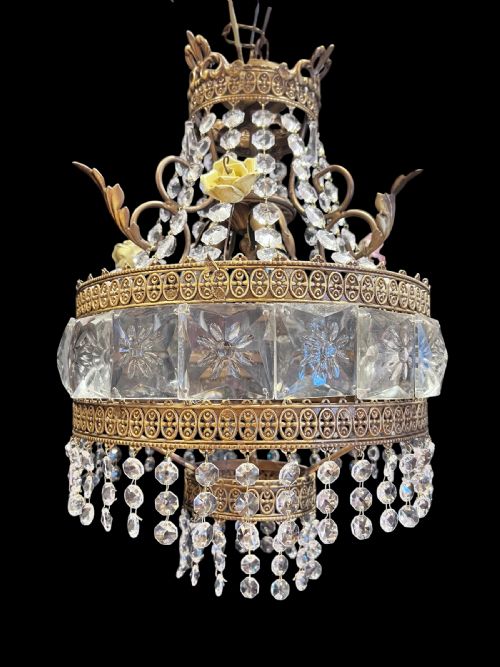
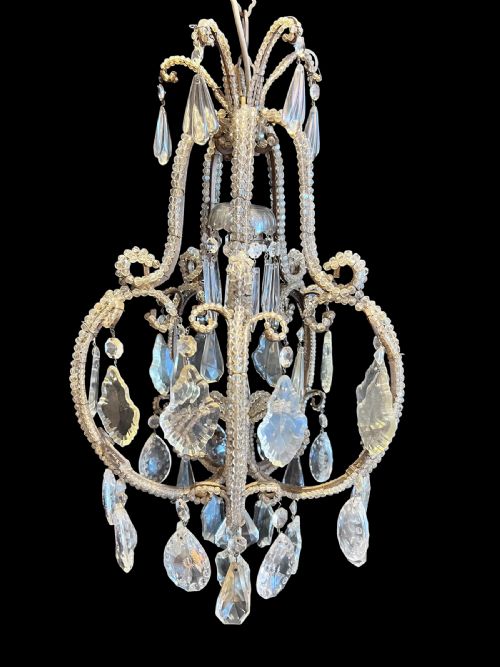
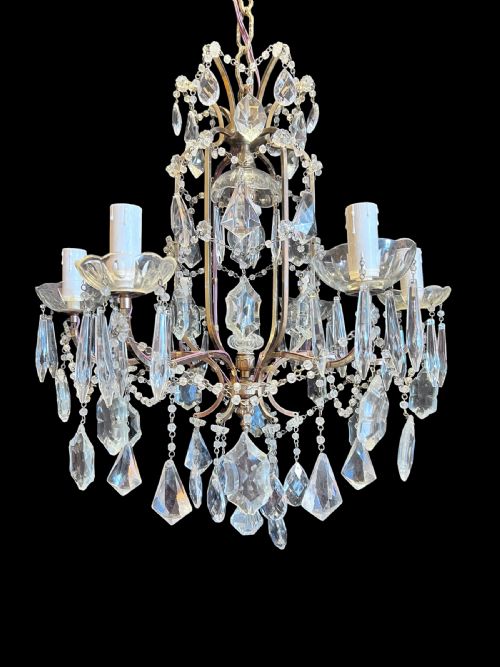
Beyond compact hanging shades, the range encompasses substantial ballroom and salon chandeliers featuring cascading crystal lustres, porcelain flowers, and gilt bronze frames. These items reflect the decorative tastes of the Edwardian era and the 1920s, utilising brass, gilt metal, and silver plating to support heavy crystal prisms.
What varies in quality
The distinction between standard production and superior examples rests on the depth of hand-cutting in the glass and the weight of the metal framework. Finer pieces employ heavier crystal with sharper facets that disperse light cleanly, set within cast bronze or substantial brass mounts rather than lighter pressed metals.
Design complexity also separates tiers of execution, visible in the density of the crystal drops, the presence of original decorated galleries, and the intricacy of gilt work. Master artisans balanced structural integrity with ornamentation, ensuring that multi-tiered tent and waterfall arrangements hung with precise symmetry.
Materials record brass, gilt bronze, and silver-gilded metal supporting various configurations of cut glass, crystal, and porcelain flowers.
The Crystal Ceiling Pendant Glossary
- Plafonnier
- A bowl-shaped ceiling light that fits close to the fixture base. This form directs illumination downward while concealing the bulb within cut glass or crystal.
- Gallery
- The metal collar or rim at the top of a shade that holds the glass securely. Original galleries often feature registration marks or decorative casting.
- Lustre
- A cut crystal pendant drop hung from the arms or frame of a light fixture. These elements move slightly to catch and scatter ambient room light.
- Tent and waterfall
- A chandelier configuration where strings of crystals form an upper tent shape above a wider cascading tier of drops. This style originated in grand French reception rooms.
- Spike chandelier
- A compact hanging light featuring vertical or radiating crystal spikes. These fixtures suit smaller spaces requiring period illumination.
Crystal Ceiling Pendant: Frequently Asked Questions
How do I install a vintage crystal ceiling pendant?
Most hanging fixtures require standard ceiling wiring and a secure mounting hook capable of supporting the combined weight of the metal frame and glass elements. Many Edwardian and period pieces arrive already rewired for modern electrical standards.
Professional installation is recommended for heavier multi-armed chandeliers or large basket assemblies to ensure the ceiling joist bears the load safely.
What rooms suit a crystal ceiling pendant?
Compact dome and acorn pendants work well in hallways, bedrooms, or smaller reception spaces where low ceilings restrict larger hanging fixtures. Their enclosed or semi-enclosed designs provide adequate downward illumination without dominating the room.
Larger multi-light tent and waterfall chandeliers find their natural place in dining rooms, living areas, or high-ceilinged entrance halls where their scale and refractive qualities can be fully appreciated.
How do I clean an antique crystal pendant?
Regular maintenance involves dusting the glass components gently with a soft cloth while the fixture remains suspended. For a deeper clean, delicate crystal drops can be washed individually in warm water with a mild detergent.
Avoid using harsh chemical sprays directly on the metal frames or gilt surfaces, as these can damage antique finishes and delicate silver plating.
How can I tell an Edwardian pendant from a later piece?
Edwardian and early twentieth-century pieces often feature specific glass-cutting patterns, distinct brass galleries, and particular wiring methods consistent with the period before the 1930s. Examining the weight of the metal and the clarity of the cut glass helps establish the era of manufacture.
Stylistic cues such as restrained Edwardian cut glass contrast with the more ornate French Empire and Rococo revival designs popular in subsequent decades.