




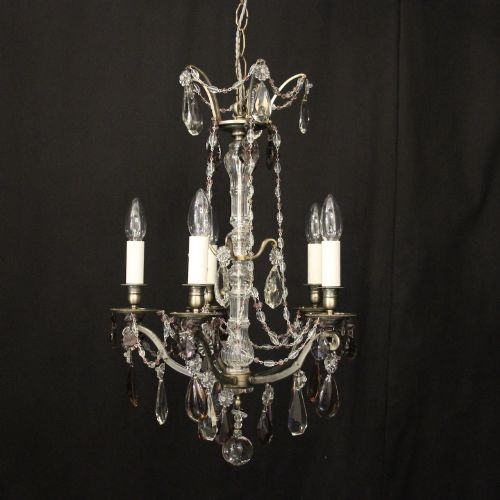
Crystal Ceiling Lamp
A crystal ceiling lamp brings immediate brilliance to a room, scattering light through faceted drops and polished metal frames.
Crystal Ceiling Lamp
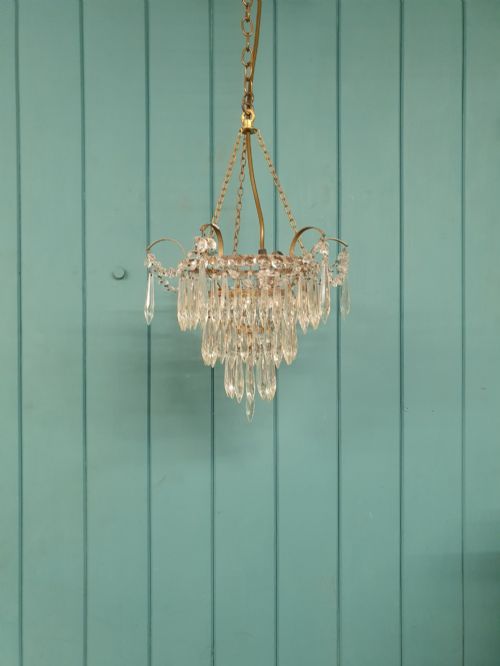
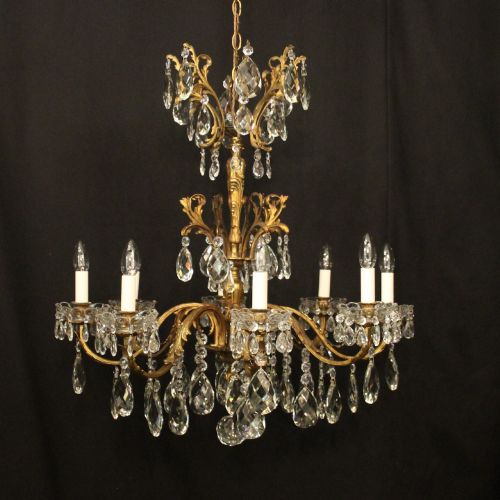
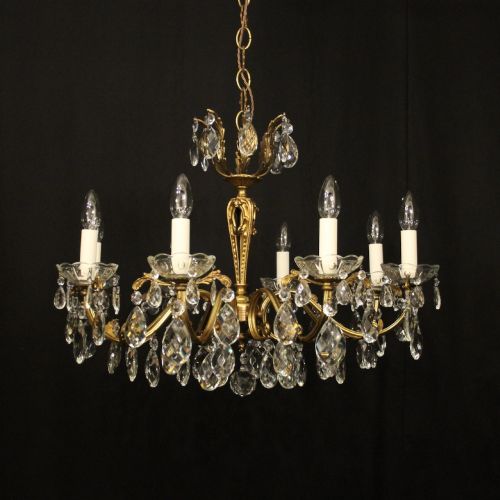
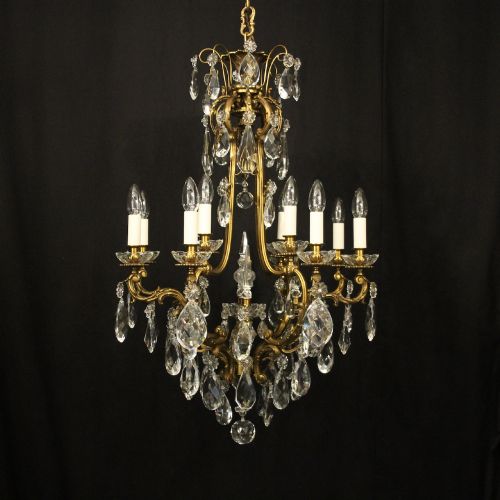
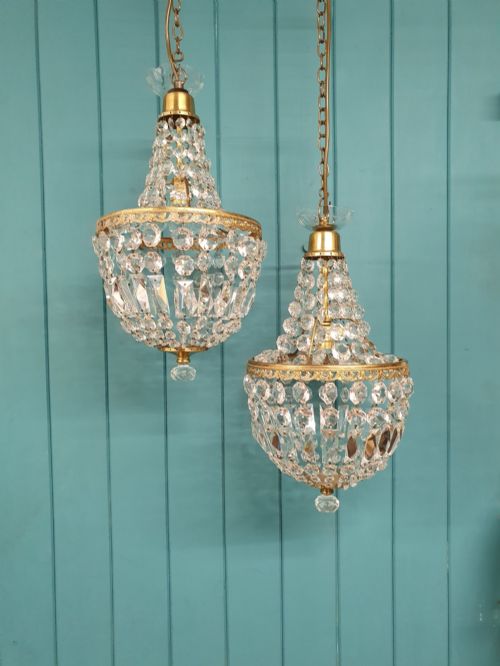
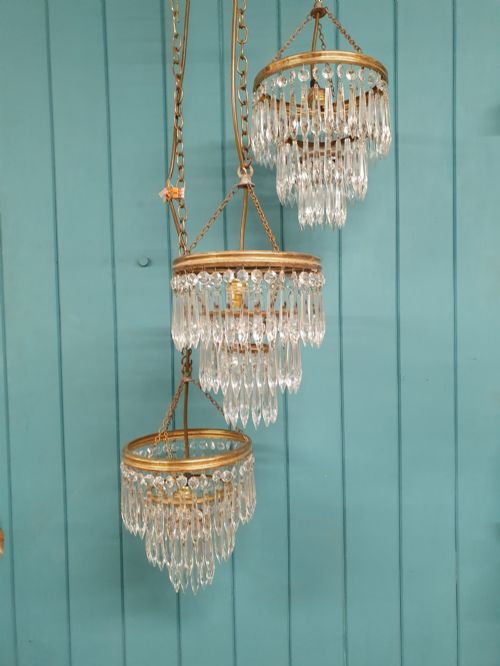
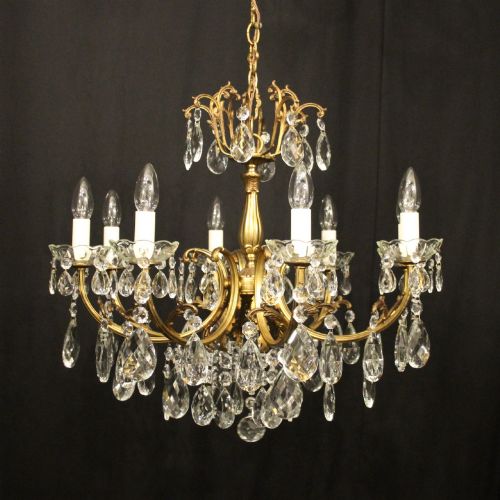
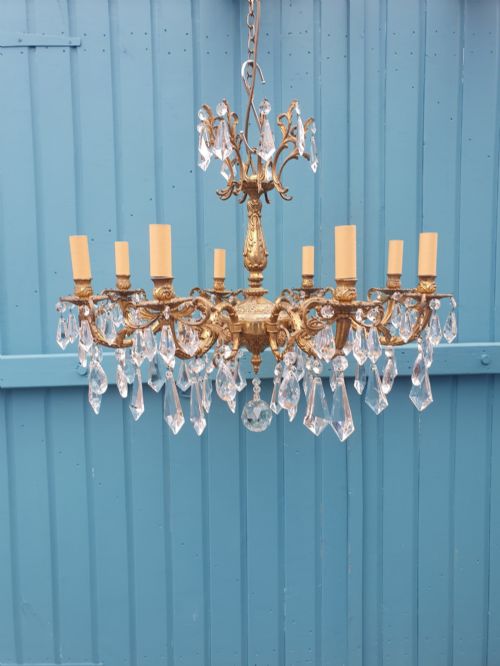
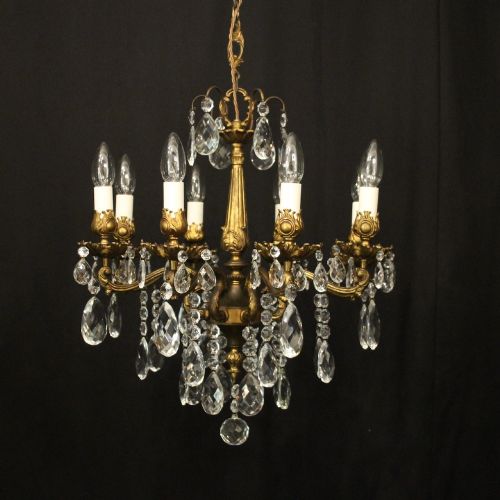
A crystal ceiling lamp encompasses chandeliers, pendant lights and plafonniers designed to suspend illumination directly from above. When you search for this phrase, you encounter fixtures that span from the late Victorian period through the Edwardian era and into the 1920s and 1930s. French and Italian designs dominate, ranging from modest single-light hallway fittings to multi-armed chandeliers spanning several tiers.
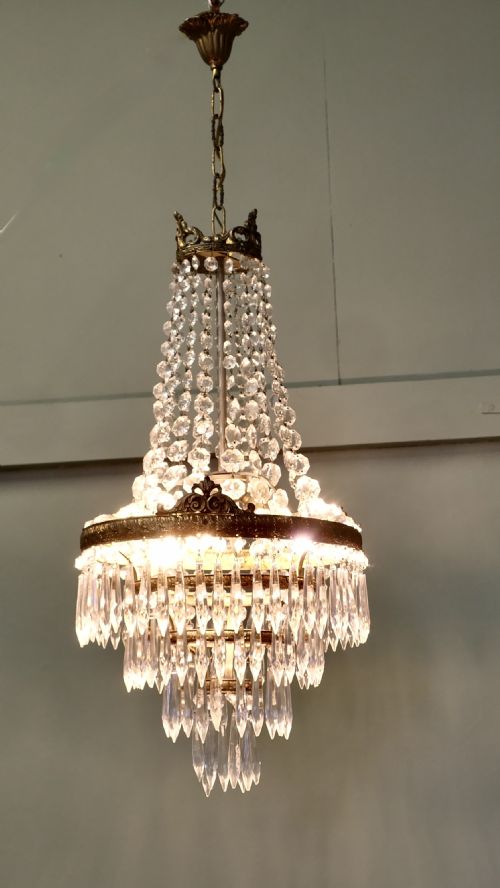
The assortment on this page relies heavily on continental aesthetics, particularly French Empire and Rococo styles alongside Art Deco geometric forms. You will find small spike chandeliers measuring mere inches alongside expansive tent and waterfall configurations holding upwards of ten lights. These fittings utilise brass, gilt bronze and silvered mounts to anchor thousands of individual glass elements.
Materials and construction methods
Makers constructed the structural frames of these lamps using cast and spun brass, gilt bronze, spelter and iron wire. These metal armatures were often silvered or gilded to reflect additional light and complement the surrounding decor of the period. Skilled artisans wired the metal frames to support numerous bulb holders, depending on whether the fixture was a single-light basket or a grand multi-armed chandelier.
The defining characteristic of these lamps is the glass itself, ranging from standard moulded glass to heavily cut crystal prisms and drops. Individual pieces like beads, bag chains, droplets and spikes were hand-hung from the metal frames using brass pins and wire loops. Coloured crystals occasionally feature in Italian and French designs to introduce subtle hues into the projected light.
Crystal Ceiling Lamp Retail Price Guide 2026
Typical asking prices for crystal ceiling lamp among the pieces listed under this phrase on Sellingantiques today, from the lower quarter to the upper quarter. They describe what is for sale here now, not the wider market.
Listings on this page span several decades, featuring Edwardian pieces alongside fixtures produced through the 1920s and 1930s.
Distinctions in quality
The standard of a crystal ceiling lamp rests largely on the depth of the metal casting and the precision of the glass cutting. Heavier gilt bronze mounts and thick brass frames indicate superior workshop output compared to lighter wire or spelter alternatives. Top-tier pieces exhibit crisp facets on every prism, allowing maximum light refraction.
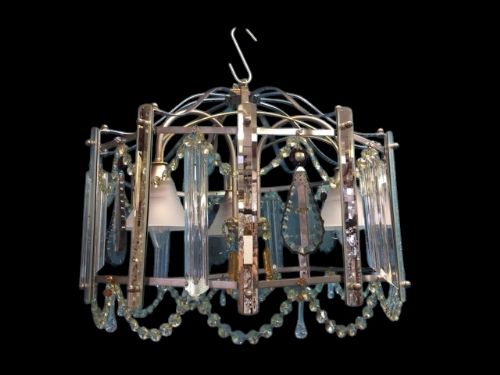
Completeness and originality dictate the character of these fixtures over time. Lamps retaining their matching set of original cut-glass drops, uniform beads and correct brass mounts hold greater integrity than assemblies pieced together from disparate components. The intricacy of the arrangement, such as complex tent and waterfall cascades or multi-tiered Art Deco glass panels, reflects the ambition of the original maker.
The Crystal Ceiling Lamp Glossary
- Plafonnier
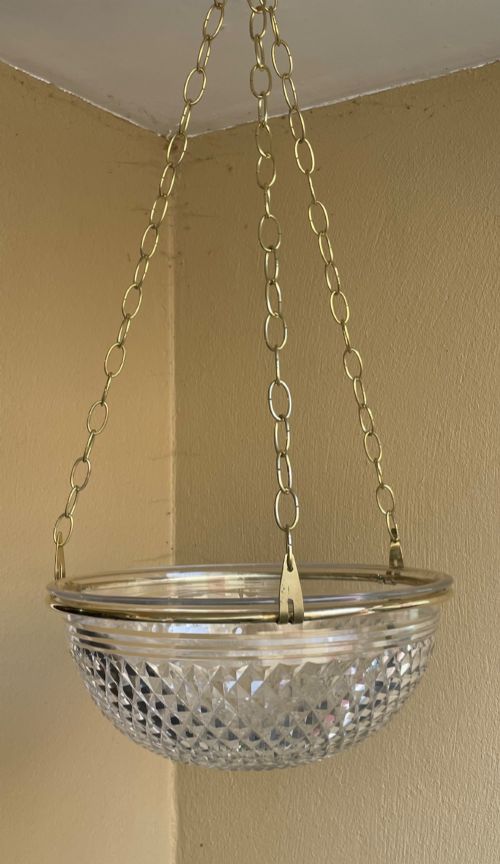
- A ceiling-mounted light fixture that sits flush or very close to the ceiling surface rather than hanging on a suspension chain. These often feature glass bowls or mounted crystals contained within a metal frame.
- Tent and waterfall
- A specific chandelier configuration where strings of crystal beads form an upper triangular tent shape, dropping down into a wider, flowing cascade of cut glass prisms below.
- Spike chandelier
- A compact hanging light fixture characterised by a central vertical cluster of outward-pointing glass or crystal spikes surrounding the bulb.
- Gilt bronze
- An alloy of copper and zinc treated with a fine layer of gold on the surface, commonly known as ormolu on high-end French light fittings.
- Cut glass
- Glass that has been shaped and faceted on a wheel to create sharp angles that catch and split light effectively.
Crystal Ceiling Lamp: Frequently Asked Questions
How do I hang a crystal ceiling lamp safely?
These antique fixtures require direct suspension from a ceiling joist using a suitable metal hook or bracket capable of supporting the combined weight of the metal frame and glass drops. Professional electrical installation is essential to ensure the internal wiring matches modern safety standards.
Because many older lamps utilise non-standard wiring channels, an electrician may need to adapt the rose and earth connections without altering the visible historic metalwork of the pendant or chandelier.
What rooms suit a crystal ceiling lamp?
Smaller spike chandeliers, single-light baskets and plafonniers suit hallways, landings, cloakrooms and boudoirs where a compact drop creates a distinct focal point without overwhelming the floor space. They provide concentrated pools of decorative illumination.
Larger multi-light tent and waterfall chandeliers or multi-tiered Art Deco pieces require high ceilings and broader floor space, such as dining rooms or drawing rooms, to allow the spread of light and the scale of the frame to register properly.
How can I tell the period of a crystal ceiling lamp?
Dating relies on stylistic clues and construction materials, such as the geometric stepping found on 1930s Art Deco tiers versus the organic floral wirework of Edwardian pieces or the heavy cast gilt bronze of 1920s French Empire revivals. Inspecting the metal types, screw threads and pin fixings also helps determine the era of manufacture.
Earlier Victorian and Edwardian examples often feature simpler brass frames and basic prism cuts, whereas interwar pieces frequently showcase more elaborate cascading drops and coloured glass accents.