




Crystal Applique Wall Lights
Crystal applique wall lights bring exceptional reflective illumination to a room, combining cut glass with gilt metal to catch the light.
Crystal Applique Wall Lights
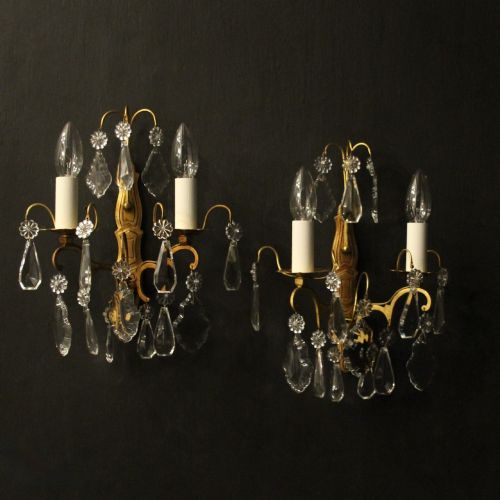
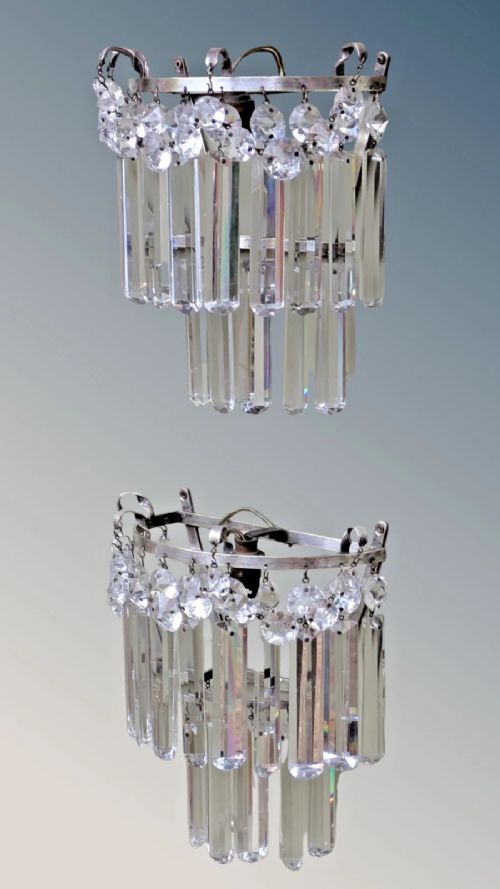
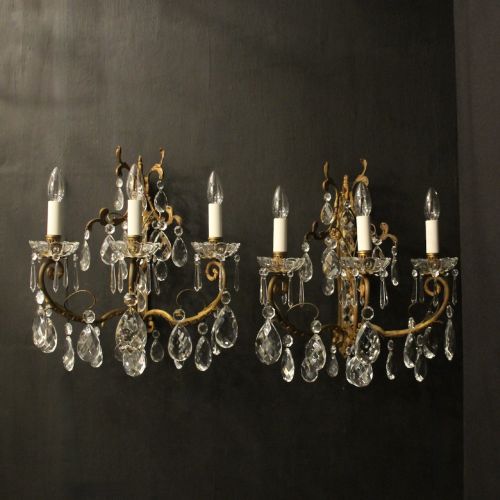
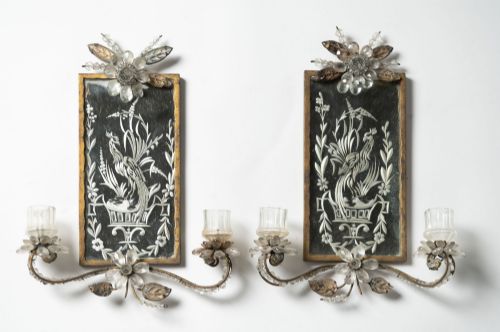
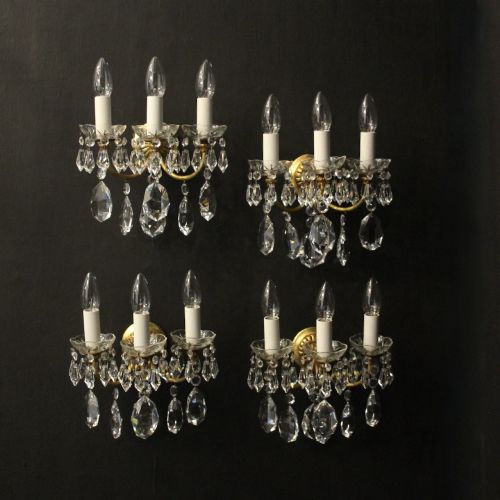
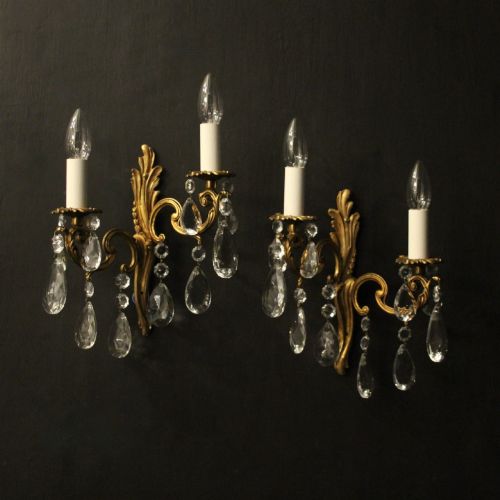
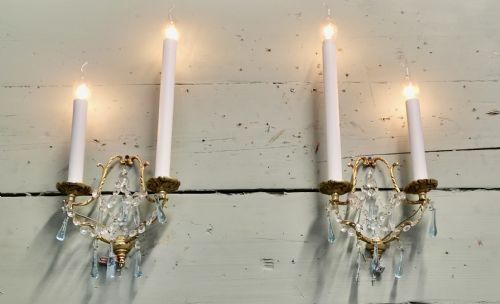
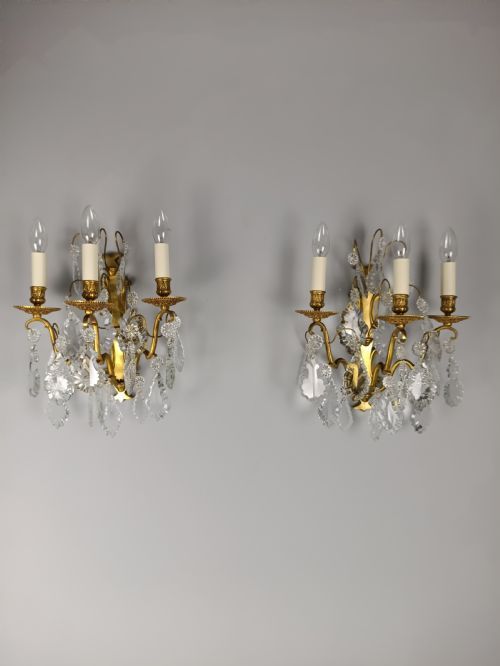
Crystal applique wall lights are decorative fixtures designed to mount directly onto vertical surfaces while projecting illumination outwards. When you explore crystal applique wall lights, you encounter twin and triple arm formats alongside mirrored sconces and wall chandeliers.
The pieces on this page originate predominantly from French workshops and Italian makers, spanning the nineteenth century through the 1930s. Styles range from French Rococo and Baroque to Gustavian, Florentine, and Edwardian designs.
Pairs dominate the selection, making them suitable for flanking mirrors, fireplaces, or doorways. Metal arms support cut glass or crystal drops, which scatter light across the surrounding space.
Materials and construction
Makers constructed the primary frames using brass, gilt bronze, ormolu, and giltwood to provide a stable, ornate armature. These metal structures were cast or carved, then gilded or polished to achieve a reflective surface.
Pendants, beads, and lustres formed from cut crystal and glass are suspended from the frames to refract illumination. Metal wiring or candle sockets integrate with the central body to support electrical conversion or traditional candles.
Listings feature items spanning the 19th Century, Edwardian era, and the 1910s to 1930s.
What separates the tiers
Quality rests in the precision of the metal casting and the depth of the gilding on the bronze or brass frames. Superior examples feature crisp chiselling on ormolu surfaces and substantial bronze weight rather than lighter pressed sheet metal.
The clarity and cut of the crystal elements dictate the overall brilliance of the fixture. Hand-cut glass drops with sharp facets create significantly more light refraction than plain pressed glass.
Maison Baguès·F. & C. Osler
The Crystal Applique Wall Lights Glossary
- Applique
- A wall-mounted lighting fixture or sconce designed to hold candles or electric bulbs. These fixtures attach flat against the wall surface.
- Ormolu
- Gilded bronze used extensively in decorative hardware and lighting mounts. The technique involves applying a gold amalgam to a bronze base.
- Lustre
- A glass pendant or hanging prism attached to a light fixture to enhance visual sparkle. Lustres catch and scatter ambient light.
- Toleware
- Painted sheet metal fashioned into decorative objects and light backplates. This material often mimics floral or organic forms.
- Giltwood
- Timber carved and coated with a thin layer of gold leaf. This finish appears frequently on Florentine and continental frames.
Crystal Applique Wall Lights: Frequently Asked Questions
How do I wire antique wall lights?
Most antique fixtures require professional rewiring to meet modern safety standards while preserving original backplates. Electricians adapt the internal channels to fit standard wall boxes.
Original brass and bronze arms often accommodate modern candelabra fittings inside existing candle tubes without altering the exterior appearance.
Where should I mount wall sconces?
Mount twin or triple arm sconces at eye level, typically around five feet from the floor. Placing them on either side of a fireplace or mirror creates balanced illumination.
Ensure the electrical supply box aligns correctly behind the backplate before securing the main metal frame to the wall.
How do I clean cut crystal?
Remove detachable glass drops and wash them gently in warm soapy water using a soft cloth. Dry each piece thoroughly before rehanging to restore maximum sparkle.
Avoid harsh chemical cleaners on gilt bronze or ormolu frames to protect the original metallic finish from damage.
Are these fixtures suitable for low ceilings?
Wall-mounted lights project outward rather than hanging downward, making them ideal for spaces with restricted vertical clearance. They provide layered ambient light without occupying floor or table space.
Compact twin-arm models fit neatly into narrow hallways and smaller rooms.