

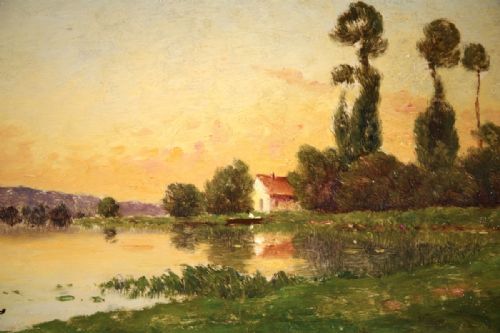


Country River Artwork
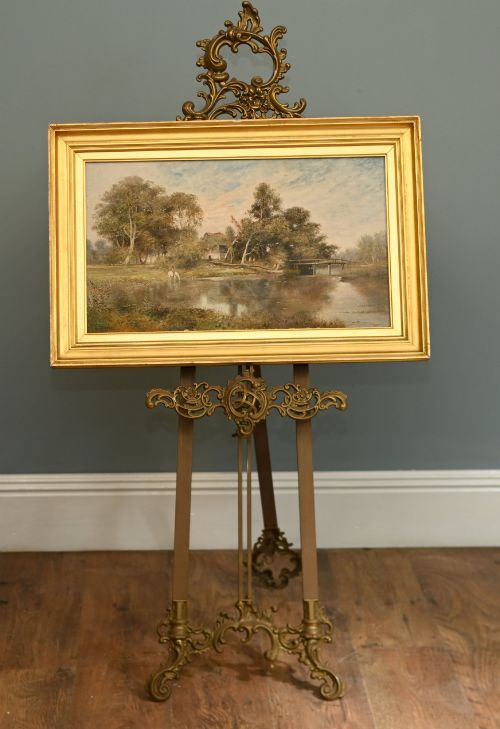
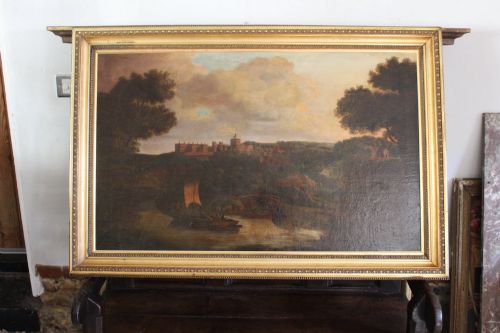
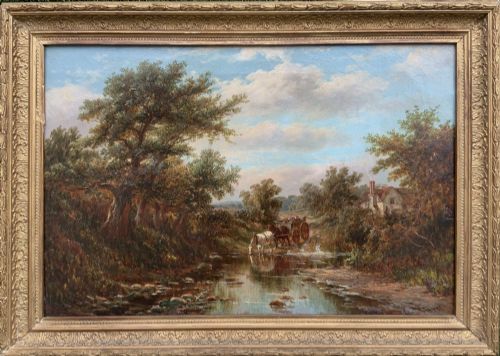
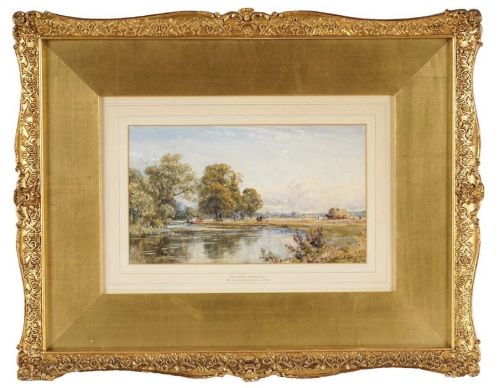
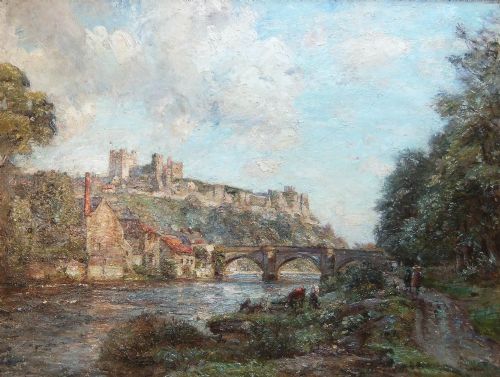
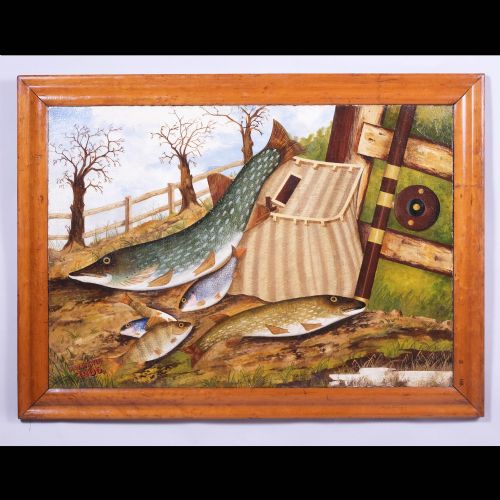
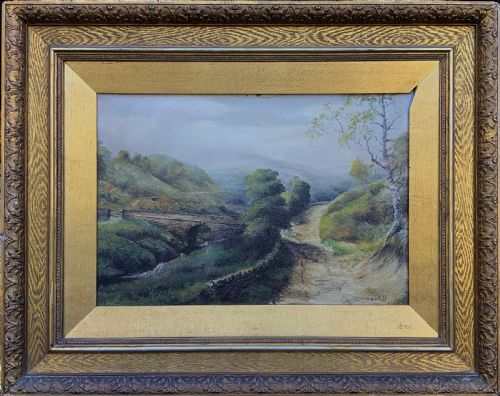
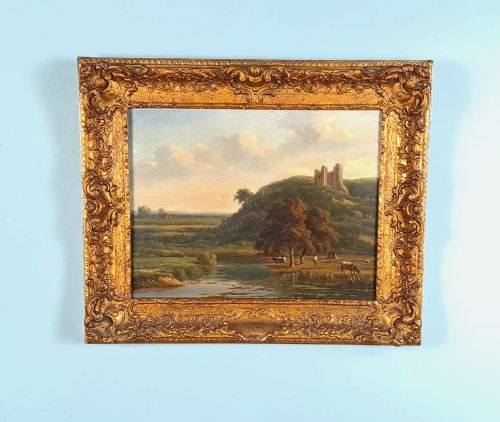
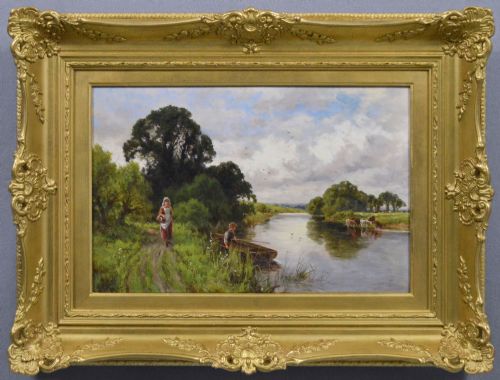
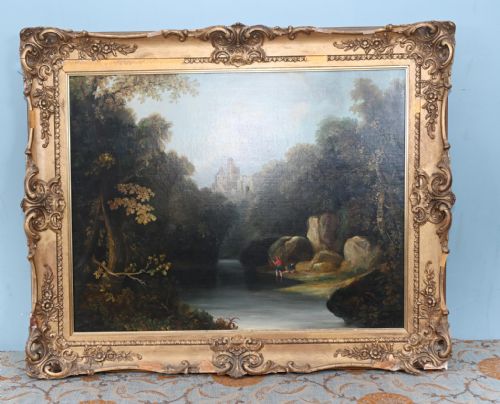
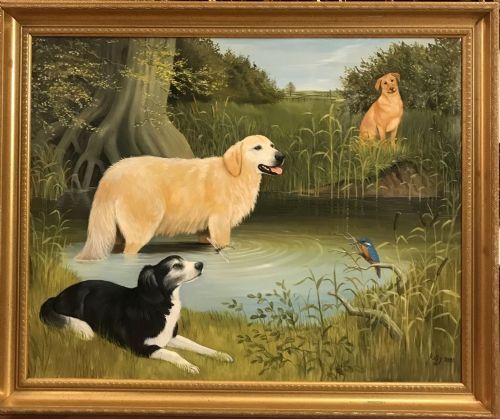
These country river artwork pieces capture rural waterways on canvas, board, and paper, offering a traditional pastoral view for your interior.
Country River Artwork
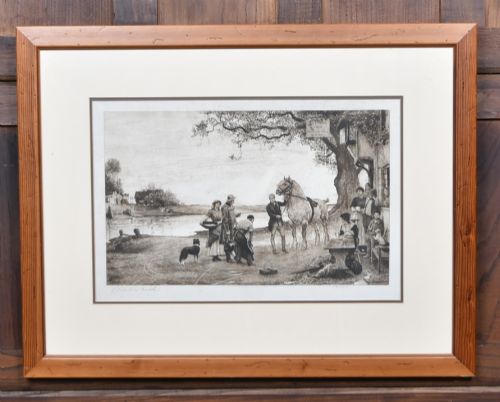
Country river artwork encompasses pastoral paintings, watercolours, and etchings depicting rural waterways, bridges, and figures by banks from the Georgian era through the mid-twentieth century. The selection leans heavily towards nineteenth-century oil paintings and watercolours rendered by British and French schools.
Works on this page often feature specific river locations, such as the Thames, the Severn, or Yorkshire wharfs, alongside generic pastoral scenes involving anglers, livestock, or estates. Common formats include framed oil paintings on canvas or board, alongside delicate watercolours mounted under glass.
Materials and techniques utilised
Artists relied primarily on oil paint applied to stretched canvas, wooden panels, or board, occasionally utilising gesso grounds and giltwood frames. Watercolours on paper appear frequently, often supplemented by ink or gouache highlights.
Support methods varied from direct application on canvas to older canvases later laid onto board, while frames range from simple timber mouldings to ornate nineteenth-century giltwood.
The listings span from the Georgian period through the 1960s, featuring oil on canvas, watercolour, and acrylic materials.
Variations in quality
Distinction in these works rests upon the confidence of brushwork, the handling of natural light upon water, and the structural integrity of the composition. Stronger pieces demonstrate careful observation of atmosphere and depth rather than mechanical repetition of foliage and water reflections.
The degree of documentation also influences standing, as signed works by recorded regional painters or exhibited academic artists generally carry more secure provenance than anonymous school pieces.
Robert W. Macbeth·Robert Thorne Waite·Herbert Royle·Henry H Parker·Henri Jaques Delpy·Arthur Reginald Smith·John Bell·Henry John Kinnaird·George Hilditch·Peter Deakin·George Arthur Fripp·William Langley·Fred Stead·Charles Harmony Harrison·Thomas Baker of Leamington·William Manners·Phyllis Morgans·Claude Cardon·Thomas Creswick·Abraham Hulk Junior·William Traies·Paul H Ellis·Pierre Emmanuel Eugene Damoye·Harry Pennell
The Country River Artwork Glossary
- Watercolour
- A paint consisting of pigment suspended in a water-based solution, traditionally applied to paper. It allows for translucent washes and delicate atmospheric effects.
- Giltwood
- Wood that has been treated with a thin layer of gold leaf or gilt gesso. It is commonly found on nineteenth-century picture frames.
- Tondo
- A circular work of art, whether a painting or a relief. Round landscape compositions appear occasionally in mid-nineteenth-century production.
- Barbizon School
- A nineteenth-century French art movement characterised by tonal restraint, naturalism, and a focus on rural landscape. Practitioners painted directly from nature.
- Stretcher
- The wooden frame upon which a canvas is stretched before painting. Inscriptions written upon this timber often record titles and artist names.
Country River Artwork: Frequently Asked Questions
How do I clean a vintage oil painting?
Surface dust should be removed gently with a soft, dry artist brush without applying pressure to the pigment.
Chemical cleaners and water must be avoided, as older oil paint and varnish layers remain sensitive to moisture and solvents.
Where should I hang a landscape watercolour?
Watercolours require placement away from direct sunlight to prevent fading of the pigments and discoloration of the paper support.
Maintaining stable indoor humidity levels also protects the paper and the original framing materials from warping.
How can I date an antique painting?
Dating relies upon examining the canvas type, stretcher construction, framing style, and any artist signatures or inscriptions found on the reverse.
Stylistic conventions of the period, such as Victorian naturalism or Edwardian impressionism, further narrow the decade of creation.
What is the difference between oil and watercolour?
Oil paint utilises a drying oil binder, offering rich texture and opacity on canvas or wooden board surfaces.
Watercolour employs a water-soluble binder on paper, creating lighter, translucent effects that require protective glass framing.