




Cornish Sea Painting
A cornish sea painting captures the rugged light and maritime life of the south-west peninsula through historic brushwork.
Cornish Sea Painting
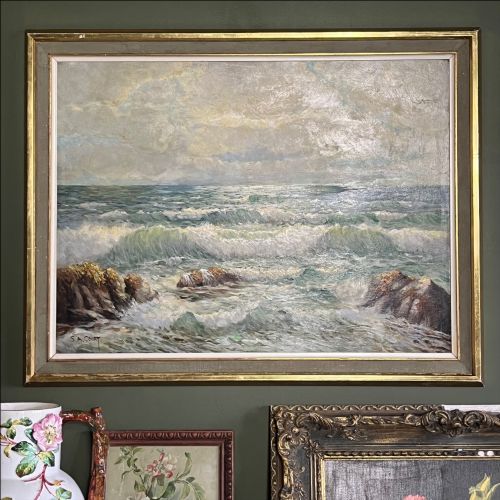
A cornish sea painting brings the rocky shores, bustling harbours and Atlantic swells of the region directly onto canvas and paper. These works document the changing coastal light through historical artistic lenses.
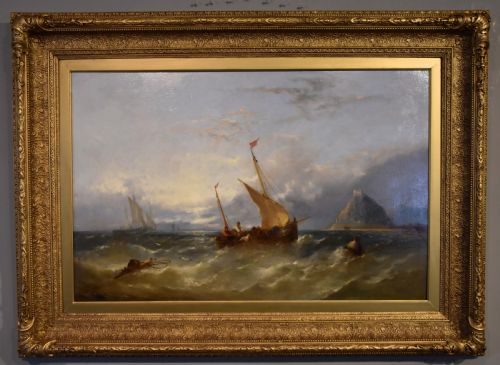
The selections available here range from detailed Victorian marine art and Edwardian realism to en plein air studies and British Impressionism. Pieces span the nineteenth century through the mid twentieth century, featuring works by noted regional artists.
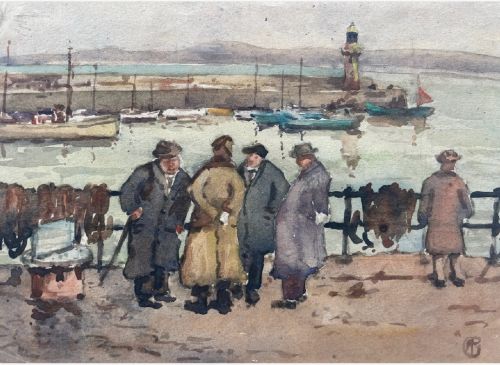
Most examples focus on familiar maritime subjects such as St Ives, St Michael's Mount, Polperro and local fishing trawlers at work. Buyers encounter both intimate watercolours and substantial framed oil paintings.
Materials and methods
Artists captured coastal scenes using oil paint on canvas or board, alongside watercolour and woodblock print techniques on paper. Oil pigments provide depth and texture for turbulent waves and moody skies.
Many works were painted en plein air directly on location to catch transient weather conditions along the shoreline. Finished canvases frequently reside within traditional gilt wood frames that complement the period aesthetic.
Cornish Sea Painting Retail Price Guide 2026
Typical asking prices for cornish sea painting among the pieces listed under this phrase on Sellingantiques today, from the lower quarter to the upper quarter. They describe what is for sale here now, not the wider market.
Several Victorian canvases still carry the scent of linseed oil and distant salt spray after more than a century.
Distinctions in quality
Quality rests upon the artist's ability to render the specific weight of Atlantic water and the particular luminosity of Cornish skies. Stronger pieces demonstrate confident brushwork and an authentic grasp of maritime atmosphere rather than rigid adherence to formula.
The distinction between a top tier work and a lesser study lies in the handling of light and composition. Documented signatures by established painters working within movements like the Newlyn School elevate a piece significantly.
Sidney A. Court·William Banks Fortescue·William Henry Williamson·George F Pennington·Charles Napier Hemy·Frederick Stuart Richardson·Herbert James
The Cornish Sea Painting Glossary
- En plein air
- Painting outdoors to capture natural light and atmospheric conditions directly. This method encourages immediate brushwork rather than studio elaboration.
- British Impressionism
- A painting style focusing on light and everyday subjects with loose brushstrokes. It developed in Britain under French influence during the late nineteenth century.
- Maritime Realism
- An artistic approach dedicated to depicting ships, coastal life and the sea with accurate detail. Artists working in this mode prioritized observational truth.
- Watercolour
- Pigments ground in a water-soluble binder and applied to paper. This medium allows for transparent washes that suit coastal mists and bright skies.
- Newlyn School
- An art colony based in a Cornish fishing village during the late nineteenth and early twentieth centuries. Artists here painted local scenes en plein air, focusing on realism and everyday rural life.
Cornish Sea Painting: Frequently Asked Questions
What subjects appear in these paintings?
The works depict local harbours, fishing boats, rocky headlands and tidal movements around Cornish locations. Scenes often feature historic vessels and coastal workers.
Popular subjects include St Ives harbour, St Michael's Mount and Polperro. Painters concentrated on the daily rhythm of maritime life.
How do watercolours differ from oils here?
Waterworks on paper offer delicate transparency and immediacy, frequently capturing subtle shifts in coastal weather. They require protective framing behind glass.
Oils on canvas provide richer texture and greater durability, allowing for heavier impasto to represent churning waves and stormy skies.
How do I identify the period of a work?
Stylistic clues, framing materials and artist signatures help date each piece to specific eras like the Victorian or Edwardian periods. Maritime clothing and vessel types also provide chronological markers.
Recorded dates in the titles or stretcher inscriptions offer direct evidence of creation timeframes.
Where should I hang a coastal painting?
These works suit traditional living spaces or studies where natural light complements their historic palettes. Avoid hanging them in direct sunlight to protect pigments.
Pairing a framed oil with neutral wall colours allows the marine tones and gilt wood frames to stand out.