


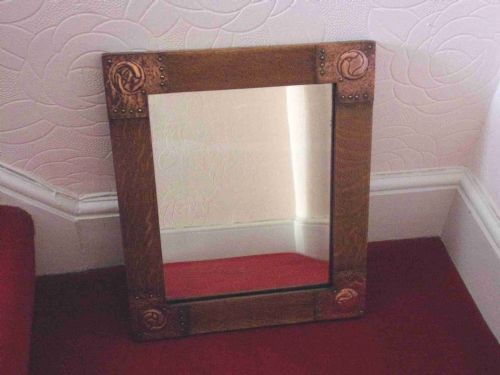


Copper Framed Wall Mirror
These copper framed wall mirrors bring tactile metalwork and reflective depth to an interior, channelling the handmade ethos of the Arts and Crafts movement.
Copper Framed Wall Mirror
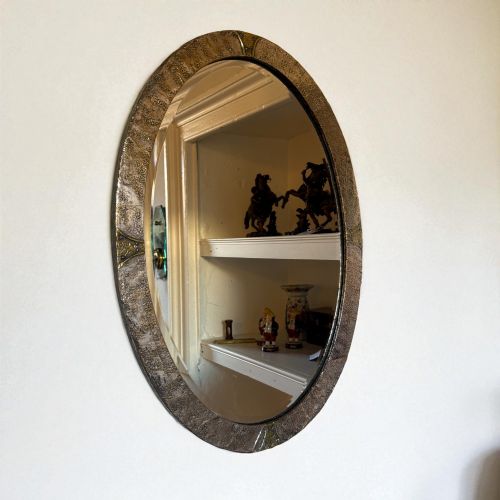
A copper framed wall mirror unites functional glass with shaped metal, frequently manifesting in the distinctive styles of the Arts and Crafts movement alongside occasional Art Deco expressions. These pieces emerge predominantly from the early twentieth century, spanning decades from eighteen ninety through to nineteen thirty.
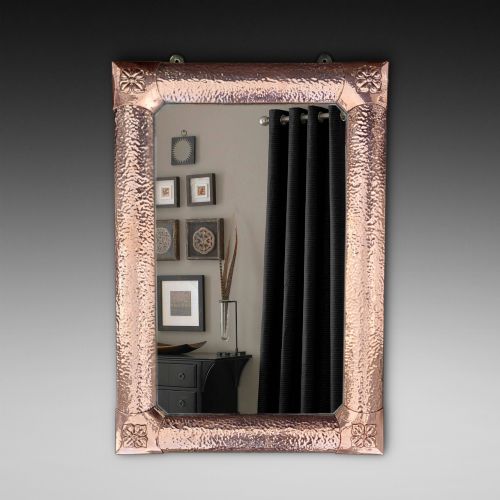
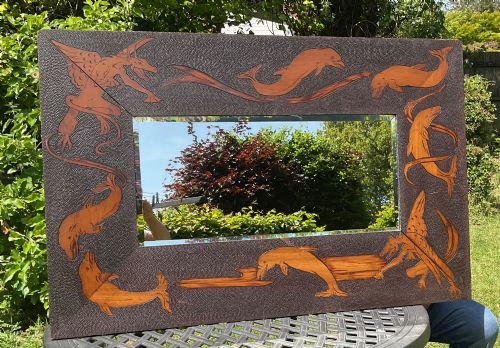
The most common formats on this page take rectangular or oval shapes, often enhanced by beaten metal surfaces, raised motifs, or ceramic cabochons. Buyers encounter variations featuring oak or brass elements alongside the primary copper framework.
Originating largely from British workshops and retailers of the period, these mirrors serve as both practical household items and decorative focal points. The survival of these works demonstrates the enduring appeal of hand-hammered metalwork in domestic spaces.
Materials and construction methods
Makers formed the frames using sheet copper, frequently employing hand-beating and repoussé techniques to raise patterns from the reverse side. This metalwork is often mounted onto wooden structures, such as oak backboards, to provide structural rigidity for the wall hanging.
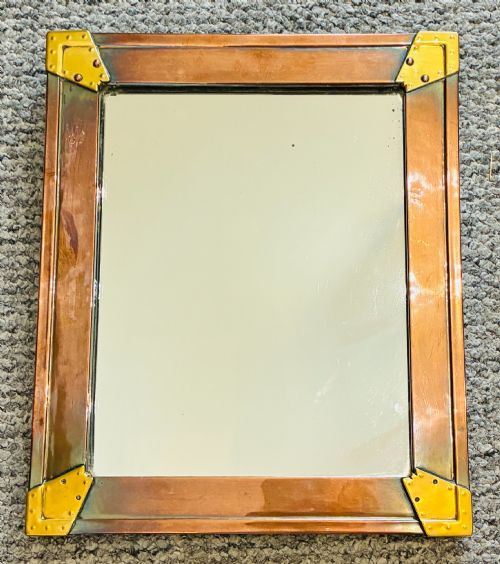
Surfaces may incorporate applied brass details, ceramic cabochons like Ruskin pottery inserts, or riveted joins that highlight the construction process. The glass itself is typically set within the metal rebate, sometimes featuring bevelled edges to catch the light.
Listings span production dates from eighteen ninety to nineteen thirty, with the nineteen hundreds representing the most frequently encountered period.
Assessing quality in period metalwork
Quality rests in the depth and crispness of the hand-hammered repoussé work, where deeply chased motifs display greater artisan involvement than shallow stampings. The complexity of the design, such as stylised trees or figurative dragons, distinguishes standard production from finer workshop output.
The integration of supplementary materials, including ceramic cabochons or mixed metal brass elements, elevates the visual interest of the piece. Superior examples maintain the original patination of the copper and retain sound wooden backing structures.
Liberty and Company
The Copper Framed Wall Mirror Glossary
- Repoussé
- A metalworking technique where the artisan hammers the design from the reverse side to create a raised relief on the front. This method defines the tactile surface texture of many period frames.
- Cabochon
- A polished, convex gemstone or ceramic piece without facets, frequently set into the copper frame as a decorative accent. Ruskin pottery produced notable ceramic examples used in this manner.
- Arts and Crafts
- A design movement spanning the late nineteenth and early twentieth centuries that prioritised traditional craftsmanship and natural materials over mass production. Most items on this page reflect this aesthetic.
- Bevelled glass
- Mirror glass with edges ground and polished at an angle to create a framed, prismatic border effect. This treatment adds depth to the reflection.
- Art Deco
- A style prevalent during the nineteen thirties characterised by streamlined geometric forms and modern materials. Pieces from this era utilise copper in combination with coloured glass panels.
Copper Framed Wall Mirror: Frequently Asked Questions
How do I hang a heavy copper mirror safely?
These pieces require secure wall fixings suited to their substantial weight, especially when mounted on wooden backboards.
Utilise appropriate wall plugs and screws matched to your wall type, ensuring the hanging cord or D-rings are robust enough to support the frame.
How should I clean the copper frame?
Maintenance involves gentle dusting with a soft, dry cloth to preserve the historical surface layer.
Avoid abrasive metal polishes that strip away the aged patination accumulated over the decades.
How can I date a copper mirror?
Dating relies on stylistic markers such as repoussé motifs, riveted construction, and associated materials like oak or Ruskin ceramic cabochons.
Pieces from the nineteen hundreds often display distinct Arts and Crafts characteristics, whereas nineteen thirties examples lean towards geometric Art Deco designs.
Are these mirrors suitable for bathrooms?
Moisture in bathrooms can accelerate corrosion on exposed copper surfaces and degrade the wooden backing boards over time.
Dry interior spaces such as hallways, living rooms, or bedrooms offer a more stable environment for preserving period metalwork.