




Copper Frame Mirror
These copper frame mirror pieces bring tactile warmth to a room through hand-hammered metalwork and rich period character.
Copper Frame Mirror
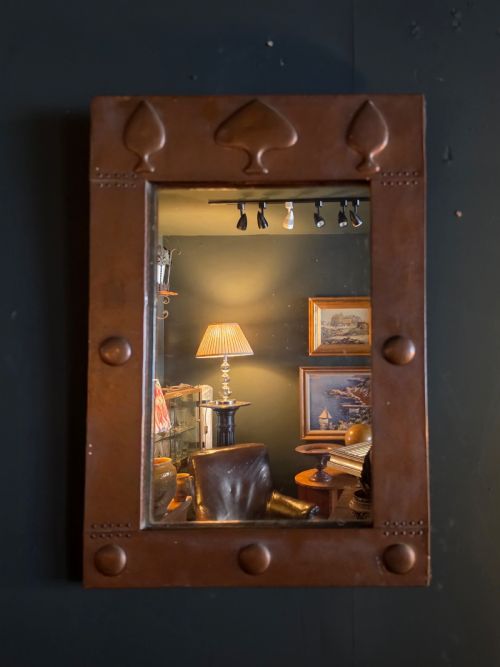
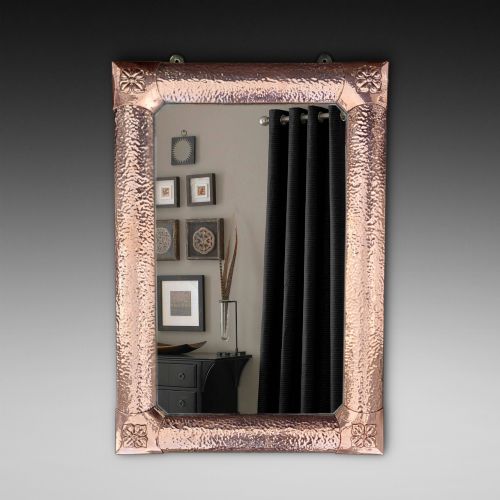
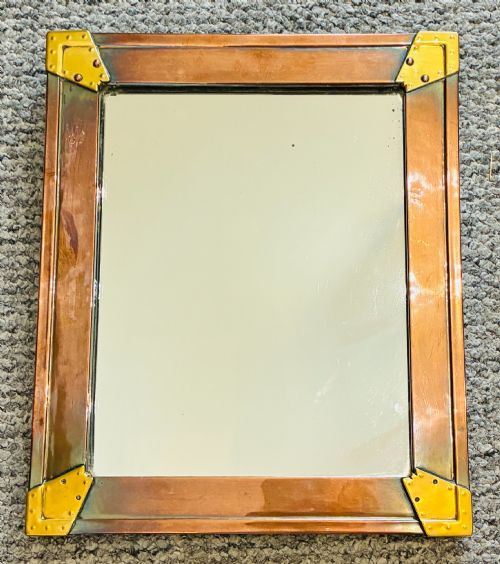
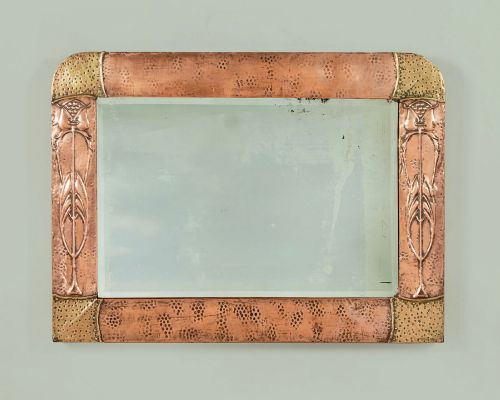
A copper frame mirror combines functional glass with hand-wrought metalwork, most frequently seen in pieces from the Arts and Crafts period and the early twentieth century. These wall-hanging objects range from simple geometric shapes to elaborate compositions featuring stylized motifs, botanical designs, or inset ceramic cabochons.
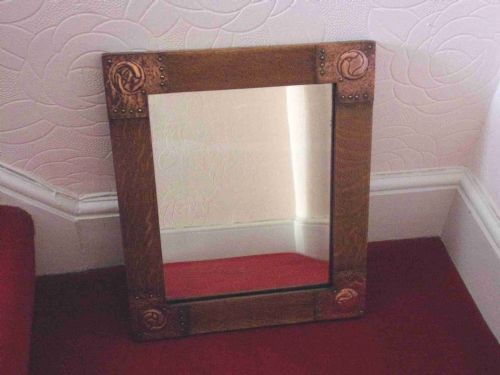
The versions most commonly met on this page date from around nineteen hundred to the nineteen twenties, spanning the Arts and Crafts and Art Nouveau styles. They appear in rectangular, oval, and round formats, mounted on oak or framed entirely in beaten metal.
Makers of this era favoured honest construction, often exposing rivets and hammer marks to celebrate the physical labour of the artisan. Such mirrors served as decorative focal points in hallways and parlours, bringing a warm metallic sheen to domestic interiors.
How They Were Made
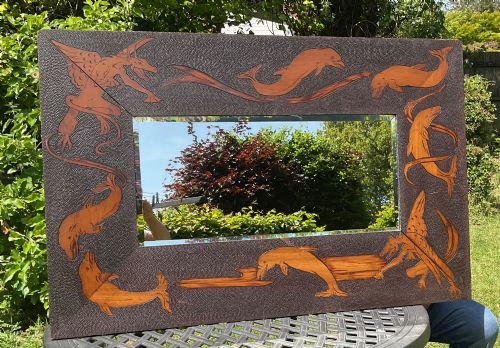
The copper frames were typically shaped by hand, utilising techniques such as repoussé and hammering to raise motifs from the reverse side of the metal sheet. Artisans worked sheet copper over wooden blocks or pitch bowls, using punches and chasers to define intricate surface details like dragons, dolphins, and Celtic knots.
Many examples incorporate secondary materials including brass wire, oak backing boards, and glazed ceramic cabochons or Ruskin enamels set directly into the metalwork. The resulting frames were then secured around bevelled or flat mirror glass, often with patination applied to accentuate the depth of the hand-beaten texture.
What Varies in Quality
The inclusion of specific decorative elements, such as genuine Ruskin ceramic cabochons, hand-set enamels, or complex figural iconography like birds and intertwined foliage, marks out superior examples. Furthermore, the integrity of the original patination and the weight of the gauge metal utilised distinguish the finer pieces from lighter, mass-produced alternatives.
Liberty & Company
The Copper Frame Mirror Glossary
- Repoussé
- A metalworking technique where the artisan hammers the metal from the reverse side to form a raised design in relief. This method defines the tactile surface texture found on many period frames.
- Cabochon
- An unfaceted, polished gemstone or ceramic piece with a smooth, rounded dome. These are frequently set into the metal frames of Arts and Crafts mirrors as decorative accents.
- Bevelled glass
- Mirror glass with an angled, polished edge that catches and refracts light. This treatment adds a refined visual border to the reflective surface.
- Patina
- The surface sheen and colour acquired by metal over time through oxidation and handling. Original patination offers evidence of age and honest preservation.
Copper Frame Mirror: Frequently Asked Questions
How do I date a copper mirror?
Dating relies on stylistic clues, construction methods, and materials associated with specific design movements. Pieces from the turn of the twentieth century often display characteristic Arts and Crafts hand-beaten textures and organic motifs.
Later examples from the nineteen twenties and thirties introduce different geometric lines or incorporate blue glass panels. Examining the backing boards, fixings, and framing techniques helps confirm the period of manufacture.
How should I clean a copper frame?
Cleaning requires a gentle approach to preserve the original antique surface and historic patination. Dusting with a soft, dry cloth is usually sufficient for routine maintenance.
Harsh metal polishes and abrasive cleaners should be avoided because they strip away the aged finish and diminish the character of the hand-hammered metalwork.
Were these mirrors made for specific rooms?
These pieces were designed primarily as domestic wall furnishings for hallways, living rooms, and bedrooms. Their reflective glass and warm metallic frames helped brighten darker Victorian and Edwardian interiors.
Larger formats served as overmantel mirrors or focal points above entrance hall furniture, while smaller circular and oval pieces suited intimate spaces.
What is Ruskin pottery on these frames?
Ruskin pottery refers to the distinctive ceramic cabochons and enamel inserts produced by the Ruskin Pottery in Staffordshire. Artisans integrated these colourful, glazed ceramic elements into the copper frames to add vibrant spots of colour.
Mirrors featuring these original ceramic insets are particularly sought after by collectors of Arts and Crafts metalwork.