





Continental Canvas Art
Continental canvas art comprises oil paintings executed across European schools from the seventeenth century through the mid-twentieth century, valued for their historical depth and painterly atmosphere.
Continental Canvas Art
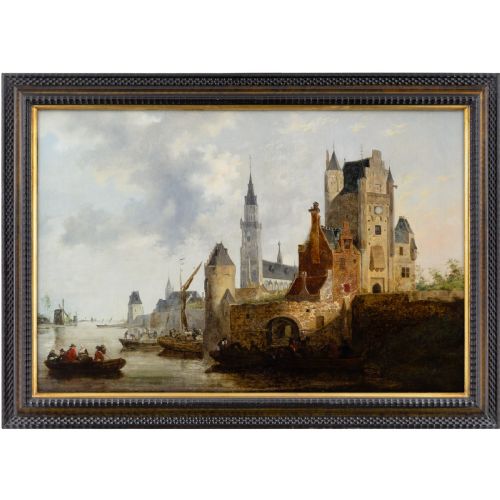
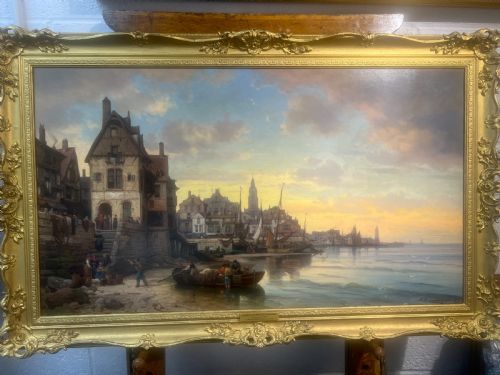
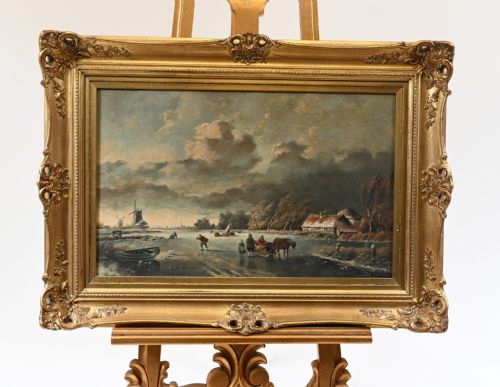
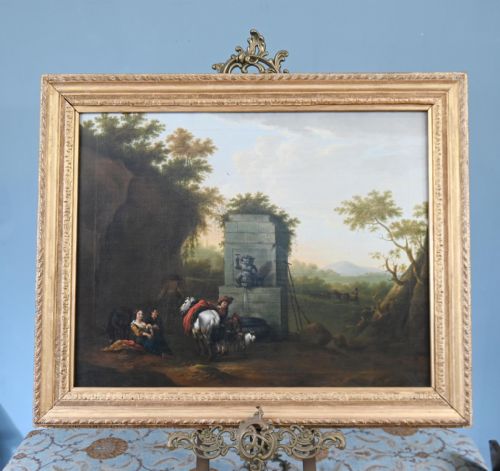
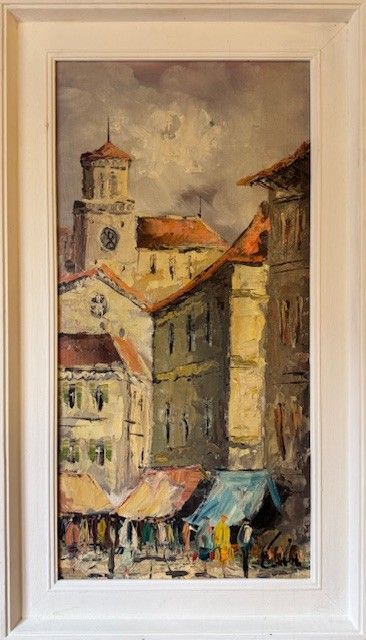
Continental canvas art brings together framed paintings originating from European workshops, capturing scenes from bustling Dutch townscapes to serene Italianate landscapes. Buyers seeking these works will frequently encounter nineteenth-century interpretations alongside earlier religious subjects and mid-century townscapes.
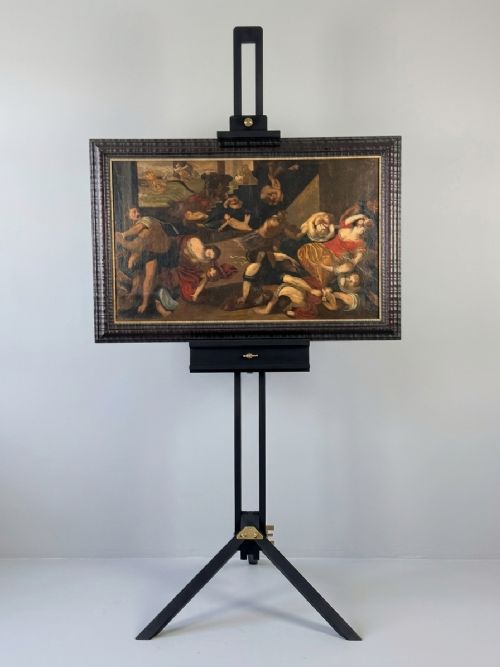
The selection spans diverse traditions, including seventeenth-century Dutch school landscapes, Baroque religious depictions, and nineteenth-century Realism. Each piece records a distinct regional aesthetic, whether through French market square scenes or grand tour vistas of Italian lakes.
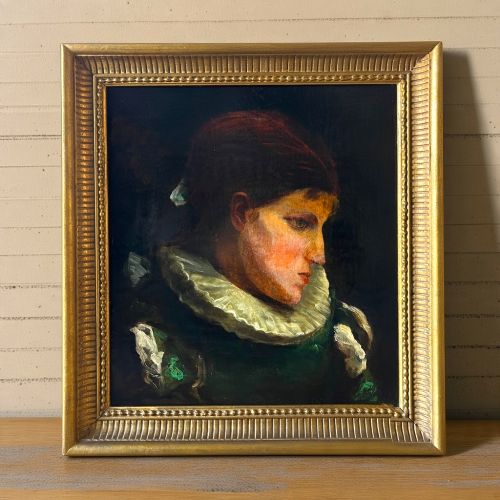
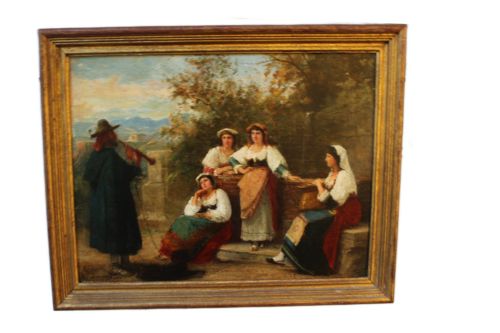
Subjects range from expansive mountain panoramas and harbour views to intimate portraits of peasants and still lifes of game and fruit. These framed oil paintings offer a tangible link to European artistic heritage across multiple historical periods.
Materials and methods of execution
Painters typically applied oil paint directly onto stretched canvas supports, utilising the absorbent ground to build rich layers of pigment and glaze. This combination allowed artists to achieve subtle tonal gradations and deep shadows characteristic of European painting traditions.
Many works retain their period framing, constructed from wood finished with gesso, gold leaf, and giltwood. These ornate or simple moulded frames protect the canvas perimeter while complementing the visual weight of the composition.
Continental Canvas Art Retail Price Guide 2026
Typical asking prices for continental canvas art among the pieces listed under this phrase on Sellingantiques today, from the lower quarter to the upper quarter. They describe what is for sale here now, not the wider market.
Recorded periods span the 17th, 18th, and 19th centuries, extending into the 1930s, 1940s, and 1960s.
Distinctions in quality
Quality rests upon the confidence of the brushwork and the structural integrity of the paint layer across the canvas. Superior examples display assured handling of light and perspective, whereas lesser works often rely on formulaic repetition without atmospheric depth.
The preservation of the original surface, including minimal canvas restoration and the survival of period giltwood frames, elevates a painting's standing. The authority of the attribution, whether linked to a documented European school or a named hand, further defines the work.
T Bergman·Jan Miel·E A Minardo·William George Meadows·William Raymond Dommersen·Armand Guillaumin·Karel Frans Philippeau·Ludwig Hermann·Marcel Brunery·Allan Douglass Mainds·Christiaan Pieter Snyders·Henry Schafer
The Continental Canvas Art Glossary
- Canvas
- A heavy woven fabric stretched across a wooden frame to serve as a sturdy support for oil paint. It provides a textured ground that holds pigment securely over centuries.
- Giltwood
- Wood carved and coated with gold leaf or metallic powder, frequently used for traditional picture frames. This finish adds reflective warmth around the edge of the painting.
- Impasto
- Paint applied thickly to a canvas so that the strokes stand proud of the surface. This technique creates a tangible sense of texture and catches light dynamically.
- Continental School
- A broad designation for artists trained and working within mainland Europe rather than Britain. It groups together regional stylistic traits from France, Germany, the Netherlands, and Italy.
Continental Canvas Art: Frequently Asked Questions
What periods do these paintings cover?
The works span from the seventeenth century through to the mid-twentieth century, encompassing Baroque religious pieces, nineteenth-century realism, and mid-century impressionist townscapes.
This broad chronological range reflects the evolving techniques and subject preferences of European artists working across different centuries.
How should I care for an oil painting on canvas?
Keep the canvas away from direct sunlight, damp environments, and rapid temperature fluctuations to prevent the paint layer from cracking or warping.
Dust the surface gently with a soft, dry brush and avoid using liquid cleaners on either the canvas or the historic frame.
Are all these pieces signed by artists?
Many works bear signatures or are attributed to specific European schools, while others remain by unknown hands working within established regional traditions.
Documentation and stylistic analysis help identify the probable origin and period when a signature is absent or illegible.
What subjects are most common in this category?
Landscapes, townscapes, harbours, and genre scenes dominate the selection, often depicting specific locations in France, Italy, Germany, and the Netherlands.
Portraiture and still lifes featuring game and fruit also appear frequently among the nineteenth-century and earlier works.