



Compact Book Shelf
A compact book shelf answers the perennial problem of limited floor space while keeping a serious library close at hand.
Compact Book Shelf
When you search for a compact book shelf, you encounter pieces designed to hold modest collections without dominating a room. The items on this page span several eras, originating from the Georgian and Victorian periods through the Edwardian years and into the 1930s.
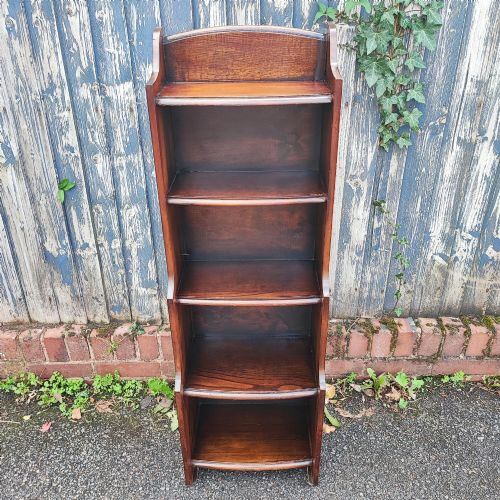
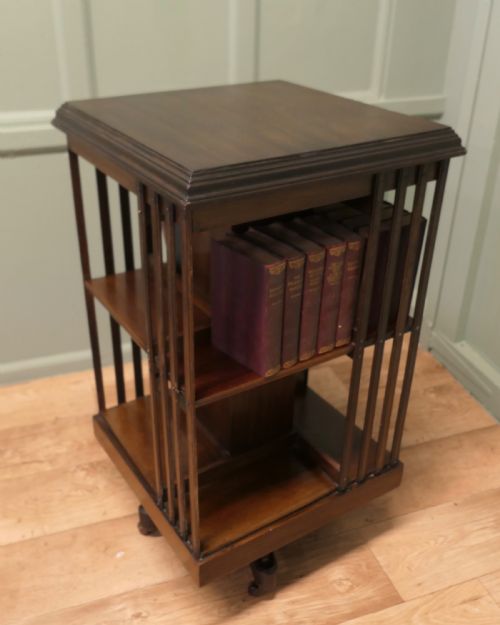
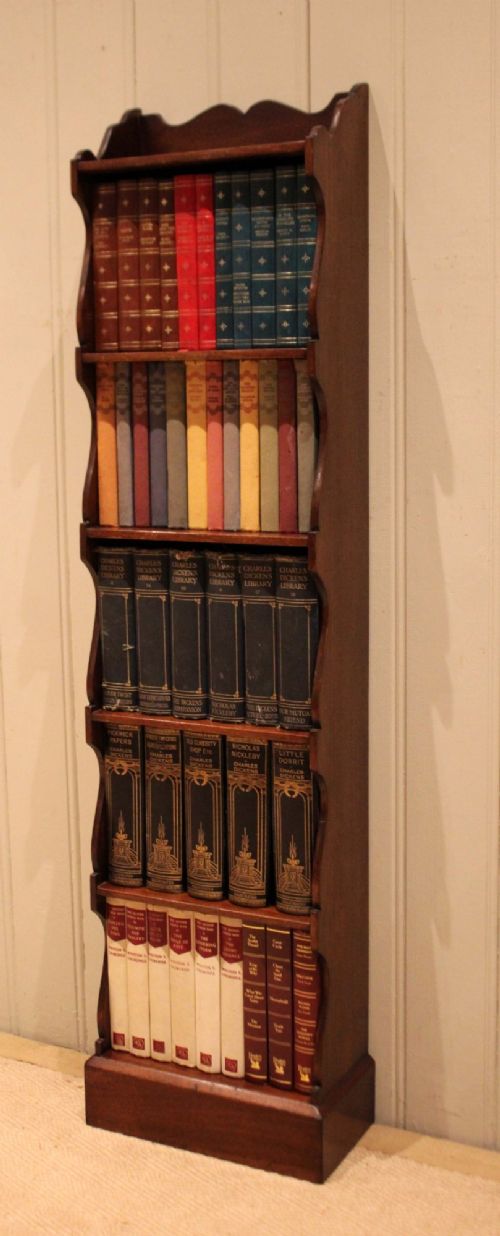
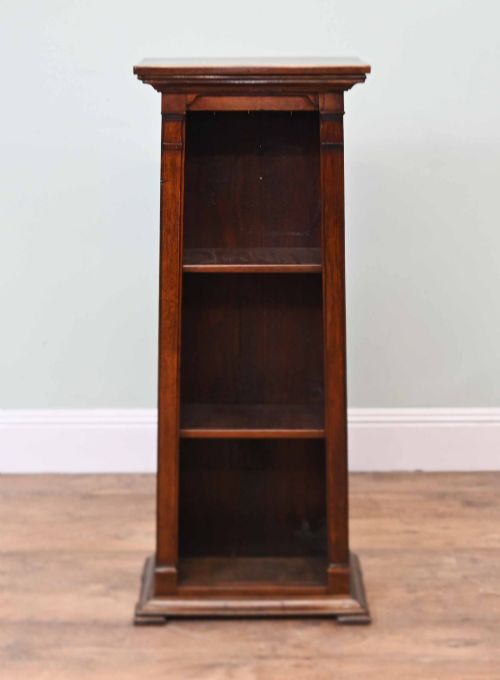
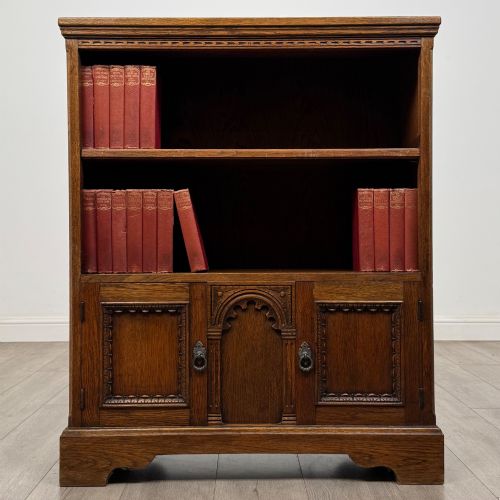
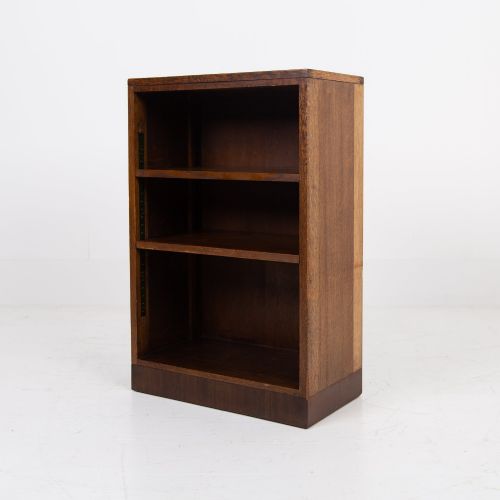
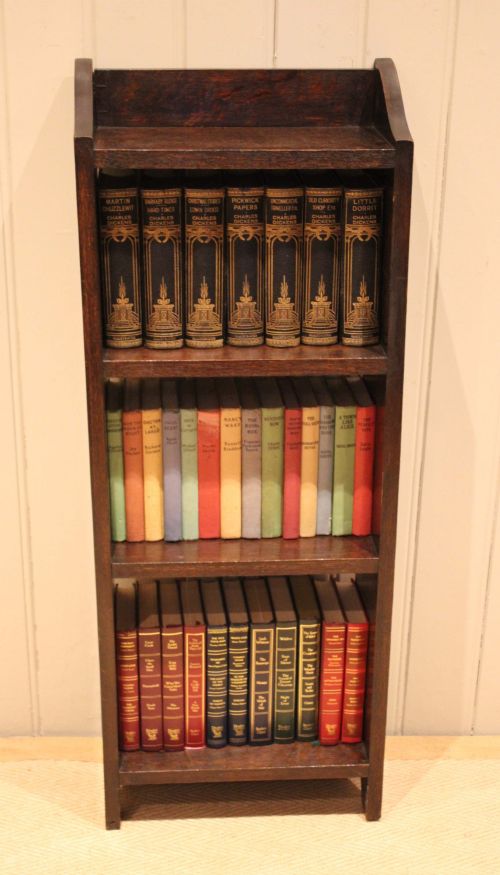
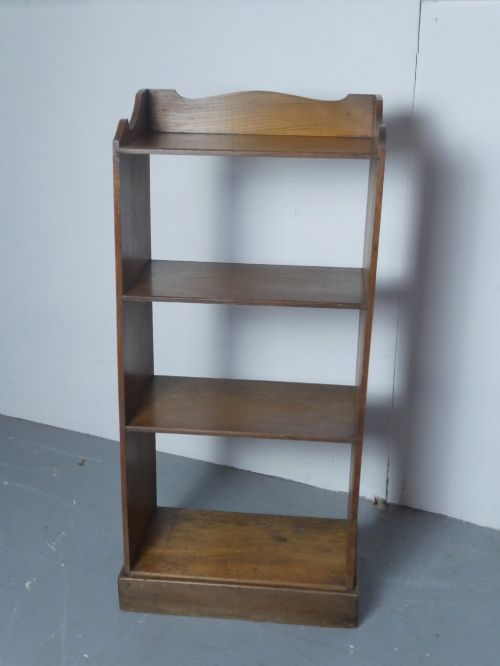
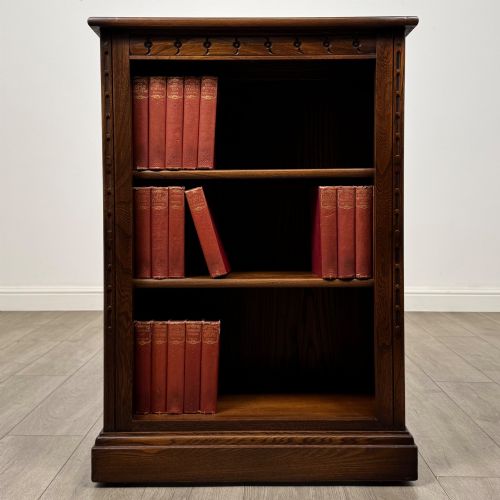
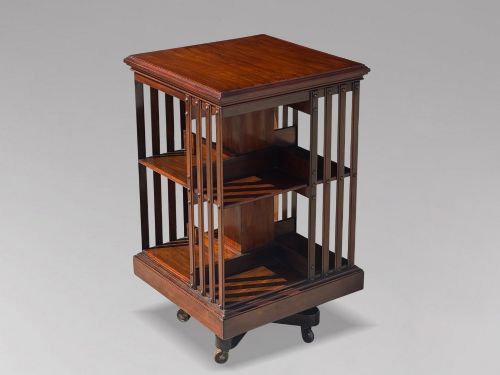
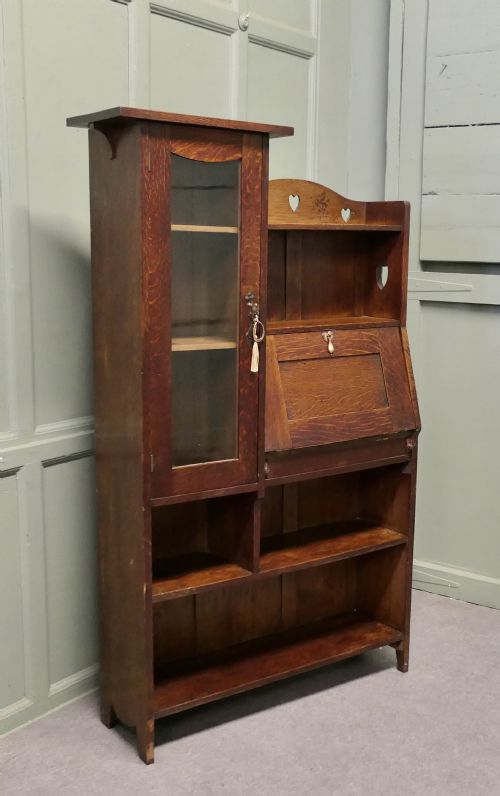
Most examples take the form of small open bookcases, sometimes featuring lower drawers, carved doors, or leather tops. You will also find revolving designs and students' bureaux that combine writing surfaces with shelving.
These pieces come in various styles including Arts and Crafts, Jacobean Revival, Art Deco, and rustic country interpretations. Their small proportions make them adaptable to alcoves, hallways, and studies where full-height cases simply will not fit.
How they were made
Cabinet makers relied principally on oak and mahogany to construct these pieces, selecting timber for durability and grain pattern. Oak appears frequently in golden tones and rich dark hues, particularly in pieces from the Arts and Crafts and Edwardian periods.
Mahogany provides a smoother, darker surface suited to Victorian and Georgian examples. Metal, brass, and cast iron appear in supporting hardware and the internal mechanisms of revolving models.
Pine and general wood varieties serve in simpler country pieces, while leather inserts add a functional writing surface to specific desk-and-bookcase combinations.
Compact Book Shelf Retail Price Guide 2026
Typical asking prices for compact book shelf among the pieces listed under this phrase on Sellingantiques today, from the lower quarter to the upper quarter. They describe what is for sale here now, not the wider market.
Revolving bookcases let you spin your entire library with a gentle nudge, solving the eternal debate of which book to read next.
What varies in quality
The distinction between standard examples and superior pieces rests on the choice of timber and the precision of construction. Dense, well-figured mahogany and selected golden oak command attention for their visual weight and stability.
Execution of detail defines the finer items, such as carved doors, panelled sides, and integrated lower drawers fitted with care. Revolving models depend heavily on the smoothness and hidden complexity of their internal turning mechanisms.
Proportion and restraint separate thoughtful vernacular design from heavier, less graceful revivals.
Ercol
The Compact Book Shelf Glossary
- Open bookcase
- A piece of furniture consisting of horizontal shelves with no doors enclosing the front. This format allows immediate access to volumes.
- Revolving bookcase
- A freestanding shelving unit built upon a concealed rotating base. This allows multiple tiers of books to spin smoothly for selection.
- Students bureau
- A compact combination of a desk and a bookcase. It usually incorporates a writing flap above or beside shelving.
- Arts and Crafts
- A design movement valuing visible construction methods and honest materials. It often highlights the natural grain of oak.
Compact Book Shelf: Frequently Asked Questions
What is a compact book shelf?
A compact book shelf is a scaled-down piece of furniture designed to hold a modest collection of books without taking up excessive floor space. These items include open shelves, revolving units, and small bureau combinations.
Originating across various periods like the Victorian era and the 1930s, they fit easily into alcoves and smaller rooms while providing sturdy storage.
Where should I place a small bookcase?
Small bookcases suit tight spaces such as hallways, bedrooms, home offices, and living room alcoves. Their reduced proportions allow them to sit beneath windows or beside armchairs.
Revolving versions work particularly well near seating areas where access to multiple titles from all sides proves useful.
How do I care for antique wood furniture?
Maintain antique oak and mahogany by keeping them away from direct heat sources and strong sunlight, which can dry out and fade the timber. Dust regularly with a soft, dry cloth.
Avoid silicone-based polishes and apply a traditional beeswax sparingly when the wood appears dry to preserve the natural finish.
How can I tell an Edwardian bookcase from a Victorian one?
Victorian bookcases often utilise heavier dark mahogany with substantial mouldings and formal proportions. Edwardian examples frequently feature lighter oak, sometimes displaying Arts and Crafts influences or simpler carved motifs.
Construction details, timber selection, and hardware styles help distinguish the manufacturing period of each piece.