



Colonial Officer Chest
A colonial officer chest is a sturdy, modular trunk designed for travel, offering heavy-duty storage with brass corners and handles.
Colonial Officer Chest
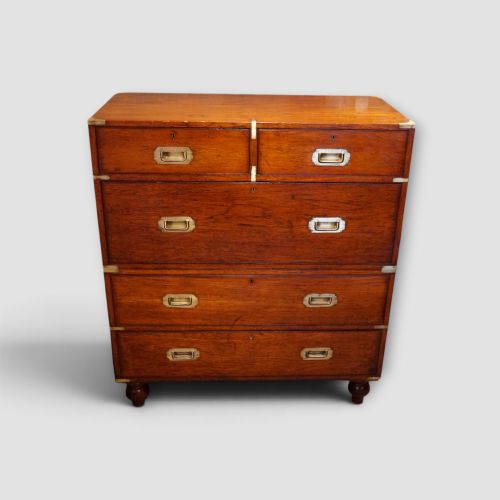
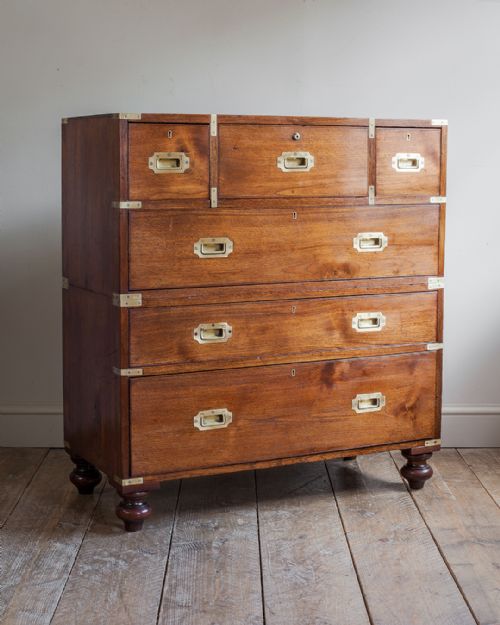
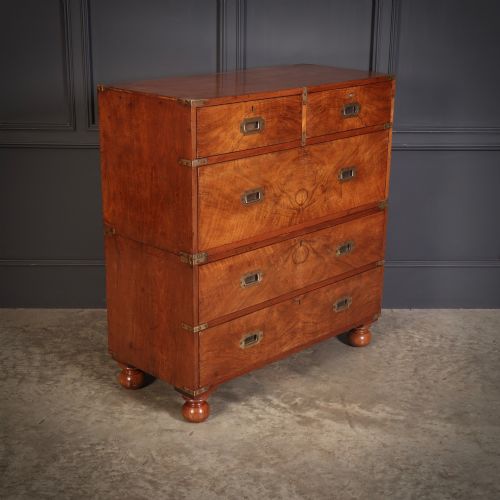
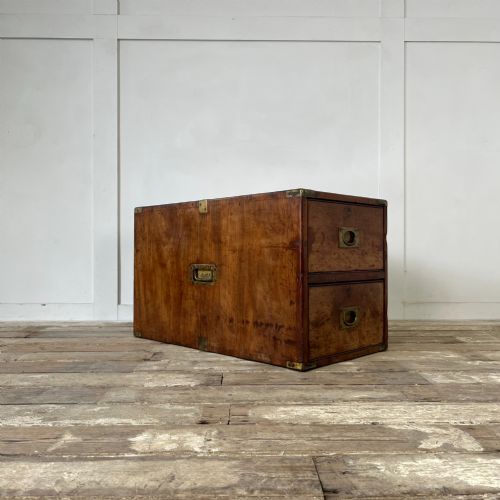
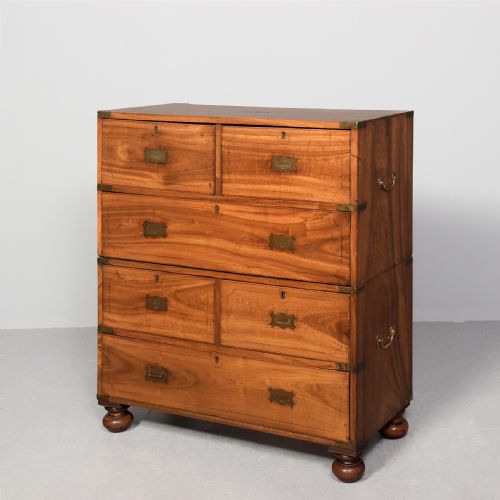
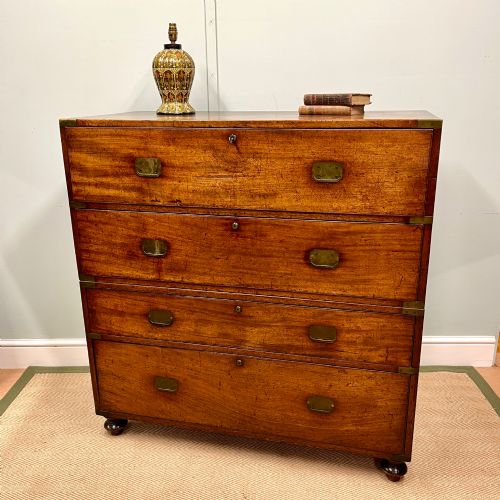
A colonial officer chest is typically encountered as a heavy-duty storage unit built in two separate sections for easy transport on military campaigns. These pieces span the nineteenth century, including the Victorian era and the Regency period, taking the form of chests of drawers, secretaire bureaux, trunks, and desktop storage.
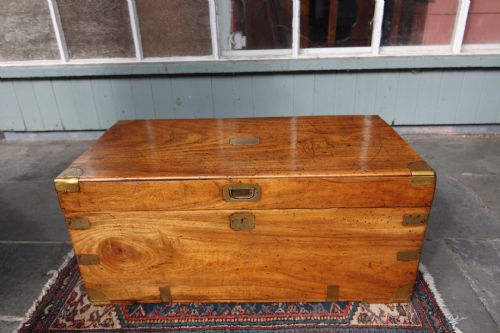
The standard version met on this page is a rectangular chest fashioned in dense timbers such as teak or camphor wood, fitted with flush brass handles and corner brackets. Many examples include a fitted secretaire drawer with a drop-front writing surface designed for officers on duty.
Origins stretch across British colonial territories and trade routes, yielding styles defined as Victorian military campaign, Anglo-Indian colonial, and China trade. The internal layout often divides into multiple drawers configured to pack uniforms, documents, and personal gear securely.
Materials and construction
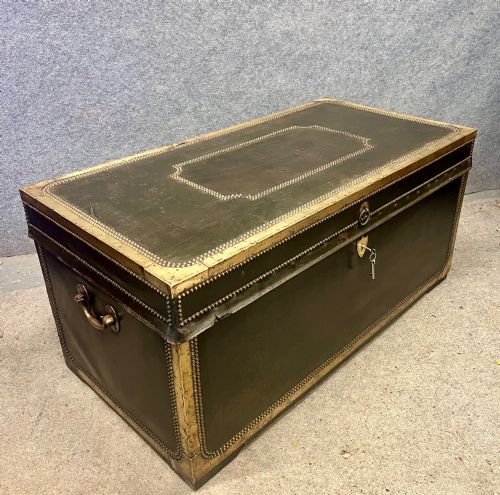
Carpenters constructed these campaign chests using durable hardwoods capable of withstanding tropical climates and rough transit, notably teak, camphor wood, mahogany, and padouk, alongside occasional examples in walnut, cedar wood, and leather. Timbers were selected for stability and resistance to warping during long sea voyages.
Construction relied heavily on heavy brass mounts, recessed carrying handles, and corner brackets screwed into the wood to protect vulnerable edges from impact. The two-part modular design allowed the upper and lower halves to separate entirely, held together by internal brass securing hooks or bolts.
Army officers packed these chests with everything from official ledgers to spare socks, trusting the brass corners to survive bumpy mule rides across the empire.
Quality variations
The standard of timber selection and joinery marks the difference between basic utilitarian storage and high-grade pieces made for senior officers. Figured grains, solid secondary woods, and substantial brass hardware indicate superior workshop production.
Complexity of internal fittings also separates examples, particularly the inclusion of a fully fitted secretaire drawer with pigeonholes and small drawers behind a fall-front panel, compared to standard stacked drawer configurations.
Army & Navy Stores
The Colonial Officer Chest Glossary
- Campaign chest
- A modular chest of drawers built in two separate sections with recessed brass handles and corner braces for military transport.
- Secretaire chest
- A chest featuring a pull-out or drop-front drawer fitted with small interior compartments and a writing surface.
- China trade
- Goods manufactured in China during the nineteenth century specifically for Western export markets.
- Brass mount
- A protective corner piece, strap, or handle let flush into the timber of travel furniture.
- Two-part chest
- A cabinet constructed as upper and lower independent carcases designed to stack securely together.
Colonial Officer Chest: Frequently Asked Questions
Why are these chests made in two parts?
The two-part construction allowed officers to divide a heavy chest into manageable loads for transport by pack animal, wagon, or porter during military campaigns.
Separating the upper and lower sections also reduced the risk of structural damage when moving heavy luggage across difficult terrain.
What is a secretaire chest used for?
A secretaire chest incorporates a specialised drawer that folds down to create a desk surface for writing letters, reports, and official correspondence in the field.
Inside the drop-front panel, small pigeonholes and tiny drawers kept ink, quills, and documents organised.
Why are many chests made of camphor wood?
Camphor wood was utilised because its natural aroma repels insects, protecting military uniforms and paper documents from humidity and moths during long voyages.
This dense timber also resisted moisture damage in tropical colonial climates.
How do I identify a Victorian campaign chest?
A Victorian campaign chest is identified by its nineteenth-century date, sturdy hardwood construction in teak or mahogany, and flush brass hardware designed to prevent snagging.
Many examples feature makers' stamps or brass plates associated with military outfitters.