
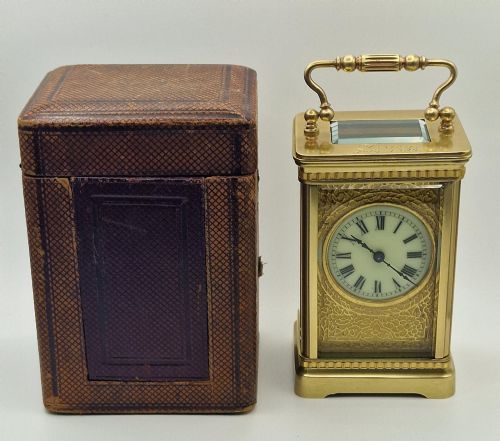


Collectable Brass Clock
These pieces of collectable brass clock range from burr walnut longcase clocks to carriage clocks and desk clocks.
Collectable Brass Clock
When you search for a collectable brass clock, you encounter a selection spanning the seventeenth century to the twentieth century. The inventory includes carriage clocks, desk clocks and longcase clocks.
The carriage clock appears most frequently among these listings, often housed in glass and brass cases. These pieces originate from periods such as the Victorian era, the Edwardian period and the year nineteen hundred.
Earlier examples also emerge, including seventeenth-century longcase clocks constructed from burr walnut alongside mid-century modern pieces like the gilt brass lamp post clock by Jaeger Le Coultre.
How they were made
Makers construct the main framework of these objects using brass and gilt brass, frequently pairing them with glass panels to reveal the movement within. Enamel dials provide the face for reading the time on carriage clocks and desk clocks.
Woodwork plays a structural role in specific forms, utilising materials such as mahogany and burr walnut for longcase clocks. Additional elements incorporate steel components in the internal mechanism and leather for protective storage boxes.
The listed pieces span materials including brass, gilt brass, glass, enamel, mahogany, burr walnut, steel and leather across seven different eras.
What varies in quality
The sophistication of the mechanical movement dictates the standing of an individual piece. Clocks featuring striking mechanisms, repeaters and alarms demonstrate greater complexity than basic timepieces.
Materials and casework finish separate standard examples from finer works. The inclusion of gilt brass, burr walnut timber and original protective boxes distinguishes the upper tier of these items.
Mappin and Webb·Joseph Windmills·Jaeger Le Coultre
The Collectable Brass Clock Glossary
- Carriage clock
- A portable timekeeper designed for travel during the nineteenth and early twentieth centuries. These pieces typically feature a rectangular brass case with glass sides and a handle on top.
- Longcase clock
- A tall pendulum clock enclosed in a wooden case resting on the floor. Seventeenth-century examples often utilise burr walnut veneers.
- Gilt brass
- Metal treated with a thin layer of gold or gold-coloured finish. This material appears frequently across nineteenth-century and mid-century clock cases.
- Repeater
- A mechanism that chimes the hours and quarters upon demand when a lever is pressed. This complication marks a higher standard of clockmaking.
- Enamel dial
- A clock face created by fusing powdered glass to a metal substrate at high heat. These surfaces provide a smooth, white background for painted numerals.
Collectable Brass Clock: Frequently Asked Questions
What is a carriage clock?
A carriage clock is a portable spring-driven timepiece developed for travel in the nineteenth century. These clocks are housed in brass frames with glass panels so the movement remains visible.
Most examples include a folding handle on the top plate. They sit securely on desks or mantels.
How do striking repeater clocks work?
A striking repeater mechanism sounds the last elapsed hour or quarter-hour when activated by the user. This function was originally designed for checking the time in the dark.
Makers integrated complex gear trains to drive these acoustic signals. They represent advanced engineering in nineteenth-century clockmaking.
What materials are used in these clock cases?
Brass and gilt brass form the primary structure for the majority of these portable timepieces. Glass panels enclose the movements to protect the gears while allowing visual inspection.
Heavier floor-standing pieces incorporate timber such as mahogany and burr walnut. Leather appears on fitted outer storage boxes.