
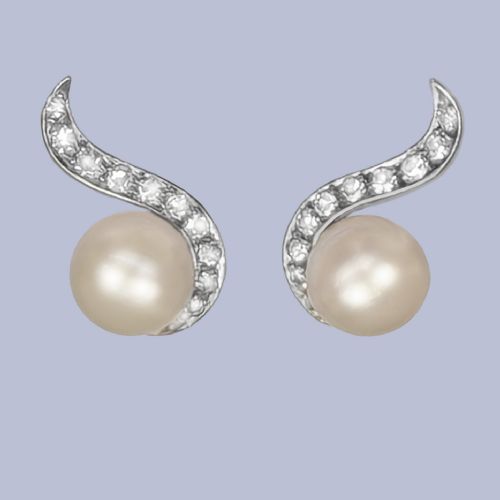
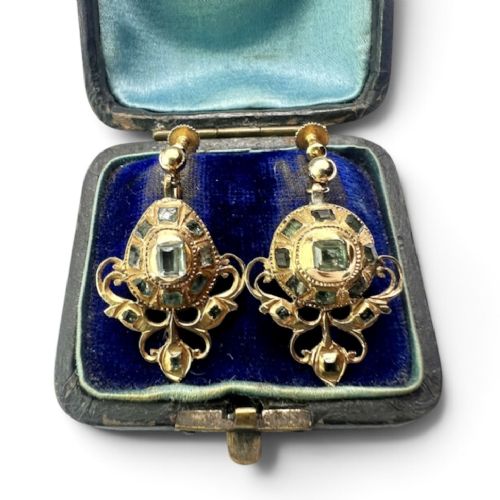
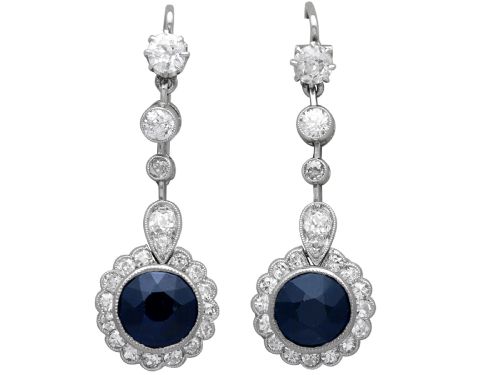
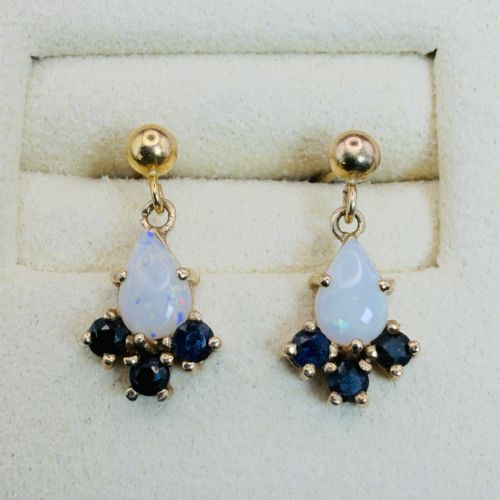




Cluster Drop Earrings
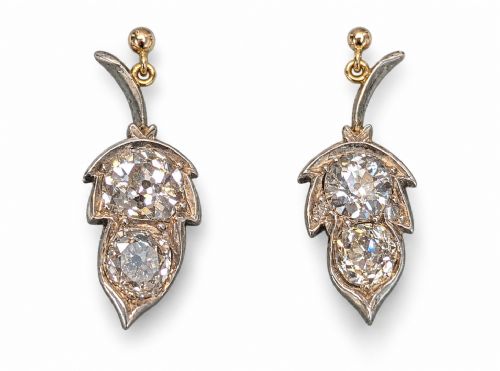
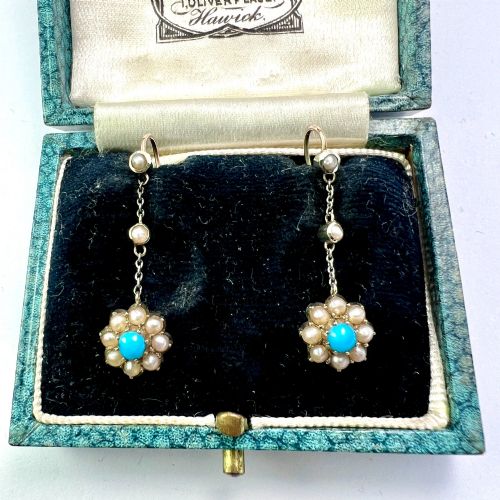
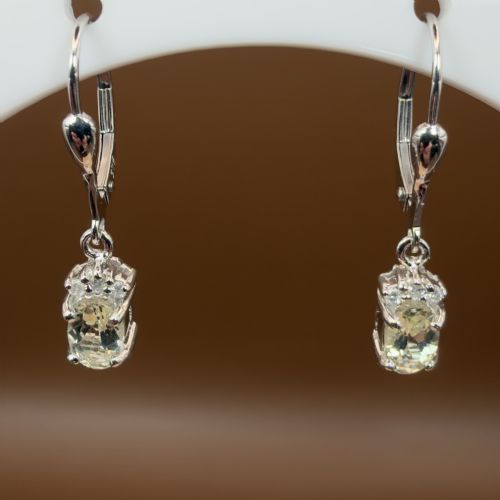
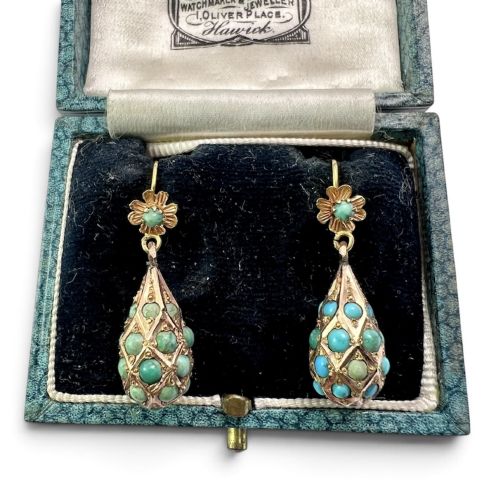
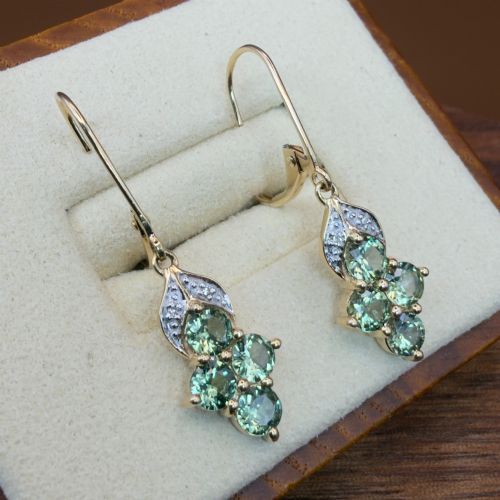
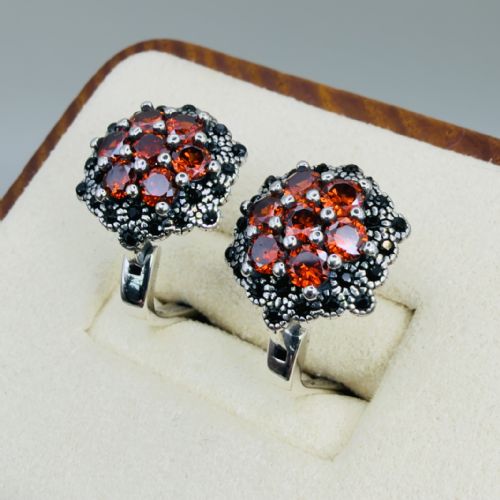
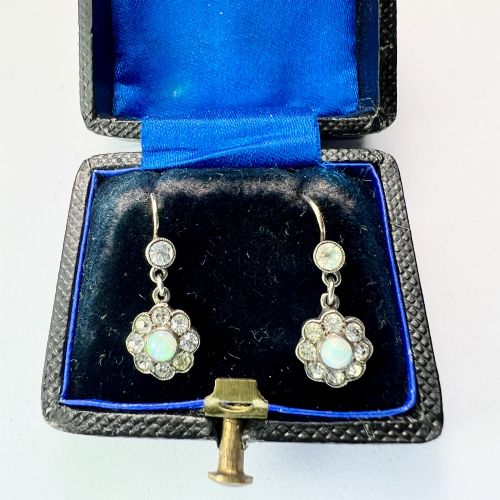
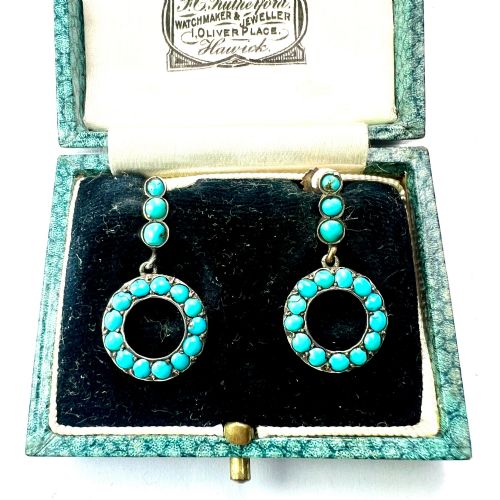
Cluster drop earrings bring together central clusters of gemstones with suspended lower drops, spanning eras from the Georgian period through to the mid-century.
Cluster Drop Earrings
When you search for cluster drop earrings, you encounter items defined by a central gathering of stones mounted above a hanging element. These pieces appear across multiple historical periods, including the Victorian, Edwardian, and Art Deco eras.
The selections on this page demonstrate considerable variety in form, ranging from daisy and floral clusters to elaborate geometric arrangements. Gemstones such as diamond, sapphire, turquoise, and pearl frequently anchor the design.
Earwires, post and clip fittings, screwbacks, and hinge backs secure these jewels to the ear. The configuration usually balances a heavier upper cluster with a mobile drop section below.
Materials and construction
Metal choices span yellow gold, rose gold, white gold, platinum, and sterling silver. Many antique pieces utilise silver-topped gold settings to enhance the whiteness and brilliance of mounted diamonds.
Gemstone selection relies on both precious stones like diamonds, emeralds, and sapphires alongside garnets, tourmalines, opals, peridots, and paste. Setting techniques range from close-backed foil settings in earlier periods to open-backed platinum claws in later decades.
Night and day drop earrings let wearers detach the lower section to transform an elaborate evening piece into a simple daytime stud.
Judging quality in design
Quality rests upon the harmony of the design and the precision of the stone setting. Finer examples exhibit well-matched gemstones with balanced colour saturation and minimal natural inclusions.
The dexterity of the metalwork distinguishes superior pieces, visible in delicate pierced galleries and secure prong placement. Coarser items often show heavy-handed soldering or mismatched stone replacements.
Knoll and Pregizer
The Cluster Drop Earrings Glossary
- Cluster
- A grouping of smaller gemstones set tightly around a central stone. This arrangement creates maximum visual impact and sparkle.
- Drop
- A suspended component that hangs below the main ear fitting. Movement is central to this form.
- Paste
- Hand-cut glass used as an imitation gemstone in historic jewellery. Quality paste exhibits sharp facets and internal depth.
- Old Cut
- A precursor to the modern brilliant cut diamond, characterised by a high crown and small table facet. These cuts catch candle and gas light effectively.
- Hinge Back
- A secure closure mechanism featuring a hinged post that clicks into a notched catch. This style provides stability for heavier drop designs.
Cluster Drop Earrings: Frequently Asked Questions
How do I date cluster drop earrings?
Dating relies on examining the metal alloys, stone cutting styles, and fastening mechanisms used in construction. Georgian and Victorian pieces often utilise closed-backed settings and handcrafted wires, whereas Edwardian and Art Deco examples favour platinum and geometric motifs.
Changes in gold purity marks and screwback or hinge designs help distinguish mid-century items from earlier Victorian and Edwardian manufacturing methods.
Are these earrings suitable for daily wear?
Daily wear depends on the age, metal durability, and stone hardness of the specific pair. Robust platinum or gold settings with diamonds or sapphires tolerate regular use better than fragile seed pearl or opal configurations.
Historic items require careful handling, avoiding contact with cosmetics, water, and harsh chemicals to preserve delicate settings and softer gemstones.
What is the difference between stud and drop styles?
Studs sit directly against the earlobe without hanging elements, while drop designs incorporate a mobile section suspended below the main fixture. Cluster drop earrings combine a stud or top cluster with this lower hanging component.
This suspended design creates movement and draws the eye downward, making drop styles distinct from static studs.
How do I care for antique cluster earrings?
Care involves gentle cleaning with a soft, dry cloth and avoiding ultrasonic cleaners or harsh chemical dips, particularly for paste, turquoise, and pearls. Professional inspection of the prongs and settings prevents stone loss over time.
Storing each pair separately in a lined box protects the metalwork and prevents softer gems from scratching against harder diamonds.