


Clear Ribbed Glass Shade
A clear ribbed glass shade brings honest industrial utility and focused brilliance to a room.
Clear Ribbed Glass Shade
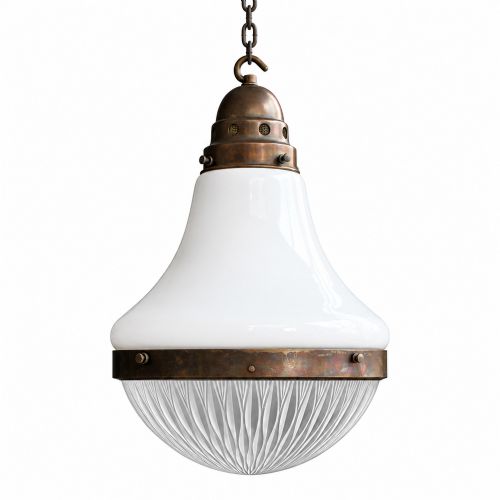
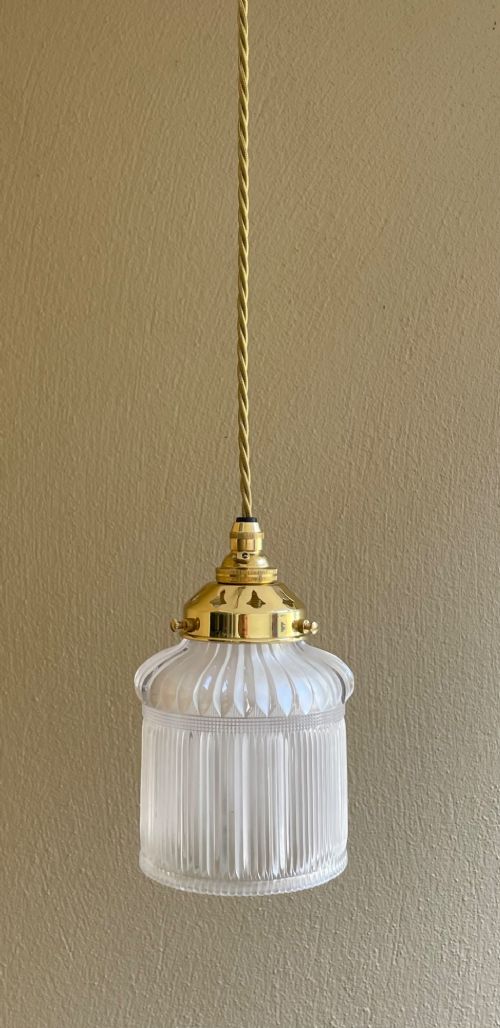
When you search for a clear ribbed glass shade, you are looking at utilitarian lighting designed to diffuse light efficiently across a workspace or living area. The pieces seen on this page span the 19th Century, Edwardian era, 1910, 1920, and 1940, taking the form of pendant lights.
You will most commonly meet bell-shaped pendant lights bearing the characteristic prismatic ribbing. These shades often retain their original galleries made from brass, chrome, or cast iron.
How they were made
These shades are formed from pressed glass, utilising precise mould designs to create the internal ribbing and prismatic patterns that direct and scatter light. The glass is frequently paired with metal galleries cast from brass, chrome, or iron.
Makers integrated the glass shades into hanging pendant fixtures using specialised fitter necks secured within metal galleries. This construction ensured both structural durability in industrial settings and straightforward maintenance.
Some shades wear their factory scars with pride, retaining tiny trapped air bubbles from a century ago.
What varies in quality
Quality rests in the crispness of the glass moulding and the optical precision of the ribbing. Finer pieces demonstrate sharp, uniform prismatic lines that distribute light evenly without distortion.
The accompanying metalwork also dictates quality, with substantial cast brass or chrome galleries holding greater architectural presence than lighter, utilitarian replacements.
The Clear Ribbed Glass Shade Glossary
- Holophane
- A proprietary type of prismatic glass designed to bend and control light efficiently. It appears frequently in industrial and Edwardian lighting.
- Gallery
- The metal collar or mount that grips the top of the glass shade and connects it to the suspension rod or flex. Galleries are commonly found in brass, chrome, and cast iron.
- Prismatic glass
- Glass moulded with geometric ribs or prisms on the surface to refract light and reduce glare. This technique defines the industrial aesthetic of the period.
- Pendant light
- A hanging light fixture suspended from the ceiling by a cord, chain, or metal rod. These fixtures usually feature a single downward-facing shade.
Clear Ribbed Glass Shade: Frequently Asked Questions
What rooms suit these shades?
These pendant lights suit kitchens, hallways, and dining areas where task lighting or focused overhead illumination is required. Their industrial character works well in both period and contemporary interiors.
Because the glass is clear, they distribute ambient light broadly while the ribs soften the bulb glare. Hanging them above a table or island provides practical downward illumination.
How do I date a shade?
Dating relies on examining the weight and tint of the glass alongside the manufacturing style of the metal gallery. Edwardian and early twentieth-century examples often feature heavier prismatic glass and robust brass or iron fittings.
Later pieces from the 1940s or those incorporating chrome reflect shifts toward sleeker industrial designs. Comparing the fitter neck and screw threads also helps establish the era of production.
Are original galleries important?
Original metal galleries enhance the historical integrity and visual balance of the pendant light. Matching the correct brass, chrome, or cast iron mount to the glass shade preserves its intended aesthetic.
Replacements do function adequately for daily use, but collectors prefer fixtures retaining their period-correct hardware. The quality of the gallery metal often matches the age of the glass itself.
How do I clean ribbed glass?
Cleaning requires warm soapy water and a soft cloth to reach inside the ribbed channels without scratching the surface. Removing the shade from the gallery first makes handling much safer.
Avoid harsh chemical abrasives that can dull the vintage glass or damage any stamped maker marks. Thorough drying prevents water spots from settling within the prismatic grooves.