





Classical Stone Table Lamps
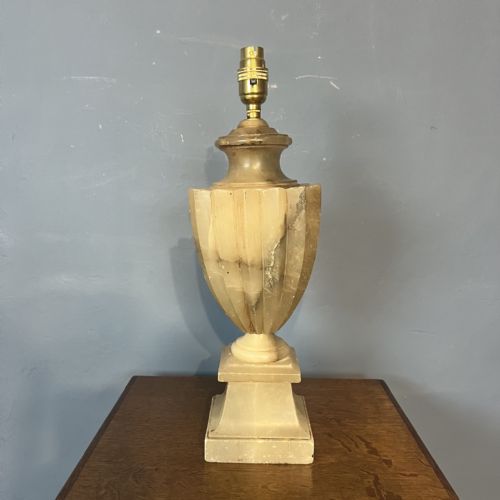
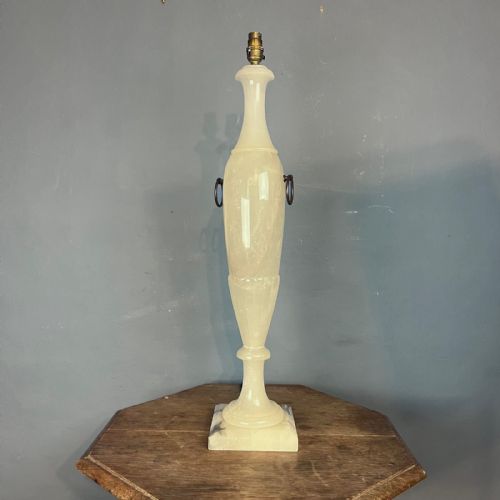
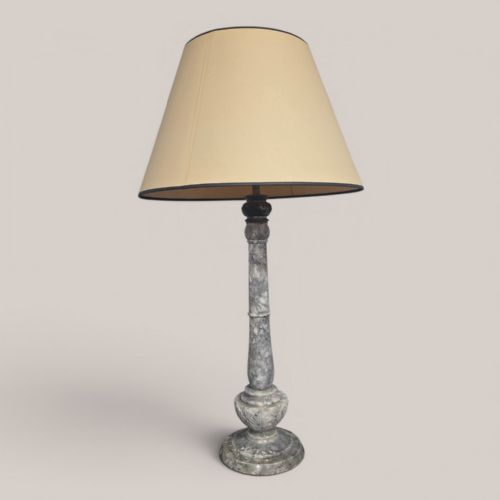
Classical stone table lamps bring genuine architectural presence to a room through carved marble, alabaster and onyx.
Classical Stone Table Lamps
Classical stone table lamps unite architectural forms with domestic lighting, drawing on centuries of design vocabulary from neoclassical to art deco. When you search for classical stone table lamps, you find solid mineral bodies shaped into columns, urns and amphorae designed to sit on furniture.
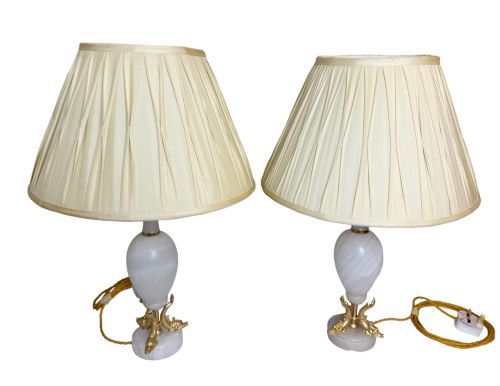
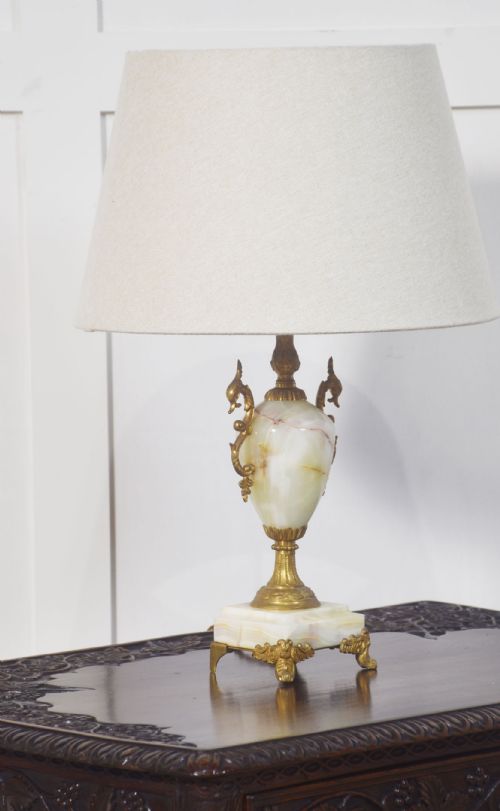
The versions you meet most often on this page date from the late nineteenth century through to the nineteen-thirties, reflecting Edwardian, Victorian and early twentieth-century tastes. These pieces frequently pair carved stone with cast metal mounts in brass, ormolu or gilt bronze.
How they were made
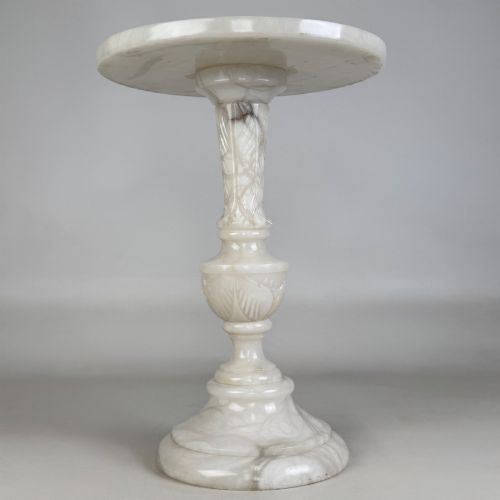
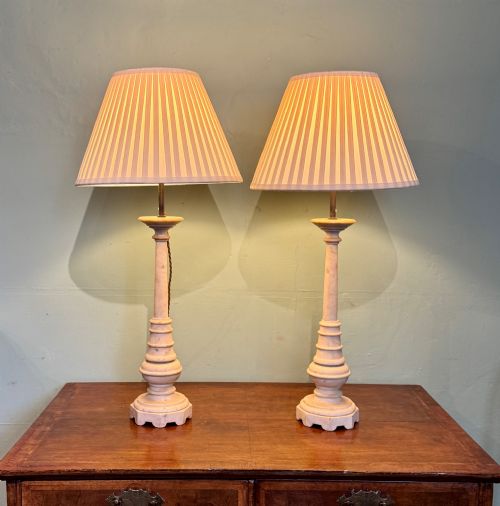
Makers shaped blocks of marble, alabaster and onyx on lathes or carved them by hand to achieve smooth columns and bulbous urn bodies. The resulting stone components were polished to reveal natural veining and translucent qualities, particularly in the finer alabaster examples.
Metal elements such as brass, gilt metal and ormolu were cast and applied as collars, plinths or paw feet to support the stone bodies and accommodate electrical or oil-burning fittings. Fabric shades completed the construction, balancing the heavy mineral bases.
Classical Stone Table Lamps Retail Price Guide 2026
Typical asking prices for classical stone table lamps among the pieces listed under this phrase on Sellingantiques today, from the lower quarter to the upper quarter. They describe what is for sale here now, not the wider market.
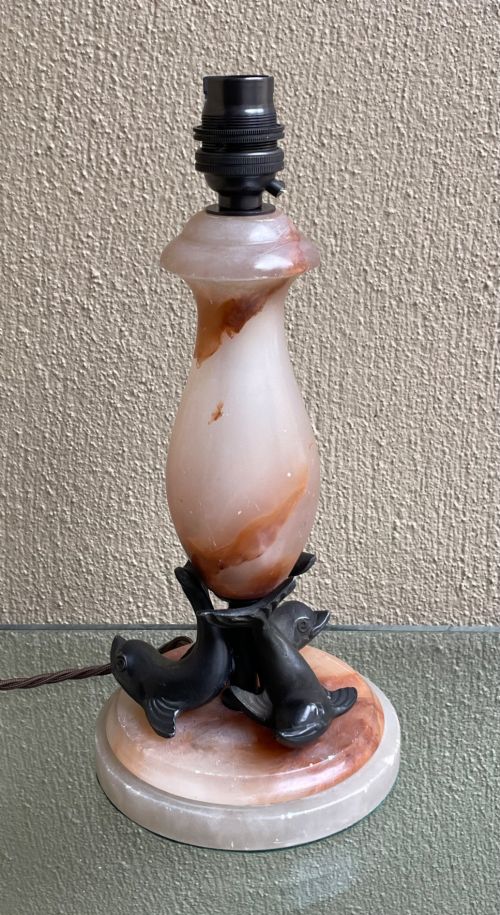
Several early twentieth-century alabaster lamps take the form of leaping dolphins, proving that even classical revivalists enjoyed a playful sea creature.
What varies in quality
Quality in these lamps rests primarily on the selection of the stone and the crispness of the carving. Uniformity of natural veining and the depth of polish distinguish pieces intended for formal reception rooms from simpler household items.
The integration of metal mounts also sets pieces apart, with heavy cast bronze or ormolu detailing showing superior craftsmanship compared to thin stamped brass fittings. The proportion between the stone body and its metal base dictates the overall visual balance.
The Classical Stone Table Lamps Glossary
- Alabaster
- A fine-grained translucent stone often used for carved lamps and urns. It diffuses light gently when thin.
- Onyx
- A banded variety of chalcedony prized for its layered translucent colours. It appears frequently in early twentieth-century lighting.
- Cassolette
- A decorative vase or urn with a reversible lid, sometimes adapted into a table lamp. French examples often incorporate gilt bronze mounts.
- Ormolu
- Finely ground high-carat gold mercury-gilded to a bronze base. It provides a bright golden finish on nineteenth-century mounts.
- Neoclassical
- A style reviving classical Greek and Roman motifs such as columns and acanthus leaves. It heavily influences these stone lamp designs.
Classical Stone Table Lamps: Frequently Asked Questions
How do I wire an antique stone lamp?
Wiring is typically handled by feeding a modern flex through the central core of the stone body. Care must be taken not to stress the mineral during rewiring.
Qualified electricians should ensure that brass or metal mounts are properly earthed where necessary.
How do I clean alabaster lamps?
Alabaster is a soft and porous material that absorbs liquids readily. Dusting with a dry, soft cloth is the safest method for routine maintenance.
Water and chemical cleaning agents should be avoided to prevent staining or dissolving the surface.
Are these lamps heavy to place on tables?
Solid marble, onyx and alabaster create substantial weight at the base of each lamp. This mass provides stability for larger fabric shades.
Furniture surfaces should be sturdy enough to support the concentrated weight of stone bases.
How do I tell marble from onyx?
Marble presents a crystalline structure with opaque veining running through a solid background colour. Onyx exhibits translucent bands and parallel layers that catch the light.
Alabaster differs from both by showing an even, milky translucency when exposed to illumination.