





Classic Wood Seating
Classic wood seating brings together solid frames and enduring forms, offering the dependable comfort and character that anchors a traditional room.
Classic Wood Seating
Classic wood seating covers a broad range of forms from dining chairs to armchairs and benches, uniting sturdy timber construction with historic design styles. When you search for classic wood seating, you encounter various periods from the Regency era through to the early twentieth century.
Armchairs often incorporate upholstery fabric, cane, or metal details, while dining sets provide matching frameworks in mahogany and other hardwoods. Garden benches round out the selection with weathered exterior finishes.
Materials and construction
Makers utilised dependable timber varieties such as mahogany and general hardwoods to form the structural framework of these chairs and benches. These dense woods provided the necessary strength for intricate carving and daily use.
Surfaces often received decorative treatments including simulated rosewood finishes and giltwood highlights. Upholstery fabrics, cane panels, and metal components added layered texture and functional comfort to the wooden frames.
Classic Wood Seating Retail Price Guide 2026
Typical asking prices for classic wood seating among the pieces listed under this phrase on Sellingantiques today, from the lower quarter to the upper quarter. They describe what is for sale here now, not the wider market.
Among the sturdy mahogany and velvet frames, an oil painting of a gentleman quietly keeps watch over the seating arrangements.
Judging quality in construction and design
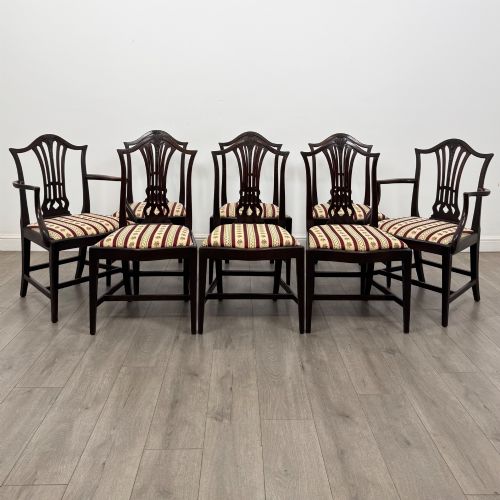
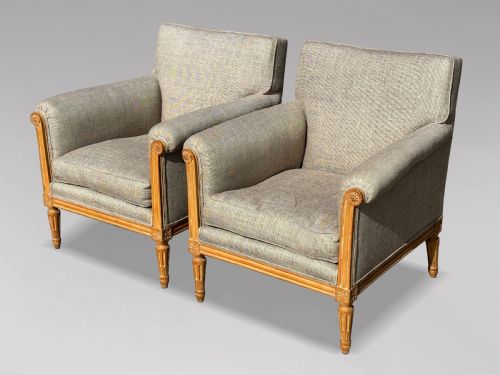
Quality separates simple utility furniture from pieces featuring refined stylistic execution, such as carved shield backs or detailed Louis XVI revival motifs. The crispness of the woodwork and the integrity of the joinery dictate the overall standard.
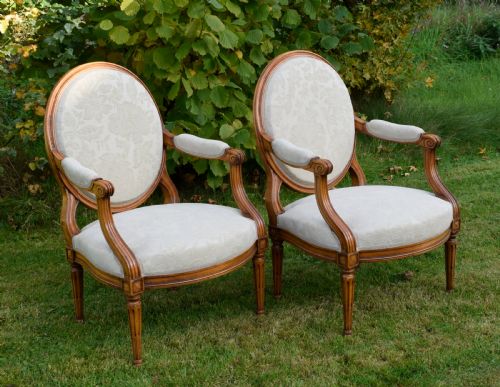
The integration of secondary materials like cane panels and quality upholstery fabrics alters the sophistication of a piece. Finer examples maintain balanced proportions and harmonious decorative details across the entire frame.
The Classic Wood Seating Glossary
- Shield back
- A chair back shaped like a heraldic shield, popularised during the eighteenth century and seen in Victorian dining chair sets. This design relies on balanced symmetry and pierced splats.
- Bergere
- An enclosed upholstered armchair with wooden framing, frequently incorporating cane panels along the sides and back. Edwardian examples often utilise mahogany for the exposed frame.
- Carver
- An armchair designed to match a set of dining chairs, usually placed at the head of a table. These pieces feature supportive armrests integrated into the main structure.
- Giltwood
- Timber treated with gold leaf or gold paint to create a decorative metallic surface. This finish appears on revival pieces influenced by continental court styles.
- Stickback
- A chair construction utilising simple turned spindles fitted into a solid wooden seat. This vernacular form prioritises sturdy utility.
Classic Wood Seating: Frequently Asked Questions
What defines classic wood seating?
Classic wood seating encompasses chairs, benches, and stools built from timber across various historic periods. These items rely on traditional joinery and established design motifs rather than modern industrial methods.
They serve practical seating roles while displaying the aesthetic characteristics of eras such as the Victorian period or the Regency revival.
How do I identify a Victorian dining chair?
Victorian dining chairs often feature robust mahogany frames and traditional ornamentation such as shield back designs. They were built for formal dining rooms and frequently survive in matched sets or groups.
Look at the weight of the timber and the style of the carved splat to connect the piece to nineteenth-century workshop practices.
Where were upholstered armchairs used?
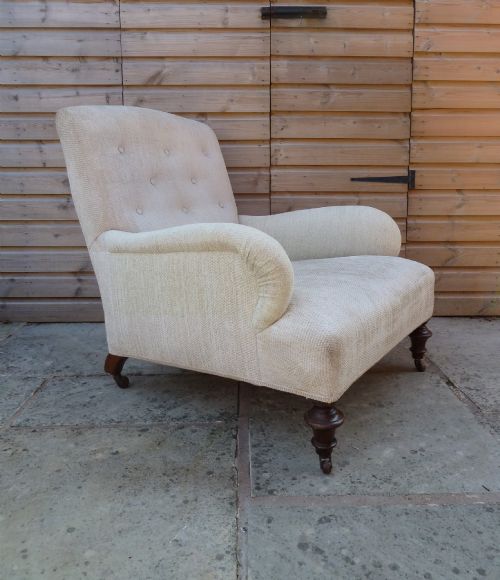
Upholstered armchairs provided comfortable seating in sitting rooms, parlours, and libraries throughout the nineteenth and early twentieth centuries. French revival styles and nineteenth-century designs offered deep padding for domestic relaxation.
They work well paired with reading lamps or positioned beside fireplaces in traditional interiors.
Can garden benches stay outside?
Garden benches utilise resilient woods designed to withstand exterior environments, developing a well-weathered or silvered surface over time. Regular exposure to the elements alters the tone of the timber without compromising the structural frame.
Position them on lawns or stone patios to blend functional outdoor seating with natural garden surroundings.