


Classic Wood Commode
These classic wood commode pieces are timber drawer units and cabinets that bring grounded storage and period presence to a room.
Classic Wood Commode
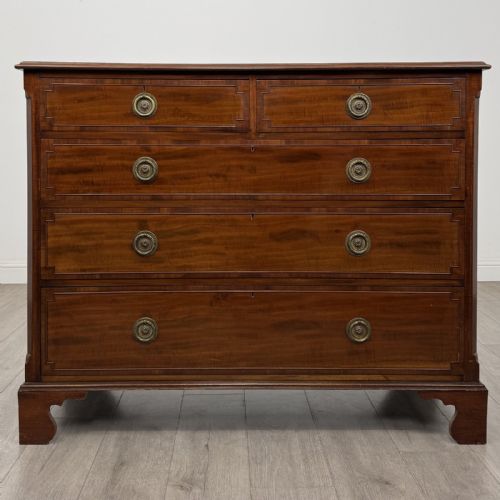
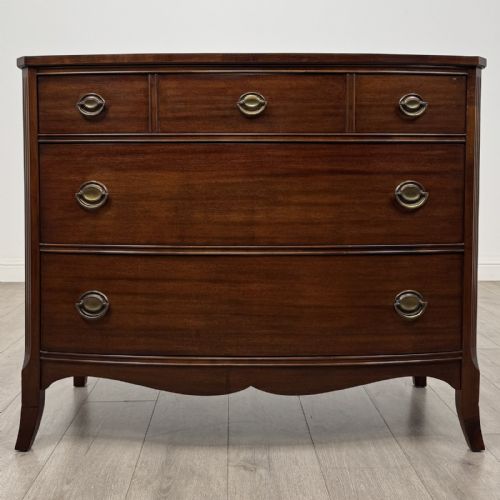
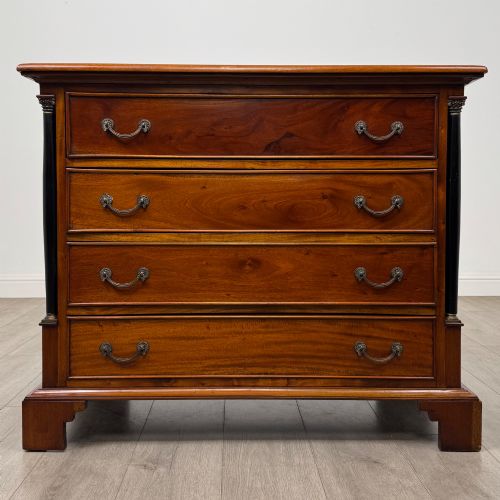
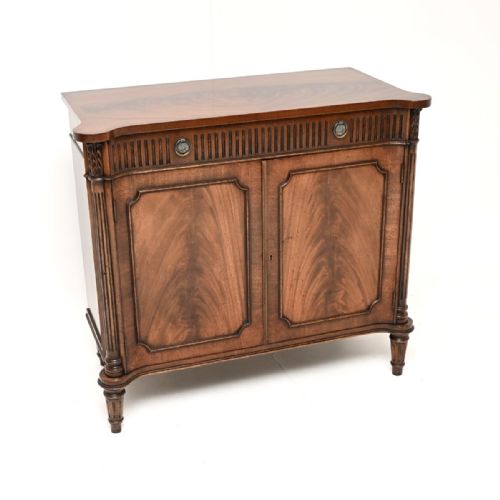
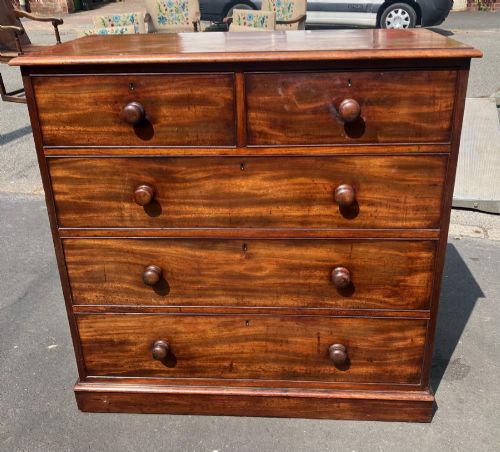
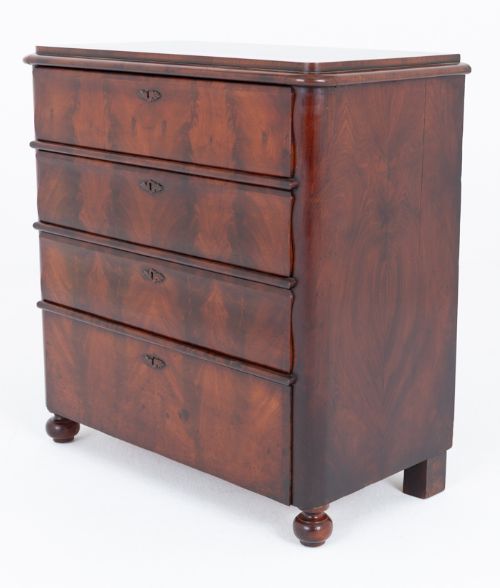
When you search for a classic wood commode, you are looking at substantial timber storage units that function primarily as chests of drawers or side cabinets. The forms range from bow-fronted chests to upright cabinet designs, rooted in Georgian, Victorian, Regency, and Biedermeier traditions.
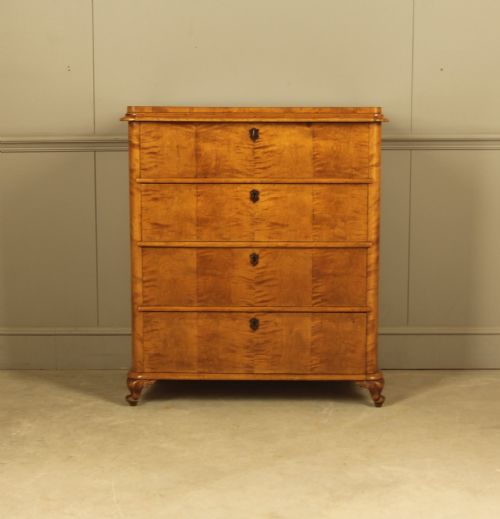
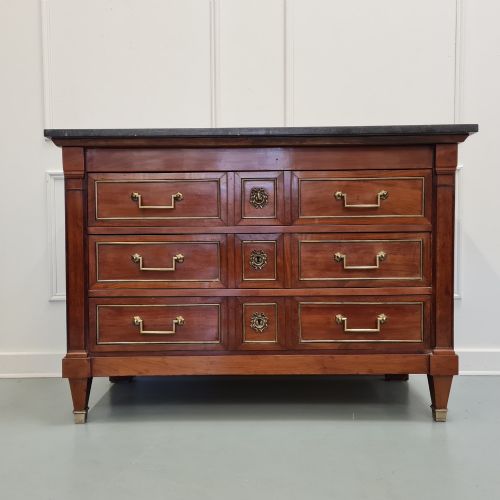
You are most likely to meet mahogany examples on this page, often featuring standard two-over-three drawer configurations or sweeping curved fronts. Pieces span across the eighteenth, nineteenth, and early twentieth centuries, including specific regional expressions like Swedish flame birch and French Empire designs.
The objects serve as practical room furniture while carrying distinct historical styles, from restrained bracket feet to prominent brass handles. Each piece represents a specific period of cabinet-making, reflecting the domestic storage needs of its era.
Materials and construction methods
Makers built these pieces using solid timbers and decorative veneers such as flame mahogany and flame birch over secondary woods like pine. Surfaces often incorporated brass hardware for handles and key escutcheons, alongside iron components in the internal construction.
Construction techniques rely on traditional joinery methods suited to heavy drawer units and side cabinets. Cabinet-makers applied fine veneers to primary display surfaces to create distinct grain patterns, supported by sturdy framing for daily use.
Several pieces come equipped with functional key escutcheons, proving that someone lost the key to their socks centuries ago.
Distinctions in construction and design
Quality separates pieces through the selection of timber figures, such as highly figured flame mahogany or birch veneers, matched against plain or secondary woods. The refinement of the cabinet-maker's joinery, from bracket feet to curved bow fronts, dictates the structural elegance of the piece.
The integration of original brass hardware and the crispness of inlaid details mark the distinction between standard utilitarian storage and finer output. Construction integrity in the drawer frames and internal linings determines how well the cabinet holds its form over centuries.
C Hindley Williams IV
The Classic Wood Commode Glossary
- Bow front
- A convex curved cabinet or chest front that swells outward at the centre, popular during the Georgian and Regency periods.
- Flame mahogany
- A veneer cut from the fork of a mahogany tree to produce a fiery, rippling grain pattern highly prized in formal furniture.
- Bracket foot
- A structural support foot shaped like a small bracket, commonly found on the corners of eighteenth and nineteenth-century case furniture.
- Biedermeier
- A Central European style from the first half of the nineteenth century emphasising clean lines and polished domestic woods.
- Escutcheon
- A protective plate surrounding a keyhole, frequently cast in brass on period cabinet doors and drawer fronts.
Classic Wood Commode: Frequently Asked Questions
What is a classic wood commode used for?
These pieces serve as practical storage furniture for clothing and household items, utilising banks of drawers or internal cabinet space.
Placed in bedrooms or living areas, they provide a stable surface for display while keeping belongings enclosed.
How do I identify a Georgian commode?
Georgian pieces typically feature solid mahogany construction, restrained classical proportions, and details such as bracket feet or brass drop handles.
Look for traditional drawer configurations, such as two smaller drawers over three larger ones, built with period joinery techniques.
What distinguishes Biedermeier pieces?
Biedermeier furniture focuses on utilitarian comfort and minimalist forms, often showcasing blonde woods or flame birch veneers without heavy ornamentation.
These nineteenth-century pieces emphasise natural wood grains and smooth, unblemished surfaces over carved architectural details.
How should I care for a wood commode?
Maintain the timber by keeping it away from direct heat sources and sudden humidity changes that can crack veneers or warp solid wood.
Dust the surface regularly with a dry cloth and occasionally feed the polish to preserve the finish of the historic wood.