

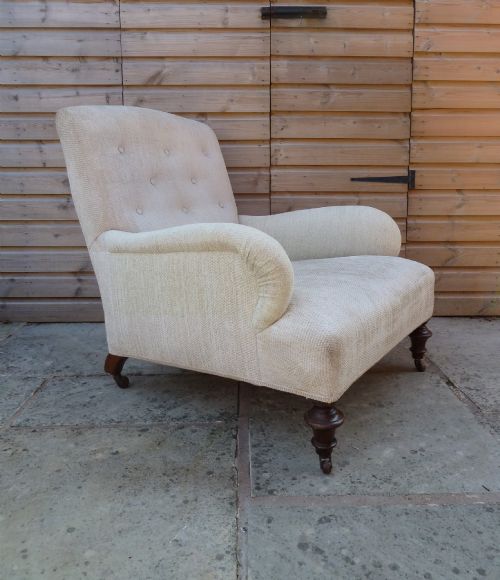
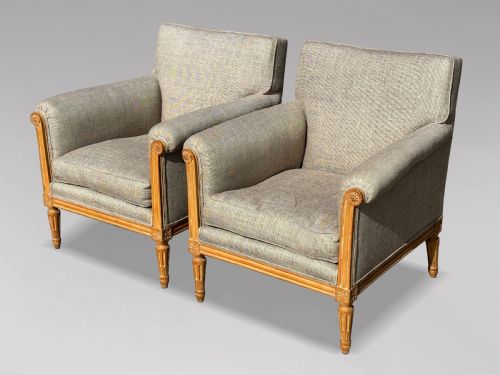

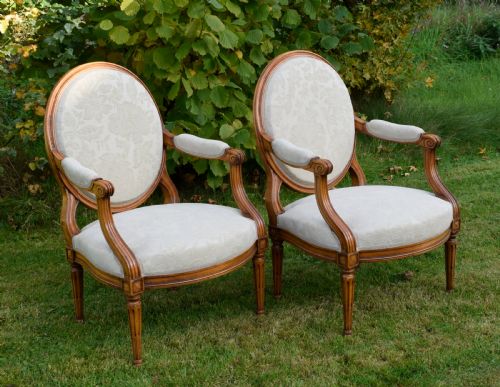


Classic Wood Armchairs
Classic wood armchairs offer solid joinery and honest timber, giving any room a grounded focal point.
Classic Wood Armchairs
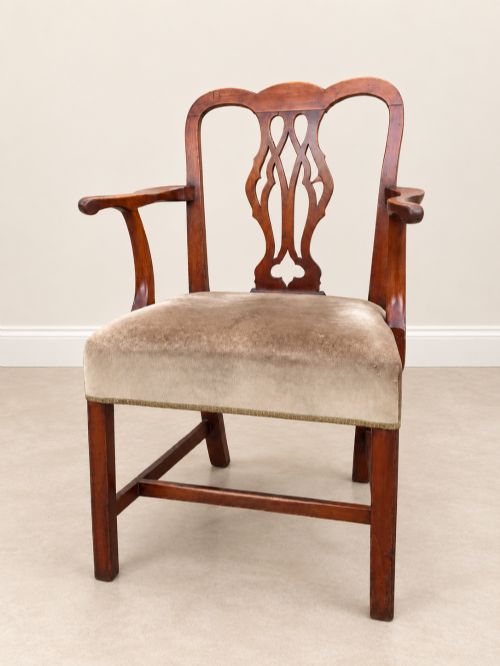
Classic wood armchairs span multiple centuries of seating design, ranging from early Georgian timber frames to lighter Edwardian creations. These pieces combine structural woodwork with various seating surfaces including cane, fabric, and velvet.
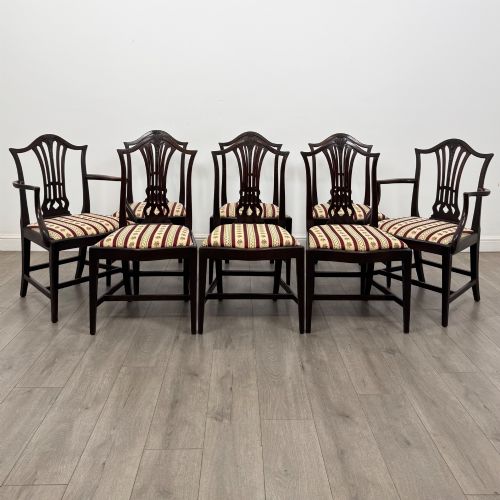
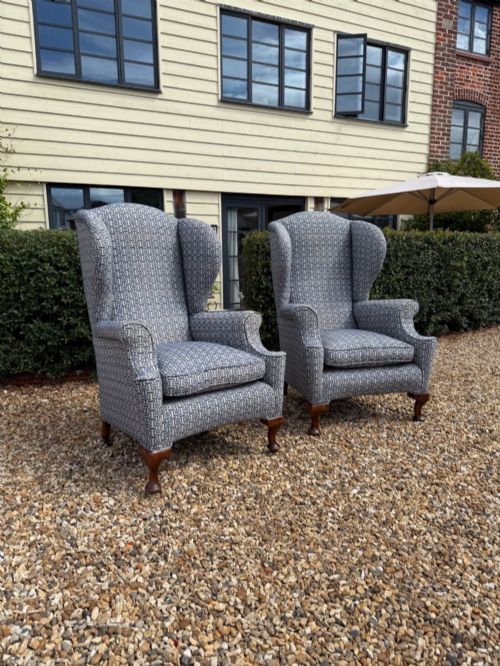
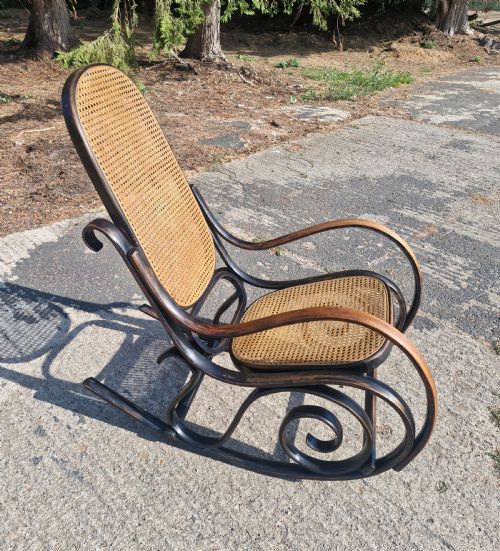
The selections available here feature specific regional interpretations and revival styles such as Hepplewhite, Queen Anne, and Louis XVI. Buyers encounter diverse forms like bergere chairs, wing armchairs, and rocking armchairs.
Makers utilised resilient timbers such as mahogany, yew, and satinwood to construct sturdy carvers and open armchairs. Each period contributes distinct proportions and carving details to the overall form.
How they were made
Craftsmen built these chairs using hardwoods like mahogany and yew, often shaped into ropeback, shield back, or stickback designs. Timber selection dictated the strength of the frame and the clarity of any carved ornament.
Upholstery techniques varied from simple drop-in pads to fully sprung frames covered in velvet, silk, or standard upholstery fabric. Cane work was also woven into open frames to create lighter seating surfaces.
Classic Wood Armchairs Retail Price Guide 2026
Typical asking prices for classic wood armchairs among the pieces listed under this phrase on Sellingantiques today, from the lower quarter to the upper quarter. They describe what is for sale here now, not the wider market.
Listings feature pieces spanning the Georgian, Regency, Victorian, and Edwardian periods, constructed in mahogany, yew, and satinwood.
What varies in quality
The refinement of the timber grain and the crispness of carved details separate standard utility chairs from finer examples. Superior pieces display thoughtful proportions and careful timber selection across both primary and secondary woods.
The integrity of the original frame construction and the quality of subsequent upholstery work influence the overall standard. Chairs that retain their original timber surfaces and supportive joinery hold greater distinction.
The Classic Wood Armchairs Glossary
- Carver
- An armchair, often designed en suite with a set of smaller dining chairs. These pieces typically feature more substantial arms to accommodate the sitter.
- Bergere
- An enclosed upholstered armchair with a wooden frame, where the sides are frequently filled with cane work. This style originated in France during the eighteenth century.
- Shield back
- A chair back shaped in the outline of a shield, popularised during the Georgian period by designers such as Hepplewhite. The wooden frame often encloses pierced splats.
- Ropeback
- A chair back incorporating carved wooden decoration resembling twisted rope. This detail appears frequently on seating from the Regency and late eighteenth eras.
- Yew
- A dense hardwood with a distinctive figured grain, utilised for high-status country furniture. Its warm tone deepens naturally over decades of use.
Classic Wood Armchairs: Frequently Asked Questions
How do I date a wood armchair?
Dating relies upon examining the timber species, construction joints, and stylistic motifs present in the frame. Secondary woods inside the seat frame often provide additional clues regarding the period of manufacture.
Comparing the carving style and upholstery method to established historical examples helps narrow down the decade or century in which the piece was constructed.
What is a carver chair?
A carver is an armchair designed to match a set of dining chairs, traditionally placed at the head of the table. These chairs feature supportive armrests built into the wooden frame.
They offer a wider seat and sturdier proportions while maintaining the aesthetic style of the surrounding dining suite.
Can I use an antique armchair daily?
Most sturdy wood armchairs tolerate regular domestic use provided the joinery remains tight and sound. Regular inspection of the frame ensures that historic timber does not split under pressure.
Updating internal webbing or padding allows older upholstered chairs to support modern seating comfort without compromising the antique frame.
What woods were used for chairs?
Cabinet makers utilised domestic and imported hardwoods such as mahogany, yew, and satinwood for their strength and appearance. Softer woods or secondary timbers were sometimes employed for hidden internal frames.
The choice of timber typically reflects the prevailing fashion and available resources of the period in which the chair was built.