


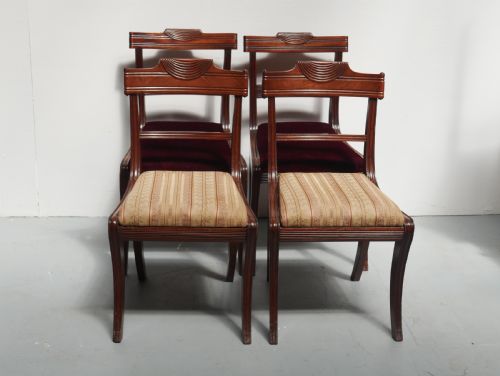


Classic Regency Seating
Classic regency seating brings formal grace and rich mahogany frames into a room, offering enduring comfort and strong architectural lines.
Classic Regency Seating
Classic regency seating spans dining chairs, armchairs, benches, and piano stools that reflect the architectural tastes of the early nineteenth century and later revivals. Buyers encounter dining sets, library chairs, window seats, and porter's armchairs executed in rich timber.
Forms include simulated rosewood stickbacks, X-framed piano stools, and cabriole-legged window seats upholstered in fabrics such as velvet, leather, and corduroy. Each piece serves both practical domestic seating and decorative interior functions.
Materials and construction
Makers utilised solid mahogany and simulated rosewood for the structural frames, often incorporating brass details to accent the timber. Wood turning and reeding shaped the legs and uprights.
Upholstery methods employed traditional materials including hessian beneath surface coverings of leather, velvet, corduroy, and patterned fabric. Frames occasionally featured inlaid woodwork and structural X-frames for added support.
Classic Regency Seating Retail Price Guide 2026
Typical asking prices for classic regency seating among the pieces listed under this phrase on Sellingantiques today, from the lower quarter to the upper quarter. They describe what is for sale here now, not the wider market.
The listings span the nineteenth century, the nineteen-twenties, and include specific revival styles alongside pieces finished in mahogany, brass, leather, and velvet.
Factors of quality
Quality rests upon the crispness of the reeding, the depth of the mahogany grain, and the integrity of the joinery across the frame. Exhibition quality examples display superior timber selection and finer decorative carving.
The choice of upholstery materials, from plain hide to rich velvet, and the preservation of original or sympathetic coverings distinguish standard production from superior pieces.
The Classic Regency Seating Glossary
- Reeded
- A decorative moulding consisting of parallel convex strips resembling inverted fluting. This technique frequently appears on the legs and uprights of nineteenth-century chairs.
- Window seat
- A long, narrow form of seating designed to fit into a window recess. These often feature decorative legs such as cabriole designs.
- X-frame
- A structural base formed by intersecting diagonal timbers that cross to support the seat above. This construction often appears on piano stools.
- Porter's armchair
- A high-backed enclosed seating form designed to keep out draughts in cold hallways. They typically feature deep leather upholstery and sturdy wooden wings.
- Simulated rosewood
- A painted or stained wood finish designed to imitate the rich grain and deep colour of genuine rosewood. Cabinet makers used this technique to achieve a high-end look with alternative timbers.
Classic Regency Seating: Frequently Asked Questions
How do I identify a true period piece?
Examine the timber construction, joinery methods, and wear patterns visible on the underside and frame joints. Period items from the early nineteenth century display timber ageing and construction techniques consistent with that era.
Compare the stylistic details, such as reeding and leg profiles, against documented examples from the Regency and William IV periods to confirm authenticity.
Are these chairs suitable for daily dining?
Many sets function well for daily use provided the frame joints remain secure and the internal webbing offers adequate support. Robust mahogany dining chairs withstand regular sitting when properly maintained.
Consider the seat height and upholstery durability if you plan to use antique seating around a modern dining table on a daily basis.
How should I care for the leather and wood?
Clean wooden surfaces with a soft, dry cloth and apply appropriate furniture wax sparingly to nourish the mahogany or simulated rosewood finish. Keep timber away from direct heat sources and strong sunlight.
Treat leather upholstery with specialist leather conditioner periodically to prevent drying and cracking while maintaining the suppleness of the hide.
What is the difference between Regency and William IV styles?
Regency seating typically exhibits lighter proportions, elegant reeded members, and classical restraint inspired by Greek and Roman forms. The lines remain refined and often feature delicate brass inlay.
William IV pieces tend to be heavier and more monumental in scale, showcasing robust mahogany timbers, bolder carving, and exhibition quality craftsmanship designed to project authority.