






Classic Mahogany Buffet
A classic mahogany buffet brings warmth and architectural presence to a room, offering practical storage disguised as fine cabinet-making.
Classic Mahogany Buffet
When you search for a classic mahogany buffet, you encounter dining room furniture designed for serving food and storing silver, glassware, or linen. The examples available on this page span the eighteenth century, the Victorian era, and early twentieth-century revivals.
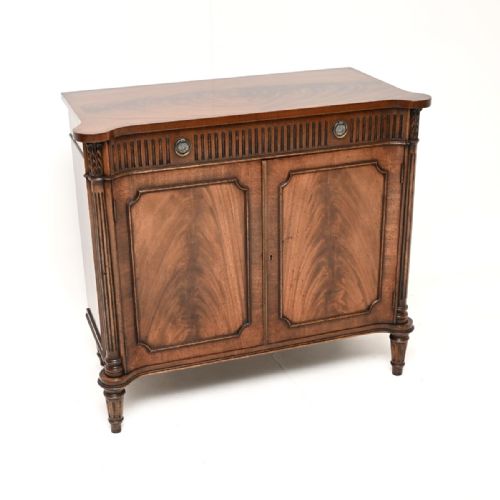
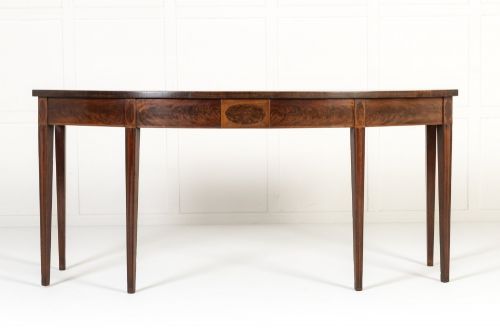
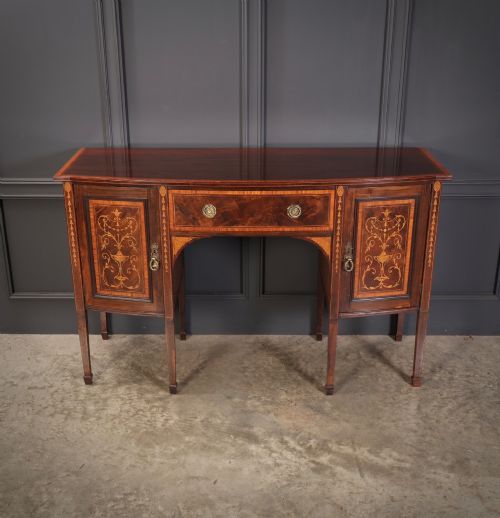
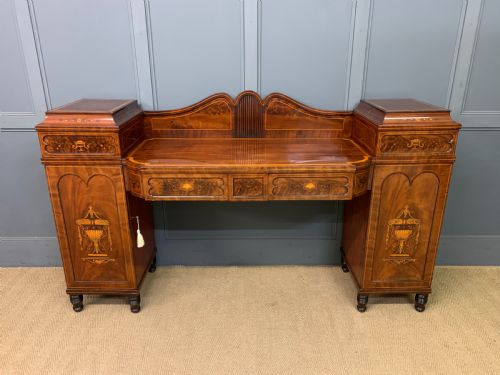
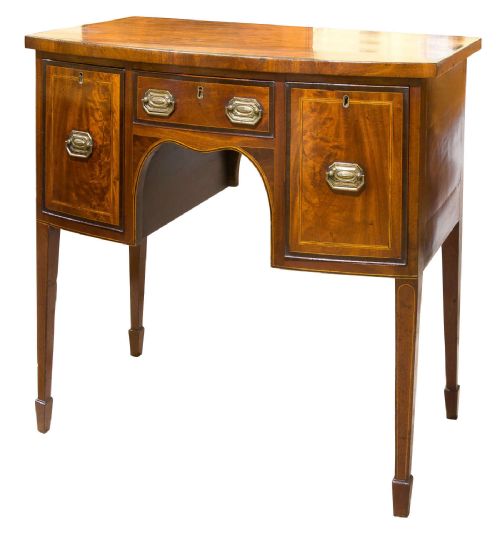
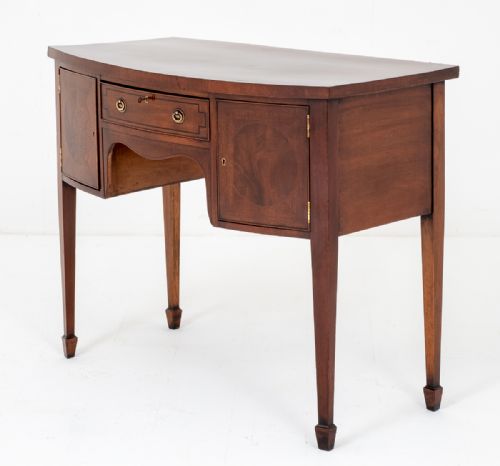
You are most likely to meet bowfront and serpentine shapes alongside straight-fronted pedestal designs. These pieces originate from Georgian, Regency, and later revival periods, reflecting the shifting formal dining habits of British households.
How they were made
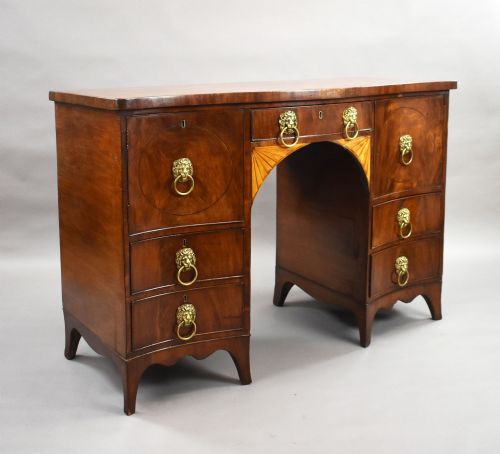
Cabinet-makers relied upon solid mahogany and flame mahogany veneers applied to structural carcass woods, building strength into wide panels and curved drawer fronts. Timber selection focused on rich grain patterns and deep natural tones that aged gracefully.
Detailed decoration relied on contrasting timbers such as boxwood and satinwood for inlay work, often taking the form of delicate stringing or elaborate marquetry panels. Brass handles and mounts completed the construction, providing both functional grip and visual punctuation.
Classic Mahogany Buffet Retail Price Guide 2026
Typical asking prices for classic mahogany buffet among the pieces listed under this phrase on Sellingantiques today, from the lower quarter to the upper quarter. They describe what is for sale here now, not the wider market.
Some serpentine buffets hide secret bottle drawers lined with lead, designed to keep your claret cool before dinner.
What varies in quality
Quality rests in the harmony of proportions, the sharpness of the timber figurations, and the precision of the joinery along curved and serpentine fronts. Superior examples display seamless veneer matching across multiple drawers and doors, preserving the continuity of the grain.
The refinement of secondary details distinguishes finer pieces, from hand-cut boxwood stringing to the substantial weight of original brass hardware. Structural integrity beneath the polished surface, including dovetailed drawer construction and solid internal framing, separates standard utility from exceptional craftsmanship.
The Classic Mahogany Buffet Glossary
- Bowfront
- A convex, curved front section popular in Georgian and Regency furniture design. This shape softens the room's geometry while increasing internal cabinet capacity.
- Pedestal sideboard
- A form featuring distinct flanking cabinet pedestals connected by a central serving table or recessed section. It represents one of the grandest layouts for formal dining spaces.
- Flame mahogany veneer
- A sliced timber veneer revealing a flickering, flame-like grain pattern created by branching timber growth. Cabinet-makers reserved this decorative surface for prominent drawer fronts and doors.
- Marquetry
- The art of forming decorative patterns using fitted pieces of various coloured veneers. It adds pictorial or geometric richness to the flat surfaces of the buffet.
Classic Mahogany Buffet: Frequently Asked Questions
What is a classic mahogany buffet used for?
These pieces function primarily as dining room servers for organising tableware, linens, and bottles during meals. Their broad top surfaces also provide ample space for displaying dishes or serving food.
Beyond the dining room, many owners place them in hallways or living areas to introduce generous surface space and deep storage. Their traditional stature anchors a room while keeping clutter out of sight.
How do I tell an 18th century piece from a revival?
Eighteenth-century examples typically display hand-cut joinery, native secondary timbers behind the mahogany, and subtle signs of age in the timber surface and drawer linings. Construction methods rely on older hand tools rather than steam power.
Revival pieces from later periods often feature more standardised internal components and machine-cut dovetails while still mimicking earlier Georgian and Regency silhouettes. Examining the drawer construction and timber movement provides clear clues to the exact era.
How do I care for mahogany furniture?
Maintain the finish by keeping the timber away from direct sunlight and strong heat sources that can dry out the wood or fade the polish. Dust regularly with a soft, dry cloth to prevent accumulation.
Apply a traditional beeswax polish sparingly when the wood appears dry, buffing it gently to preserve the natural lustre. Avoid synthetic silicone sprays which can damage the historic polish over time.
What styles of buffet are available?
The selection includes formal George III pedestal designs, elegant bowfronts, and sweeping serpentine forms from the Georgian period. Regency and Victorian interpretations bring bolder proportions and distinct aesthetic weight.
Revival styles from the early twentieth century reproduce these historic silhouettes for later homes, matching classic proportions with period-appropriate timber veneers.