



Classic Fireside Seating
Classic fireside seating brings enduring comfort and character to a room, offering upholstered armchairs designed to anchor a traditional hearth.
Classic Fireside Seating
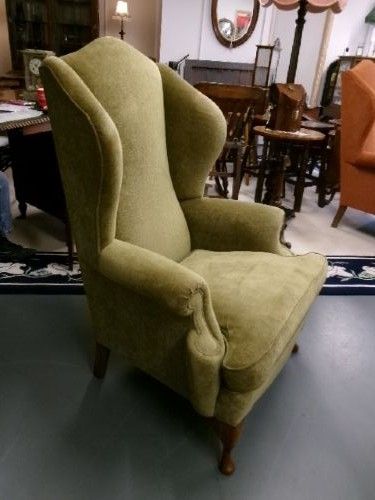
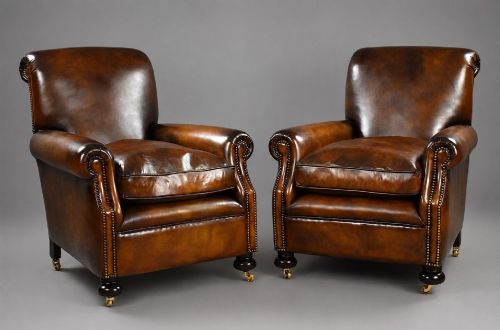
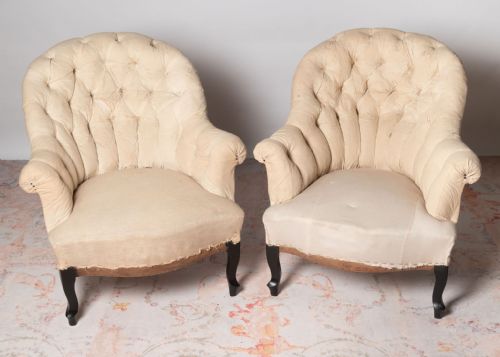
Classic fireside seating encompasses traditional armchairs and accent chairs designed for comfort by the hearth, drawing on styles from the eighteenth century through to the interwar decades. Buyers browsing classic fireside seating encounter wingback armchairs, low nursing chairs, and deep club chairs rooted in English and French furniture traditions.
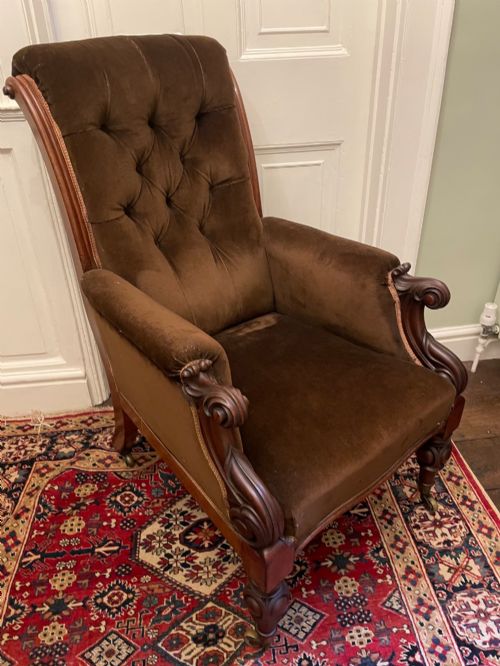
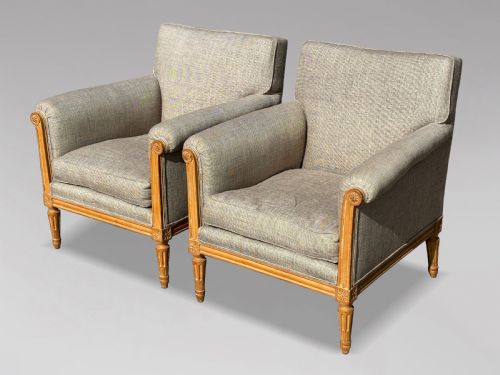
The pieces appearing on this page span the Victorian and Edwardian eras, the Regency period, and later revivals such as Georgian style and Louis XVI revival. Makers and workshops of the nineteenth and early twentieth centuries produced these designs in timber frames upholstered in leather, fabric, calico, and brass-detailed finishes.
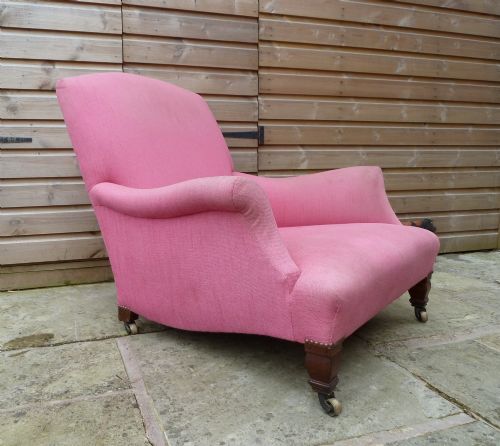
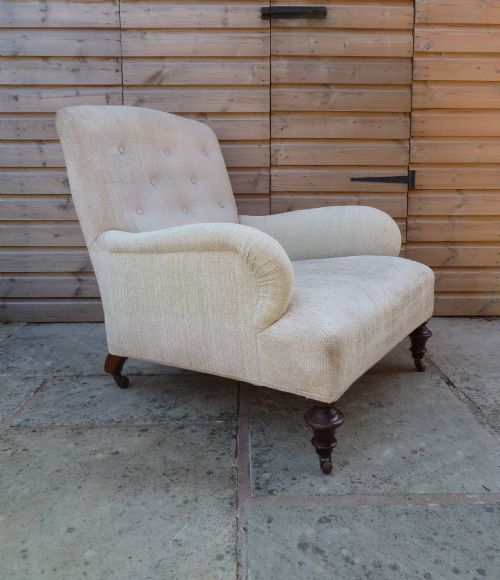
Most commonly, a buyer meets styles echoing earlier Georgian proportions or nineteenth-century ease, including distinctive Howard and Sons style armchairs and Bridgewater style armchairs. These forms combine robust wooden frames with deep padding designed for practical domestic use.
How they were made
Makers constructed the structural frames of classic fireside seating using hardwoods such as mahogany, rosewood, and general timber, often exposing the grain on legs and arm supports. These foundational frames provided the rigidity necessary to support deep upholstery and heavy daily use.
Upholsters layered materials including fabric, leather, and calico over internal spring or stuffing systems, securing edges with brass tacks where appropriate. The combination of dense textile coverings and sturdy wood created durable seating designed to withstand decades of fireside placement.
Classic Fireside Seating Retail Price Guide 2026
Typical asking prices for classic fireside seating among the pieces listed under this phrase on Sellingantiques today, from the lower quarter to the upper quarter. They describe what is for sale here now, not the wider market.
Common object types on this page include armchairs and accent chairs in Georgian style and French revival designs.
What varies in quality
Quality in these pieces rests upon the integrity of the underlying timber frame and the proportion of the silhouette, separating finely balanced historical designs from heavier, later interpretations. A well-proportioned armchair maintains harmonious lines between the height of the backrest, the depth of the seat, and the curve of the arms.
The standard of upholstery materials and execution dictates the refinement of the piece, distinguishing simple utilitarian seating from more luxurious examples finished in fine leather or tailored fabric. Original frames retaining their structural rigidity demonstrate superior craftsmanship compared to heavily altered or weakened pieces.
Howard And Sons
The Classic Fireside Seating Glossary
- Wingback armchair
- An upholstered seat featuring protective side panels designed to shield the occupant from draughts near an open fire. These wings grew out of seventeenth- and eighteenth-century domestic requirements.
- Bergere
- An enclosed armchair with stuffed or upholstered back and sides, typically featuring exposed wooden framing. The style originated in France and remained popular through the Edwardian era.
- Nursing chair
- A low-seated armchair designed historically for comfort while tending to infants or fireside tasks. The reduced height allows the sitter to remain close to the hearth.
- Club chair
- A deep, comfortable armchair traditionally upholstered in leather. The generous proportions encourage relaxed sitting.
- Calico
- A plain-woven textile often used as an initial upholstery layer or base cover beneath decorative outer fabrics. It provides a stable foundation for traditional stuffing techniques.
Classic Fireside Seating: Frequently Asked Questions
How do I care for leather club chairs?
Leather club chairs require regular dusting and occasional conditioning to maintain the suppleness of the hide over time.
Keeping them away from direct heat sources and strong sunlight prevents the leather from drying out and cracking.
How do I identify a Victorian armchair?
Victorian armchairs often display darker woods like rosewood or mahogany, alongside deep buttoning and substantial, curved upholstery forms.
They frequently reflect revival styles that drew inspiration from earlier Georgian or French court aesthetics.
Where should I place fireside seating?
These armchairs suit living rooms, studies, and bedrooms, particularly positioned near a fireplace or reading corner.
Their substantial forms allow them to act as focal points within traditional and eclectic room schemes.