


Classic Dining Chairs
Classic dining chairs bring centuries of cabinetmaking skill to the table, offering lasting form and everyday utility.
Classic Dining Chairs
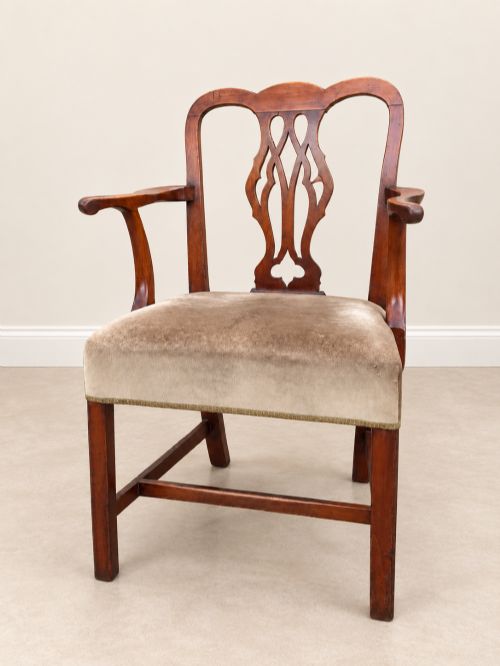
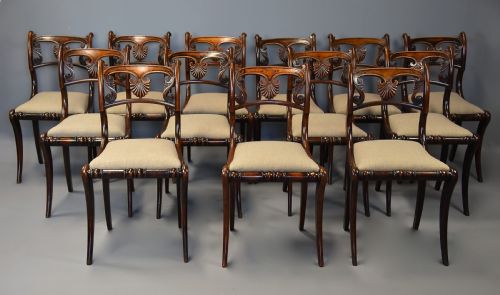
Classic dining chairs encompass seating designed for dining rooms across multiple centuries, ranging from formal Georgian and Regency models to later revival pieces and Art Deco suites. When searching for classic dining chairs, buyers encounter single items, matched pairs, elbow chairs, and large sets designed to accommodate gatherings.
The selections span distinct historical eras, incorporating 19th Century and earlier designs alongside 1920s and 1940s interpretations. Woods like mahogany, yew, elm, and beech predominate, often paired with textile, fabric, velvet, or leather upholstery.
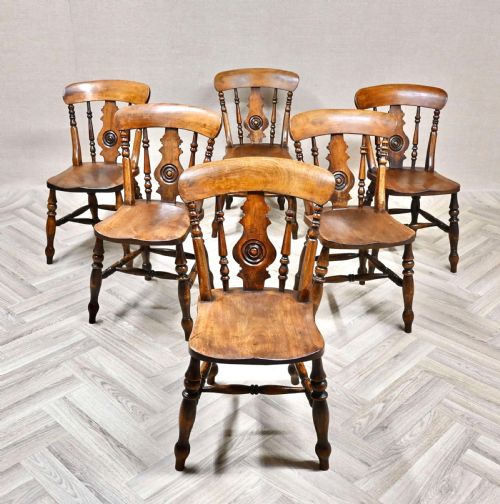
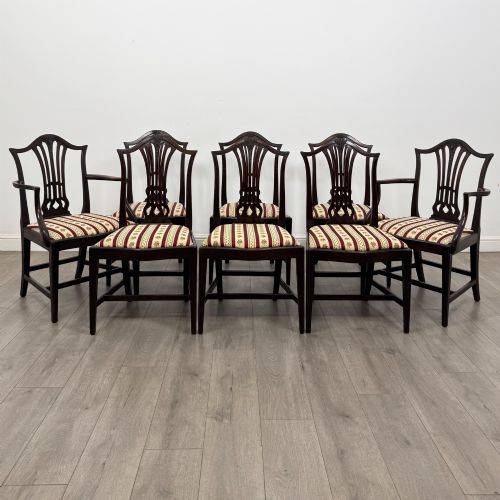
The prevailing forms on this page include Windsor kitchen chairs, shield back dining chairs, ropeback carvers, and expansive dining suites. Buyers frequently find both individual carvers and larger sets featuring multiple side chairs and matching armchairs.
Materials and construction methods
Cabinetmakers utilised dense hardwoods such as mahogany, yew, and beech to construct robust frames capable of withstanding daily use. Simulated rosewood and burr maple also appear, demonstrating decorative surface treatments applied to the underlying timber.
Joinery methods relied on traditional pegging and mortise and tenon joints to secure components like shield backs, ropebacks, and bullseye Windsor structures. Seat bases were frequently upholstered using traditional stuffing methods covered in leather, velvet, fabric, or textile.
Bullseye Windsor kitchen chairs bring rustic charm directly to the table, proving that sturdy utility can also be remarkably cheerful.
Assessing quality and craftsmanship
The calibre of a set rests upon the integrity of the timber selection and the precision of the carving on elements like shield backs and ropebacks. Uniformity across larger sets of ten or twelve chairs indicates careful initial pairing and execution by the maker.
Subtle differences in proportion and the crispness of decorative details distinguish standard production from exhibition quality pieces. The retention of original upholstery materials or sympathetic reupholstery preserves the character of the period.
The Classic Dining Chairs Glossary
- Carver
- An armchair designed with elbows, traditionally placed at the head of a dining table.
- Shield back
- A chair back shaped in the outline of a shield, popularised during the Georgian era.
- Ropeback
- A dining chair design featuring carved wooden rails twisted to resemble a length of rope.
- Windsor
- A traditional chair constructed with turned legs and spindles inserted into a solid carved wooden seat.
- Elbow chair
- An alternative term for an armchair, featuring supportive arms integrated into the top rail or supports.
Classic Dining Chairs: Frequently Asked Questions
How many chairs come in a typical set?
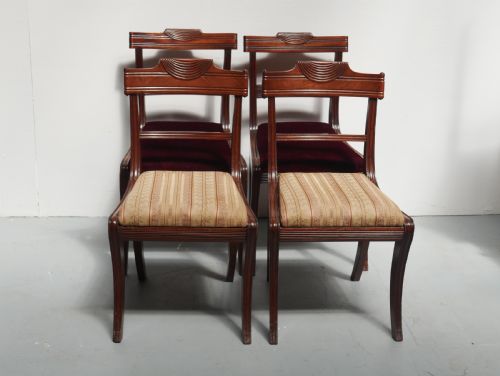
Sets vary widely in size, ranging from small groupings of four up to larger dining suites comprising ten, twelve, or thirteen pieces. Carvers are often included in these larger sets as head-of-table seating.
Buyers should examine the specific listings to confirm whether a set is matched or assembled from individual pieces of the same period.
What materials were used for upholstery?
Original seating surfaces utilised materials such as leather, velvet, fabric, and woven textiles to provide comfort during meals. Many pieces retain these traditional coverings or have been historically reupholstered.
Textiles and leathers often reflect the aesthetic of the period in which the chair was made or subsequently restored.
Are these chairs suitable for daily use?
These hardwood chairs were constructed by cabinetmakers to serve practical dining functions over generations. Solid timber frames in mahogany, beech, yew, and elm provide the necessary structural stability for everyday seating.
Routine care and appropriate weight distribution help preserve the historical joinery and upholstery of each piece.
How do I identify a Regency style chair?
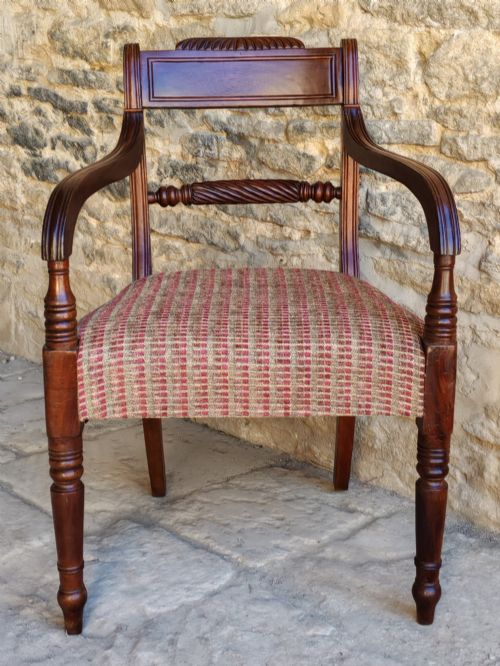
Regency style pieces often incorporate classical motifs, dark hardwoods like mahogany, and simulated rosewood finishes inspired by early nineteenth-century design. Forms frequently include curved top rails and sabre legs.
Comparing the proportions and decorative details against known Georgian and Victorian examples helps clarify the era.