


Classic Crystal Fixture
These classic crystal fixture designs bring unmistakable sparkle to a room, spanning grand chandeliers and delicate wall lights.
Classic Crystal Fixture
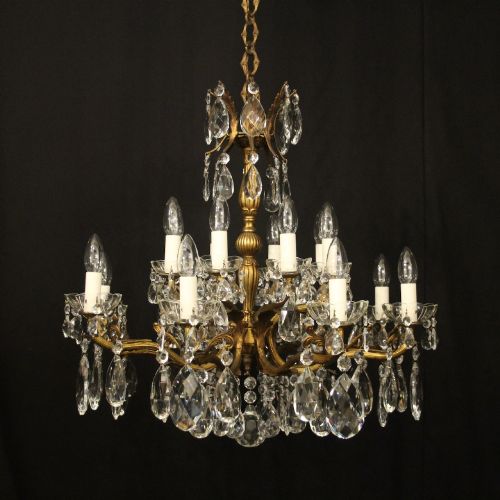
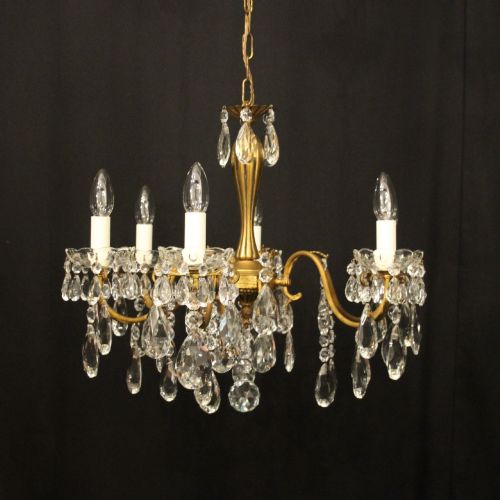
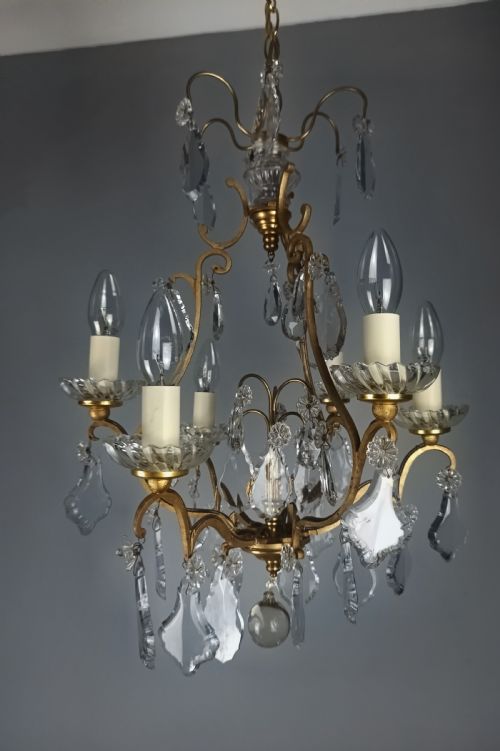
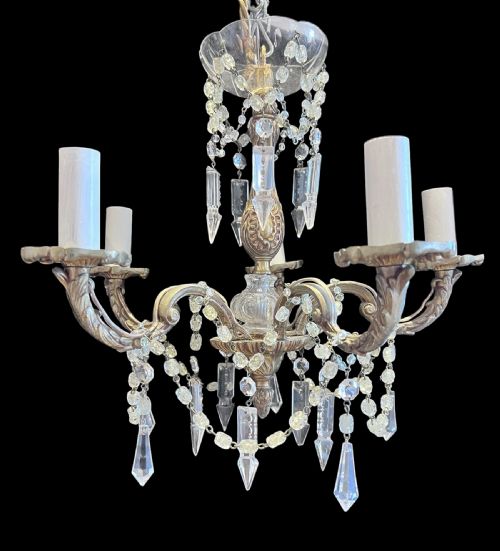
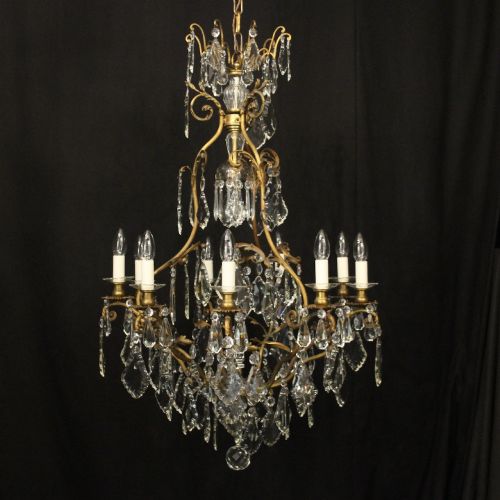
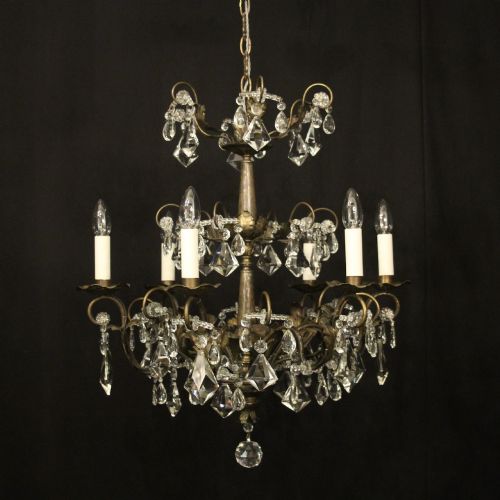
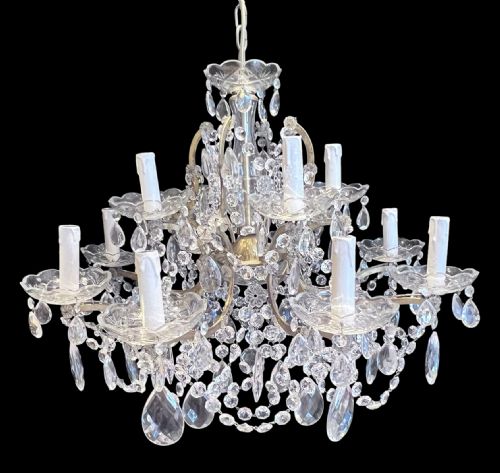
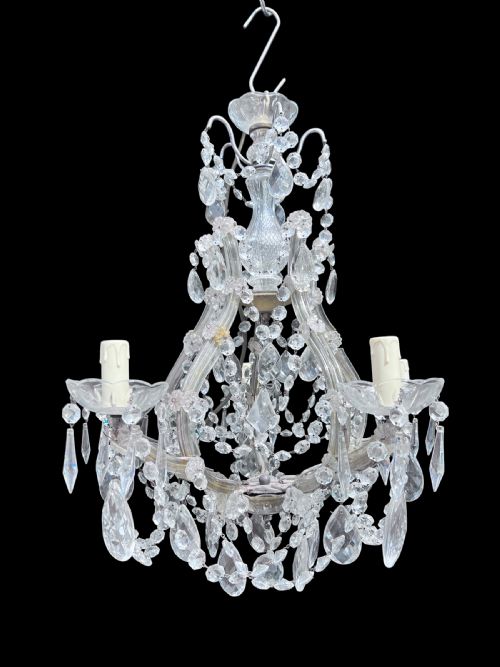
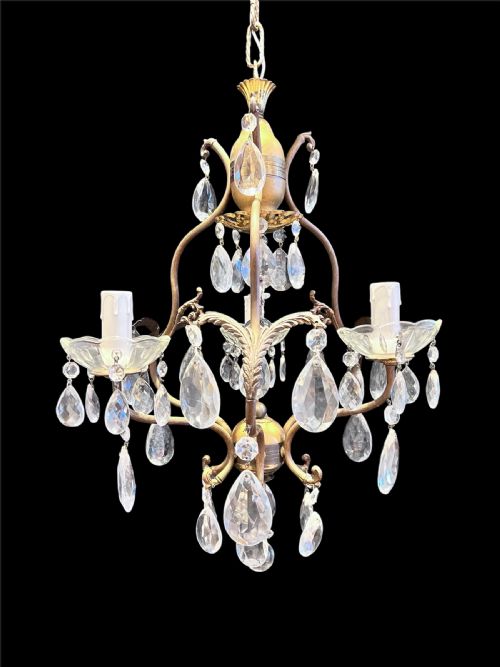
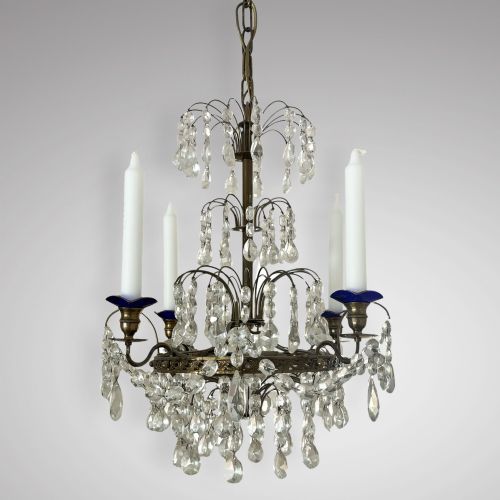
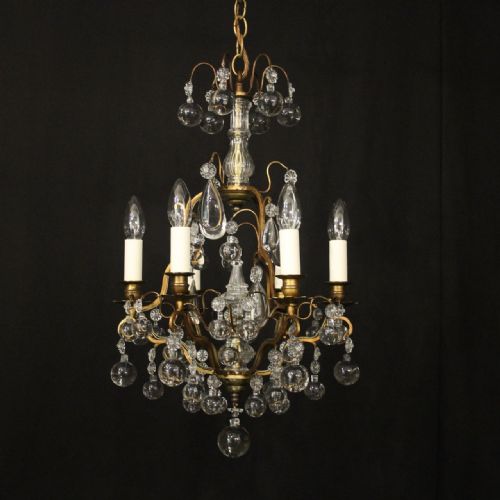
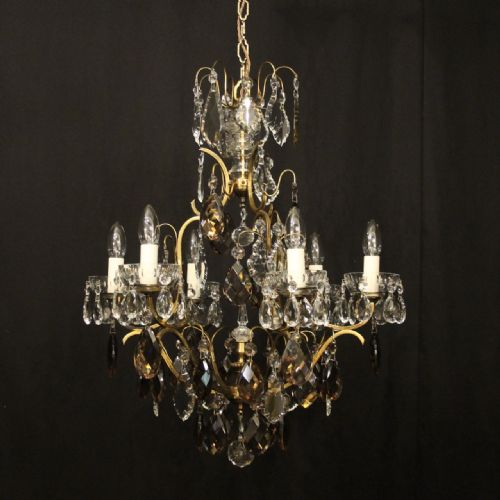
A classic crystal fixture most commonly takes the form of a chandelier suspended from a ceiling, though table lamps and wall lights also appear. The selection draws heavily on French and Italian designs, ranging from small three-light arrangements to substantial twelve-light and fifteen-light structures.
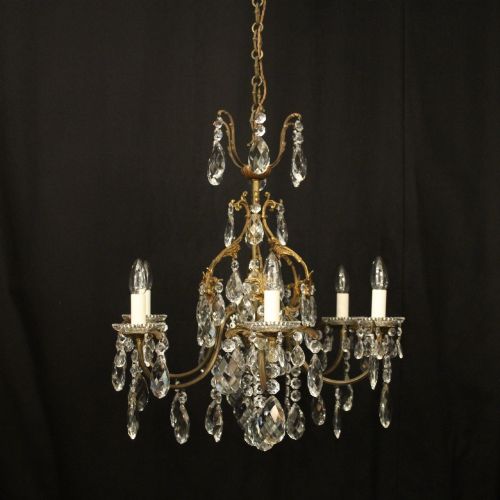
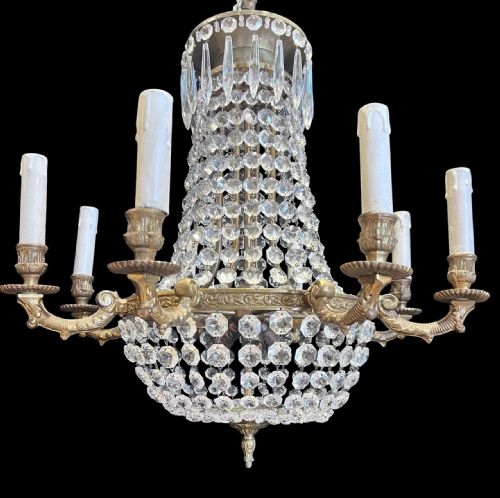
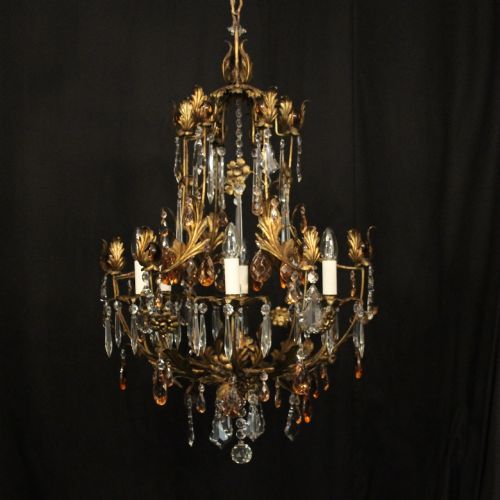
Dating primarily from the nineteenth and early twentieth centuries, these pieces incorporate distinct regional characteristics. Italian Marie Theresa and Florentine styles sit alongside French Empire birdcage and tent-and-waterfall configurations.
The materials used across these forms combine crystal, glass, and cut crystal with supportive frames of brass, gilt metal, bronze, and silver. Pieces vary from single-tier frames to large two-tiered structures fitted with numerous candle arms.
How they were made
Makers constructed the primary framework using cast and forged metals including brass, bronze, and gilt metal. Frames were frequently gilded or silvered to enhance the decorative effect before hanging.
Hanging elements rely on crystal, cut glass, and crystal glass shaped into drops, beads, and bag tents. Individual glass pieces are wired or pinned together to form cascades and waterfalls of light.
Classic Crystal Fixture Retail Price Guide 2026
Typical asking prices for classic crystal fixture among the pieces listed under this phrase on Sellingantiques today, from the lower quarter to the upper quarter. They describe what is for sale here now, not the wider market.
What varies in quality
The refinement of the metalwork sets finer examples apart, particularly where bronze or brass frames display intricate gilding and casting detail. Heavier multi-tiered structures require robust internal framing to support extensive glass quantities safely.
The clarity and cutting of the crystal itself dictate the visual depth of the piece. Superior cut crystal refracts light with greater precision, while specialised inclusions such as amethyst or coloured crystal introduce additional visual complexity.
The Classic Crystal Fixture Glossary
- Birdcage chandelier
- A lighting fixture featuring a curved metal frame shaped like an avian enclosure, densely hung with crystal drops. This French style directs the visual weight toward the upper section.
- Tent and waterfall
- A chandelier configuration where crystal beads form an upper tent shape above a lower cascade of drops. This arrangement maximises light refraction across multiple tiers.
- Marie Theresa
- A chandelier style characterised by flat metal strapwork entirely covered in glass plates and rosettes. Originating in Austria, this form became popular in Italian workshops.
- Bag tent
- A lower gathered section of crystal drops resembling a small pouch beneath the main frame. It collects the downward flow of beads in structured vertical lines.
- Gilt bronze
- Metal cast from copper and tin alloys that has been coated in a thin layer of gold leaf or gold paint. This finish provides a warm, reflective surface on French frames.
Classic Crystal Fixture: Frequently Asked Questions
What rooms suit a classic crystal fixture?
These pieces function effectively in principal living spaces, dining rooms, and high-ceilinged halls where adequate hanging clearance exists. Their scale allows them to serve as a primary focal point.
Smaller variants such as wall lights or single-bulb table lamps provide concentrated accent illumination for intimate corners or bedrooms.
How do I identify a French style fixture?
French examples frequently employ gilded bronze or brass frames shaped into birdcage, tent-and-waterfall, or Empire configurations. They often feature elaborate arm counts ranging from six to fifteen lights.
Italian counterparts, by contrast, frequently showcase Marie Theresa or Florentine styles with distinct strapwork and silvered finishes.
What materials make up these fixtures?
The structural elements rely on metals such as brass, bronze, and gilt or silvered metal. These form the arms and internal skeleton supporting the electrical or candle fittings.
Crystal, cut glass, and crystal glass form the pendants, drops, and bead strands that envelop the frame and refract the illumination.
How do period dates affect the design?
Eighteenth and nineteenth-century pieces tend to feature hand-cut crystal elements and heavy cast bronze frames. Edwardian and early twentieth-century examples often introduce machine-cut precision and lighter brass or gilt structures.
Mid-century items like table lamps incorporate simpler glass profiles suited to domestic spaces of that era.