


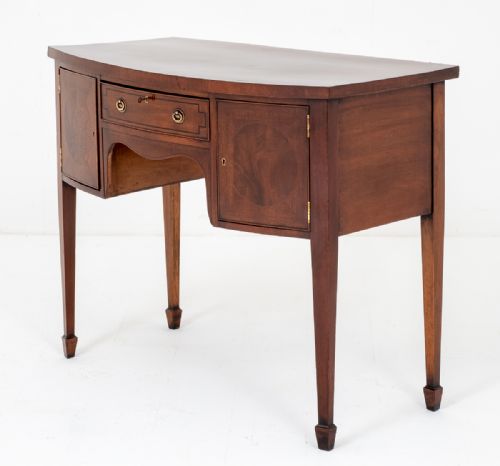
Classic Brown Credenza
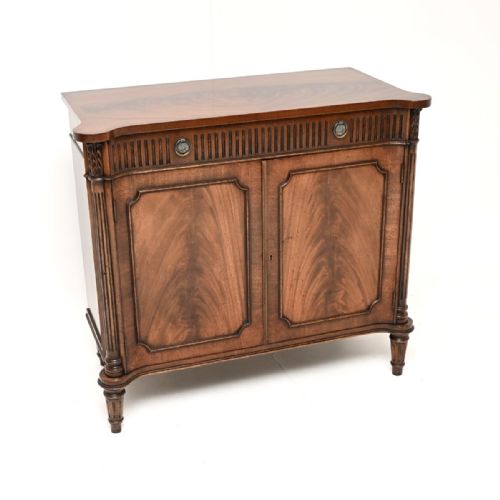
These classic brown credenza items are mahogany and oak sideboards and cabinets built to anchor a dining room.
Classic Brown Credenza
A classic brown credenza on this page typically takes the form of a mahogany or oak sideboard, buffet, or side cabinet designed for dining room storage. The selection spans Georgian, Victorian, and early twentieth-century periods, alongside revival styles from the nineteenth and twentieth centuries.
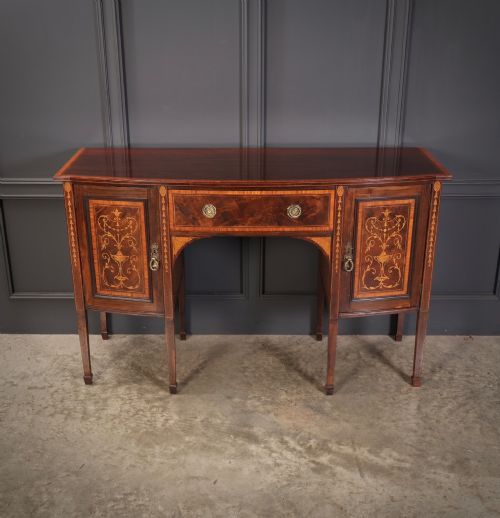
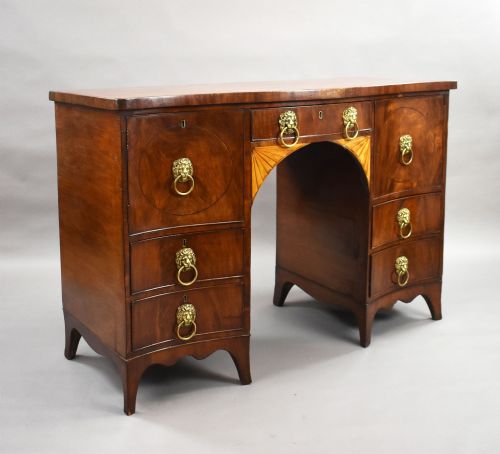
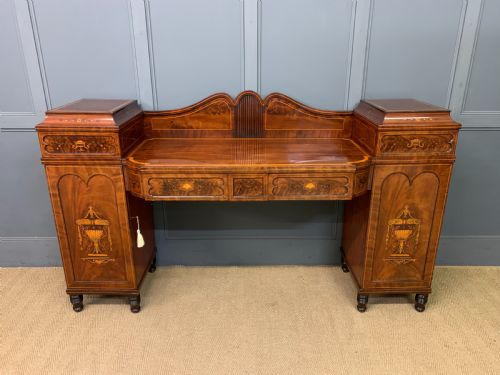
Buyers encounter bow front profiles, pedestal configurations, and two-door cabinets on legs, reflecting formal dining traditions. The forms range from eighteenth-century George III pieces to Regency and Sheraton Revival interpretations.
Makers and craftsmen utilised traditional cabinetry layouts, incorporating cupboards and serving surfaces intended for silver, linen, and glassware. These brown wood storage pieces anchor a room with substantial presence and utility.
How they were made
The primary construction relies on solid mahogany and oak, frequently enhanced with flame mahogany veneer across door panels and drawer fronts. Cabinetmakers employed boxwood and satinwood for delicate stringing, banding, and marquetry inlay.
Detailing often includes brass hardware, such as handles and drawer pulls, paired with glass elements where display cabinets are concerned. Joinery techniques from the eighteenth and nineteenth centuries ensure structural integrity across pedestals, legs, and bow front frames.
A six-legged Georgian setup gives a sideboard enough footing to survive three centuries of heavy dining silverware.
What varies in quality
Distinctions in quality rest upon the selection of timber and the precision of decorative inlays like boxwood and satinwood. Finer examples display carefully matched flame mahogany veneer and crisp marquetry rather than plain surfaces.
The sophistication of the period style, from George III proportions to revival interpretations, dictates the level of architectural detail and refinement in the legs, pedestals, and brass mounts.
The Classic Brown Credenza Glossary
- Bow front
- A convex curved cabinet or sideboard front that softens the linear geometry of a dining room.
- Flame mahogany
- A figured wood veneer showing a distinct flame-like grain pattern, prized for decorative surfaces.
- Pedestal sideboard
- A form featuring distinct side pedestals flanking a central section, common in George III and Regency designs.
- Marquetry
- Decorative patterns created by fitting different woods, such as satinwood and boxwood, into a veneer ground.
Classic Brown Credenza: Frequently Asked Questions
Where should I put a sideboard?
These brown wood storage pieces belong primarily in a dining room, where they serve as a surface for serving food and storing tableware.
They also function effectively in large hallways or living spaces to provide substantial storage and display capacity.
How do I care for mahogany?
Protect the wood by keeping it away from direct sunlight and maintaining steady indoor humidity levels to prevent veneer splitting.
Apply a traditional wax polish occasionally to nourish the surface and maintain the natural lustre of the mahogany.
What is a pedestal sideboard?
A pedestal sideboard consists of two independent cabinets or pedestals connected by a central serving table or board.
This grand configuration appeared frequently during the Georgian and Regency periods for formal dining rooms.
How do I distinguish revival styles?
Revival pieces borrow the aesthetic vocabulary of earlier Georgian or Regency eras but are built during the Victorian period or the early twentieth century.
Inspect the secondary woods, construction methods, and hardware to determine whether a piece is of the original period or a later interpretation.