
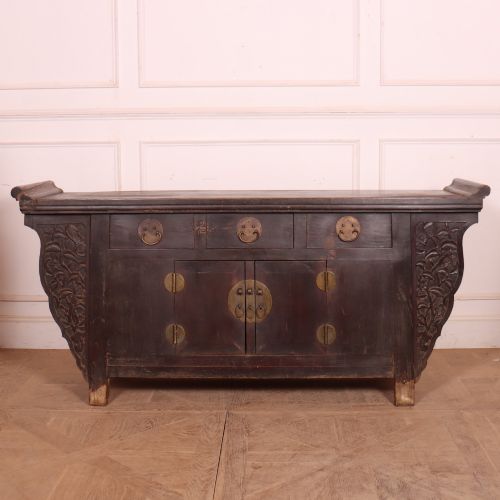


Chinese Coffer Table
These Chinese coffer table pieces are versatile low chests and trunks adapted for modern living, offering hidden storage alongside a distinctive surface.
Chinese Coffer Table
When searching for a chinese coffer table, a buyer encounters robust camphorwood trunks, carved chests, and low tables adapted from traditional storage forms. The selection spans the nineteenth century through the early twentieth century, encompassing pieces created for domestic use as well as export markets.
Many items meeting this description began life as camphor-lined chests, campaign trunks, or altar tables before finding new life as coffee tables. Traditional forms include elm sideboards, lacquered centre chests, and writing desks reflecting Qing dynasty or Chinese traditional design.
Origins range from nineteenth century workshops to Anglo-Chinese commissions and export pieces finished in red or black lacquer. Buyers frequently find substantial elm timbers, pigment-finished pig skin chests, and hardwood side cabinets serving the function of a low table.
How They Were Made
Construction relies upon traditional timber framing utilising native woods such as elm, camphorwood, and dense hardwoods. Makers selected these materials for stability and grain character, often lining storage trunks with fragrant camphor to protect contents.
Surface decoration frequently involves layers of red or black lacquer, sometimes applied over pigment and pig skin finishes. Brass hardware, including strapwork, corner plates, and locking plates, provides structural reinforcement alongside visual contrast.
Listings feature nineteen-century elm, camphorwood, and lacquered hardwood pieces alongside twentieth-century export items.
What Varies in Quality
Quality rests upon the integrity of the timber framing and the preservation of original lacquered or polished surfaces. Pieces retaining undisturbed brass mounts and intact camphor linings command greater interest from collectors.
The sophistication of the joinery and the depth of carved detail distinguish standard utility chests from finer export and domestic furnishings. Proportion and balance in the conversion from chest to table format also determine the success of the piece.
The Chinese Coffer Table Glossary
- Camphorwood
- A resilient aromatic timber prized for cabinetmaking and trunk linings. Its natural scent repels insects, making it ideal for storage chests.
- Lacquer
- A durable resin finish applied in multiple thin coats to wood. It creates a smooth, protective surface often coloured with black or red pigments.
- Coffer
- A chest or trunk traditionally used for storing valuables or linens. Many examples are subsequently adapted to function as low tables.
- Qing Dynasty
- The final imperial dynasty of China, spanning from sixteen forty-four to nineteen twelve. Pieces from this era often display traditional regional carving styles.
- Altar Table
- A long, narrow table historically used in temples or domestic halls for ceremonial displays. Their elegant proportions translate well into modern reception rooms.
Chinese Coffer Table: Frequently Asked Questions
What is a Chinese coffer table?
A Chinese coffer table is typically a traditional storage chest, trunk, or altar table adapted to serve as a low centre table. These pieces combine enclosed storage space with a flat surface suitable for a living room.
Most examples utilise traditional timbers like elm or camphorwood, dating from the nineteenth century or early twentieth century. Their dual purpose makes them practical for contemporary interiors needing character and storage.
How were these trunks used originally?
Original uses varied from storing textiles and valuables in domestic households to transport during travel. Camphor-lined trunks protected garments from pests, while altar tables held ceremonial objects.
Over time, many of these sturdy trunks and low tables found new roles in Western homes as coffee tables. Their robust construction allowed them to withstand this functional transition easily.
How do I care for a lacquered wooden surface?
Lacquered surfaces require gentle cleaning with a soft, dry cloth to remove dust. Avoid using harsh chemical polishes, abrasives, or excessive moisture that might damage the historic finish.
Keep the piece away from direct sunlight and radiators to prevent the timber from drying out or the lacquer from cracking. Natural wax may be used sparingly on unlacquered hardwood elements.
How do I date a nineteenth-century Chinese chest?
Dating relies upon examining the construction methods, wear patterns, and materials used in the piece. Nineteenth-century examples often display hand-cut joinery, traditional brass hardware, and patinated timber surfaces.
Comparing the decorative style, such as Qing dynasty motifs or export finishes, helps narrow the timeframe. Subtle tool marks and natural ageing of the lacquer provide further clues to its age.